Living on the Mid North Coast of New South Wales means enjoying beautiful coastline, green hinterland, and tight-knit communities. It also means dealing with some of Australia's most unpredictable storm weather, year after year.
The region sits right where subtropical and temperate weather systems meet. This creates the perfect conditions for East Coast Lows, which are intense low-pressure systems that form rapidly off the coast and bring gale-force winds, torrential rain, and dangerous flooding to towns like Taree, Forster, Tuncurry, Wingham, and Gloucester.
After the devastating May 2025 floods, which caused over $195 million in insured losses across the Mid North Coast and Hunter region and broke rainfall records that had stood since 1895, now is the time to get your property ready. The Bureau of Meteorology has confirmed that while La Niña is weakening, sea surface temperatures in the Tasman Sea remain well above average, keeping the risk of severe storms high through autumn 2026.
This guide walks you through what you need to do to protect your home, your trees, and your family before the next big storm hits. Whether you are in a coastal area like Forster or further inland near Gloucester, these steps will help you reduce your risk.
Table of Contents
- Why Storm Season Hits the Mid North Coast So Hard
- Lessons from the May 2025 Floods: What Went Wrong
- Start with Your Trees: The Biggest Storm Risk Most People Miss
- Species to Watch on the Mid North Coast
- Check Your Home: Roof, Windows, and Foundation
- Manage Water Before It Manages You
- Your 6-Step Storm Preparation Checklist
- Essential Apps Every Mid North Coast Resident Should Download
- Council Rules: What You Can and Cannot Do with Trees Before a Storm
- Protect Your Property Before the Next Storm Hits
Summary
Key Takeaways
-
The Mid North Coast sits in a storm hotspot where subtropical and temperate weather systems collide, creating East Coast Lows that bring destructive wind and flooding to the Manning, Hastings, and Macleay catchments.
-
The May 2025 floods caused over $195 million in insured losses across the Mid North Coast and Hunter region alone, with 14,500 claims lodged and average claim costs rising 18 per cent.
-
Trees are the most overlooked storm risk on residential properties. Waterlogged roots, internal decay, and weak branch unions make trees far more likely to fail during high winds, threatening homes and power lines.
-
Your roof is your home's first line of defence. Rusted fasteners, cracked tiles, and blocked gutters are the most common failure points during severe weather.
-
Good drainage prevents the worst flood damage. Simple upgrades like agricultural pipes, French drains, and keeping permeable surfaces can protect your foundation and yard.
-
MidCoast Council requires permits for most tree work, but emergency provisions allow removal of trees that pose an immediate threat to life. You must apply for a permit within 72 hours after emergency work.
1. Why Storm Season Hits the Mid North Coast So Hard
The Mid North Coast is not just another stretch of NSW coastline. It is one of the most storm-exposed areas in the country, and there are specific reasons why.
The Manning, Hastings, and Macleay river catchments funnel huge volumes of water through relatively narrow valleys. When an East Coast Low drops hundreds of millimetres of rain over a few days, these rivers rise fast. In May 2025, the Manning River rose to levels 1.5 metres higher than the already severe 2021 flood.
At the same time, the warm waters of the Tasman Sea feed moisture into these weather systems, making them more intense. Bureau of Meteorology data shows that sea surface temperatures are
currently running well above the long-term average, which means the atmosphere holds more water and storms dump heavier rainfall.
For the 2025/2026 season specifically, the outlook shows a greater than 80 per cent chance of above-median maximum temperatures across the region. March 2026 forecasts also indicate a significant probability of above-average rainfall for the NSW north coast. Even as La Niña weakens, the combination of warm seas and volatile atmospheric conditions keeps the risk level high.
What does this mean for homeowners? The storms that hit this region are not just heavy rain. They are powerful systems with damaging winds that can bring down trees, rip off roofing, and flood properties within hours. Being prepared is not optional here.
2. Lessons from the May 2025 Floods: What Went Wrong
The May 2025 event was a wake-up call for the entire region. Understanding what happened helps you avoid the same problems this time around.
Between 19 and 25 May 2025, an Easterly Trough Low produced extreme rainfall across the Manning River catchment. Taree recorded over 608 mm in less than a week. Wingham saw 278.8 mm fall in a single 24-hour period, breaking a record that had stood since 1895. The speed of the river rise caught many residents off guard.
Severe riverbank erosion hit the Taree CBD, and contaminated silt up to 250 mm deep buried public spaces and private yards. Across the Mid North Coast and Hunter, the Insurance Council of Australia recorded 14,500 claims totalling $195 million. The average cost per claim rose by 18 per cent in 2025, driven by higher prices for building materials and specialised labour.
One of the most confronting findings was that homes built to council-mandated elevation standards in places like Glenthorne were still flooded. This shows that design baselines from even a few years ago may no longer be enough in a changing climate.
The key lesson: waiting until a storm warning is issued is too late. The trees that fell, the roofs that lifted, and the drains that overflowed in 2025 could all have been addressed weeks or months earlier. That is what this guide helps you do.
3. Start with Your Trees: The Biggest Storm Risk Most People Miss
When people think about storm preparation, they usually think about the house first. But for many properties on the Mid North Coast, the biggest risk is not the building itself. It is the trees surrounding it.
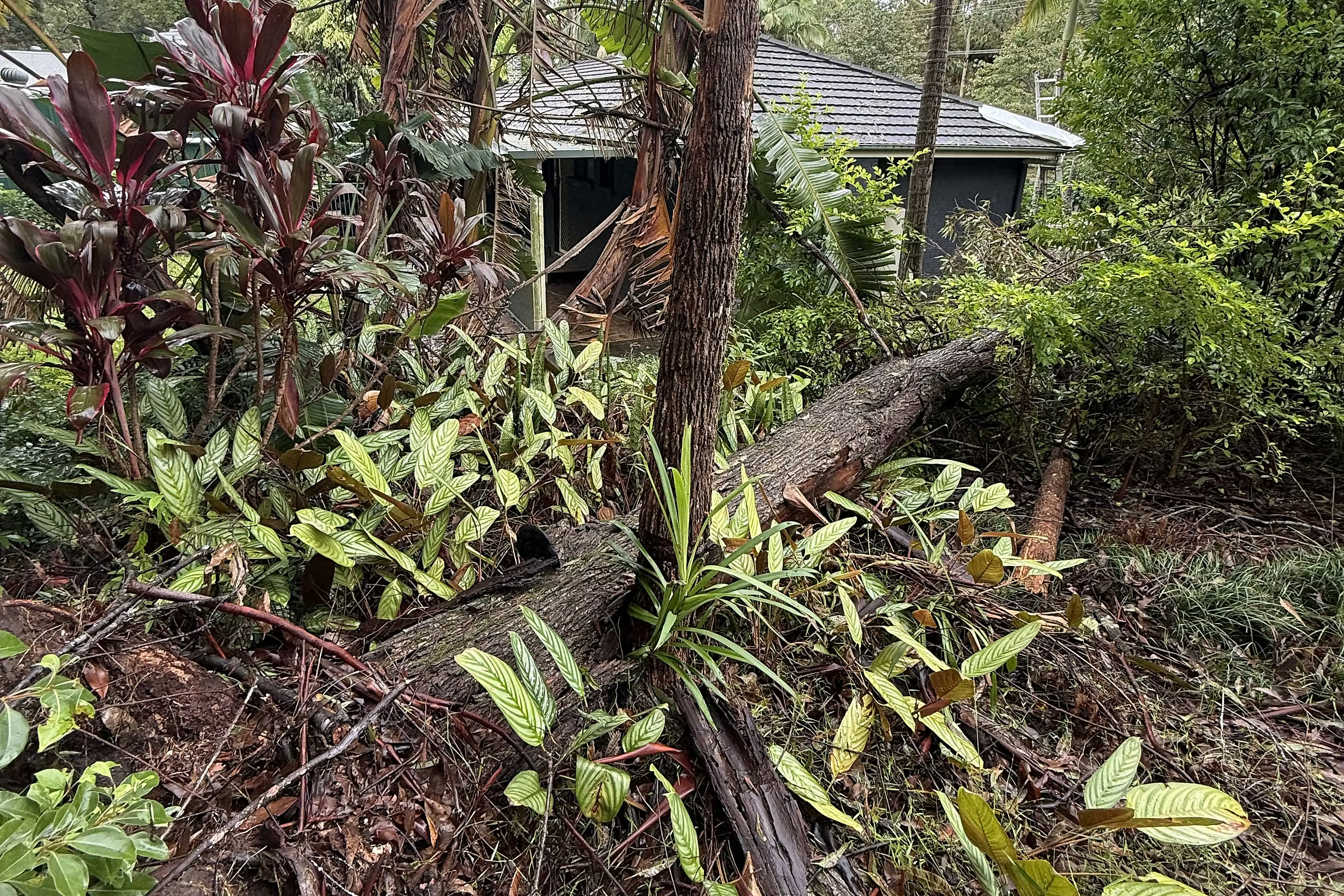
A large tree that fails during a storm can crush a roof, bring down power lines, block driveways, or injure someone. After the prolonged wet conditions of 2024 and 2025, many trees in the region have waterlogged root systems that are far weaker than they look.
What Makes a Tree Dangerous Before a Storm
- Root plate instability: If the ground around the base of a tree is lifting, cracking, or feels soft and spongy, the roots may have lost their grip. This is especially common on flood-prone properties near the Manning River or Wallis Lake.
- Internal decay: Fungal growths on the trunk, soft bark, or a hollow sound when you tap the wood all suggest the tree is rotting from the inside. These trees can snap without warning in high winds.
- Canopy dieback: A tree with thinning leaves, bare branches at the top, or large dead limbs hanging in the canopy is under serious stress. Dead branches, often called widow makers, can fall at any time.
- Weak branch unions: Where two branches or trunks of similar size grow from the same point, they often develop included bark instead of strong wood at the join. These V-shaped unions are one of the most common points of failure during storms.
- Past lopping damage: Trees that were heavily lopped (cut back hard) in previous years often respond by growing clusters of thin, fast shoots called epicormic growth. These shoots are weakly attached and 3 to 5 times more likely to break off as they grow larger.
The Australian Standard for pruning (AS 4373) recommends never removing more than 20 to 25 per cent of a tree's canopy in a single season. Proper tree pruning by a qualified arborist reduces storm risk while keeping the tree healthy and structurally sound.
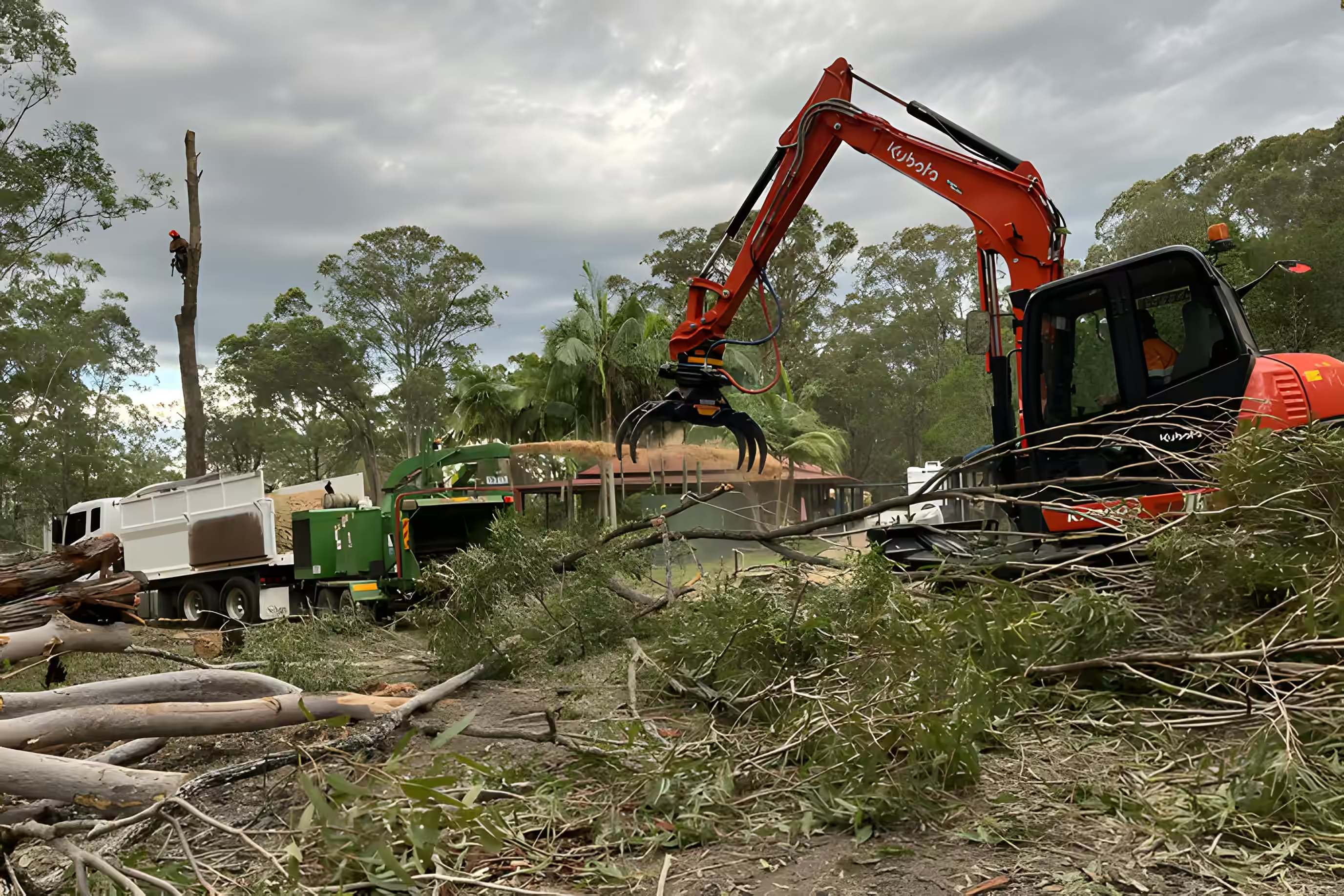
For trees that are already compromised, professional tree removal is the safest option. Do not attempt to remove large trees yourself, especially near power lines or structures. Our 24/7 emergency tree services team is available when the situation is urgent.
4. Species to Watch on the Mid North Coast
Not all trees respond to storms the same way. The species growing on your property, combined with local soil and weather conditions, determines how much risk each tree carries. Here are the species our arborists deal with most often across the MidCoast.
| Species |
Storm Risk |
Recommended Action |
| Spotted Gum |
Strong wood but develops V-shaped unions that split in gales |
Have a qualified arborist inspect for included bark defects |
| Blackbutt |
Develops internal hollows and is prone to windthrow in wet soil |
Book a professional decay assessment before storm season |
| Forest Red Gum |
High risk of root plate failure on floodplain soils after heavy rain |
Prioritise root stability checks if near rivers or creeks |
| Camphor Laurel (invasive) |
Brittle limbs, shallow roots, often exempt from protection |
Consider removal, especially near structures |
| Turpentine |
Susceptible to Myrtle Rust and weakened by illegal ringbarking |
Monitor for fungal spores and report suspected vandalism |
Invasive species like Camphor Laurel and Coral Tree are frequently exempt from council protection and are often recommended for removal because of their brittle wood and shallow root systems.
If you are unsure what species you have on your property, a qualified arborist can identify them and assess their condition during an inspection. Learn more about our fire and hazard management services, which cover pre-storm risk reduction for both native and non-native trees.
5. Check Your Home: Roof, Windows, and Foundation
Once your trees are sorted, turn your attention to the building itself. The 2025 storm season showed that even well-maintained homes can be vulnerable if specific weak points are not addressed.
Your Roof Is the First Thing to Fail
In high-wind events, roofs are the primary failure point. The coastal environment on the Mid North Coast, with its salt spray and heavy rain cycles, accelerates corrosion on metal fasteners and roofing sheets. Here is what to check:
- Fasteners: Look for rusted, loose, or missing screws on metal roofs. A single unsecured sheet can peel back in strong wind, exposing the entire roof structure.
- Tiles: Walk around your home and look for slipped, cracked, or missing tiles. Even small gaps allow water in, and during a severe downpour that water can quickly overwhelm ceiling linings.
- Gutters and downpipes: Clear all leaves and debris. Blocked gutters cause water to back up under the eaves and into the roof cavity. This is one of the easiest and most effective things you can do before storm season.
- Windows and doors: For properties in exposed coastal areas like Forster, Diamond Beach, and Pacific Palms, consider fitting storm shutters or impact-resistant screens to protect glazing from flying debris.
Check Your Foundation
Foundation problems often go unnoticed until a storm makes them worse. Walk around your home and look for the following warning signs:
If you see white powdery deposits (efflorescence) on brickwork or concrete, that indicates significant moisture is getting into the structure. After the 2025 floods, many residents in the Manning River catchment explored house lifting as a permanent solution to rising flood levels. While that is a major project, even smaller steps like sealing cracks and improving drainage make a real difference.
6. Manage Water Before It Manages You
On the Mid North Coast, the ability to move water away from your home quickly is the single most important factor in preventing flood damage. When the soil is already saturated from weeks of rain, even a moderate storm can cause water to pool around foundations and overwhelm drains.
Simple Drainage Upgrades That Work
- Agricultural pipes (Ag lines): These perforated pipes are installed 150 to 300 mm below ground level, surrounded by drainage rock. They collect groundwater and stop your yard from turning into a bog. Highly effective for properties with clay-heavy soil.
- French drains: Rock-filled trenches that redirect surface water away from the home and toward a safe outlet like a street gutter or drainage easement.
- Swales: Open, grass-lined channels that slow and redirect water flow. These are commonly used on larger rural blocks.
- Retaining wall drainage: If you have retaining walls, make sure they have weep holes and proper drainage pipes behind them. Without this, water pressure builds up and can cause the entire wall to collapse.
Keep Permeable Surfaces
MidCoast Council's stormwater guidelines assume each residential lot is 60 per cent impervious (covered by buildings, concrete, and paving). The more permeable surfaces you maintain, such as lawn, gravel paths, or porous concrete, the more water your property can absorb naturally instead of sending it rushing toward your house or your neighbour's.
For properties where tree roots are causing drainage issues or blocking pipes, stump grinding after tree removal can open up buried drainage paths and improve water flow across your block.
7. Your 6-Step Storm Preparation Checklist
The NSW SES has a well-tested preparation framework that every Mid North Coast household should follow. Here is a version tailored to local conditions:
Step 1: Prepare your home. Fix roof leaks, secure loose tiles, and make sure all windows and doors close properly and seal well. Replace any damaged weatherstripping.
Step 2: Check your roof and gutters. Clean out all leaves and debris from gutters, downpipes, and drainage channels. Blocked gutters are one of the top causes of water damage during storms.
Step 3: Deal with your trees. This is the step most people skip, and it is often the one that matters most. Have a qualified arborist inspect any large trees within falling distance of your home, driveway, or fence line. Book tree pruning to remove dead wood, reduce canopy weight, and address weak unions before the weather turns.
Step 4: Know your utility shut-offs. Make sure every adult in the household knows how to safely turn off the electricity, gas, and water supply. Label your switchboard and gas meter clearly.
Step 5: Secure outdoor items. Trampolines, outdoor furniture, pot plants, and BBQs all become dangerous projectiles in high winds. Tie them down or move them inside when a storm warning is issued.
Step 6: Build your emergency kit and plan. Keep a battery-powered radio, torches, a first aid kit, important documents (insurance, ID, medical records), drinking water, and non-perishable food in a grab bag. Write down your evacuation route and a meeting point for your family.
8. Essential Apps Every Mid North Coast Resident Should Download
Digital warnings have largely replaced the old manual siren system. These four apps are considered essential for anyone living on the Mid North Coast:
- Hazards Near Me NSW: Uses the Australian Warning System to send real-time alerts. Set up Watch Zones for your home address and workplace so you get notified the moment a threat is detected in your area.
- BOM Weather: Provides live radar imagery and official Bureau of Meteorology warnings for severe thunderstorms, coastal hazards, and floods. This is your best tool for tracking a storm in real time.
- Live Traffic NSW: Shows road closures as they happen. During the 2025 event, closures were widespread along the Pacific Highway and around Wingham and Gloucester. Knowing which roads are open can be the difference between getting home safely and being stranded.
- Emergency Plus: Shares your exact GPS location with emergency services when you call 000. This is critical if you need help and are not sure of your exact address, which is common on rural properties.
9. Council Rules: What You Can and Cannot Do with Trees Before a Storm
One of the most common questions we get from homeowners before storm season is: can I just remove that tree that worries me? The short answer is: it depends.
MidCoast Council manages vegetation through a Vegetation Management Policy that targets specific areas where trees contribute to landscape character, habitat, or ecological communities. Not every property is covered, but if yours is, you need to follow the process.
Three Steps to Find Out Where You Stand
Step 1: Check the online mapping portal. MidCoast Council provides an online tool where you can see if your property falls under the Vegetation Management Policy by checking for General Development Constraints.
Step 2: Self-assess for an exemption. If your property is covered, you may still qualify for an exemption. This requires correctly identifying the tree species and providing photographs of the tree in its full setting. If approved, you will receive an exemption certificate that must be displayed on your front fence for two days before and after the work.
Step 3: Apply for a vegetation permit. If the tree does not qualify for an exemption, you need to lodge a formal permit application. Council's Tree Management Team will conduct an on-site inspection. Processing takes up to 28 days, so plan ahead.
For a full guide to the permit process, visit our council permit page.
What Happens in an Emergency
If a tree is actively falling or poses an immediate threat to life during a storm, the SES, Rural Fire Service, or Council can authorise emergency action to make it safe. However, once the immediate danger has passed, you still need to comply with the policy. If additional work is needed on a damaged tree on a covered property, a Vegetation Management Permit must be applied for within 72 hours of the emergency.
Protected Species in Specific Areas
In Tea Gardens and Hawks Nest, Council generally does not support the removal of identified Koala habitat and food trees. For every Koala food tree removed, four replacement trees must be planted. For other native trees, the ratio is two replacements for every one removed.
Navigating these rules is one of the reasons it pays to work with a local arborist who understands both the regulations and the ecology of the MidCoast. We handle the permit process and documentation as part of our service, so you can focus on getting your property safe.
10. Protect Your Property Before the Next Storm Hits
Storm season on the Mid North Coast is not a question of if, but when. The data from 2025 shows that existing infrastructure and preparation habits are not keeping pace with the intensity of modern weather events. The good news is that most of the damage can be reduced with practical steps taken well before the first warning is issued.
MidCoast Tree Solutions provides professional tree pruning, tree removal, land clearing, stump grinding, and 24/7 emergency tree services across the entire Mid North Coast. We work with residential, commercial, and government clients to reduce tree-related storm risk.
Our team services Taree, Forster, Tuncurry, Wingham, Old Bar, Hallidays Point, Harrington, Bulahdelah, Gloucester, and all surrounding areas.
Do not wait for the next storm warning. Request a free quote for a pre-storm tree assessment today, or call us to speak with a local arborist who knows your area and your trees.