Tree Care Tips
Why Choosing a Fully Insured Arborist Matters
Not every arborist carries the same insurance, or the same risk. Here's what to check before anyone touches a tree on your property.
10
Min Read

Tree removal rules vary by council area and tree size. Here's what MidCoast NSW homeowners need to know before picking up the chainsaw.
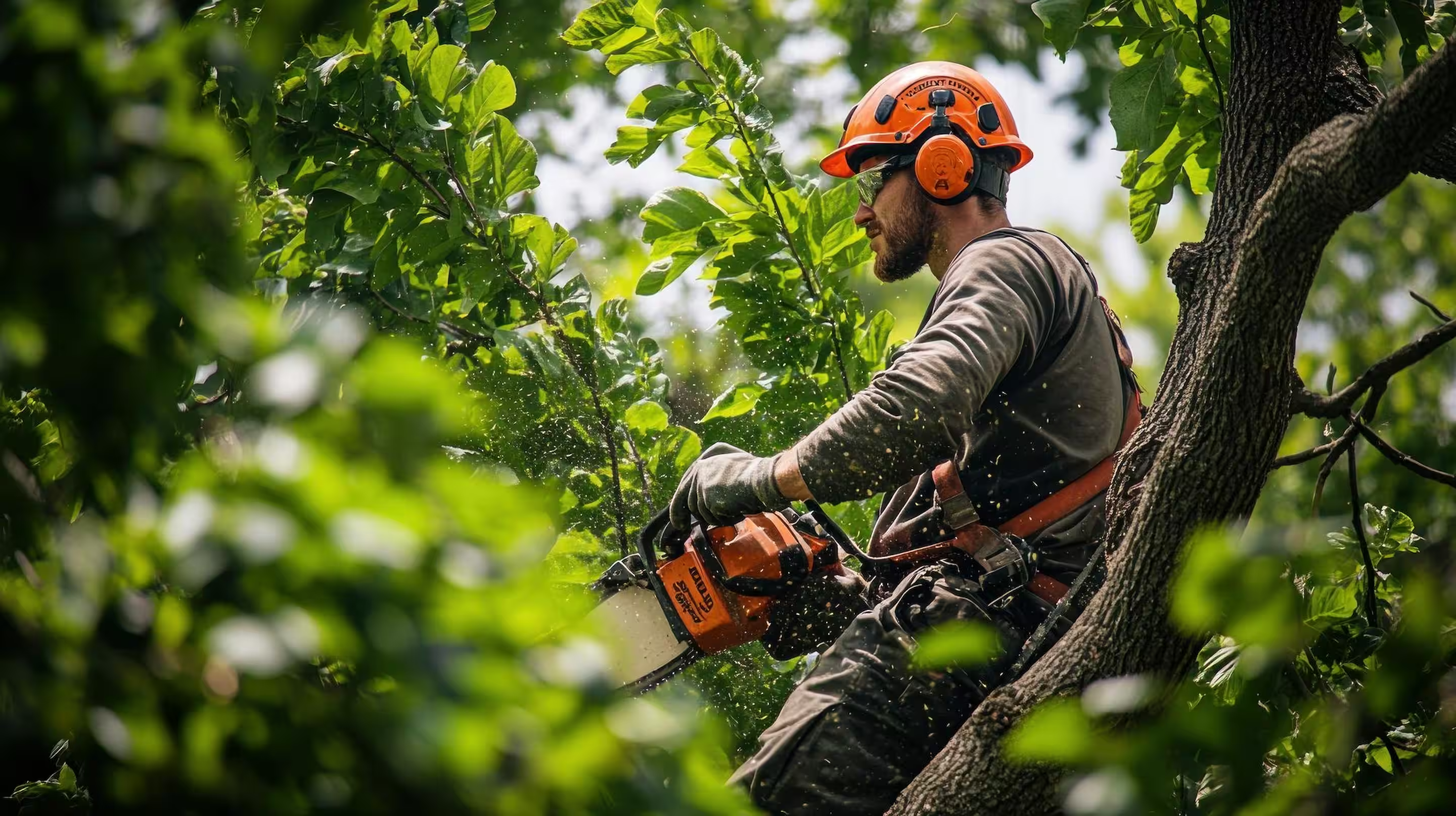
If you have a tree on your property that is worrying you, or if you are planning renovations near established trees, at some point someone will tell you that you need an arborist assessment. But what does that actually involve? What do they check, and why should you care about the outcome?
For most homeowners in the MidCoast, hiring an arborist is not something you do every day. The process can seem unclear, especially when council permits, insurance claims, or development approvals are involved. This guide walks you through exactly what happens during a professional arborist assessment, step by step, so you know what to expect and why each part matters.
Whether you are in Taree, Forster, Wingham, or anywhere across the MidCoast, the process follows the same professional standards. Understanding it puts you in a stronger position to make good decisions about your trees, your property, and your legal obligations.
There are several common situations where a professional tree assessment becomes necessary. Some are obvious, and others catch people by surprise.
In each of these situations, the arborist assessment provides the objective, professional evidence you need to make decisions, satisfy council, or protect yourself legally.
The word "arborist" covers a wide range of skill levels. In an unregulated industry, the qualifications a person holds are the most reliable way to judge their expertise. Getting this wrong can cost you time and money.
An AQF Level 3 arborist is trained in the hands-on work of tree care: climbing, pruning, and removal. They hold a Certificate III in Arboriculture and carry the skills needed to safely carry out physical tree work. However, they are generally not qualified to write formal reports for council submissions, development applications, or legal matters.
An AQF Level 5 arborist holds a Diploma of Arboriculture, which includes in-depth study of tree biology, soil science, pest and disease management, and arboricultural law. This is the level MidCoast Council requires for permit applications involving significant trees, development approvals, and any report that may be used in legal proceedings.
Level 5 consulting arborists also carry professional indemnity insurance on top of the standard public liability cover. This protects you if the advice turns out to be incorrect.
Reputable arborists are typically members of professional bodies such as Arboriculture Australia (AA) or the Institute of Australian Consulting Arboriculturists (IACA). IACA membership is particularly notable because it excludes members who also do pruning or removal work. This removes any conflict of interest: an IACA arborist has no financial incentive to recommend work that is not genuinely needed.
At MidCoast Tree Solutions, our arborists hold the qualifications recognised by Arboriculture Australia.
Before an arborist sets foot on your property, they carry out background research to understand the regulatory context.
This desk research saves time on site and ensures the arborist arrives with a clear picture of what regulations apply to your specific property.
The on-site inspection is the core of the assessment. It follows a method called the Visual Tree Assessment (VTA), which is the industry standard for evaluating tree health and safety from the ground.
The arborist examines three main zones of the tree, each of which can reveal different types of problems.
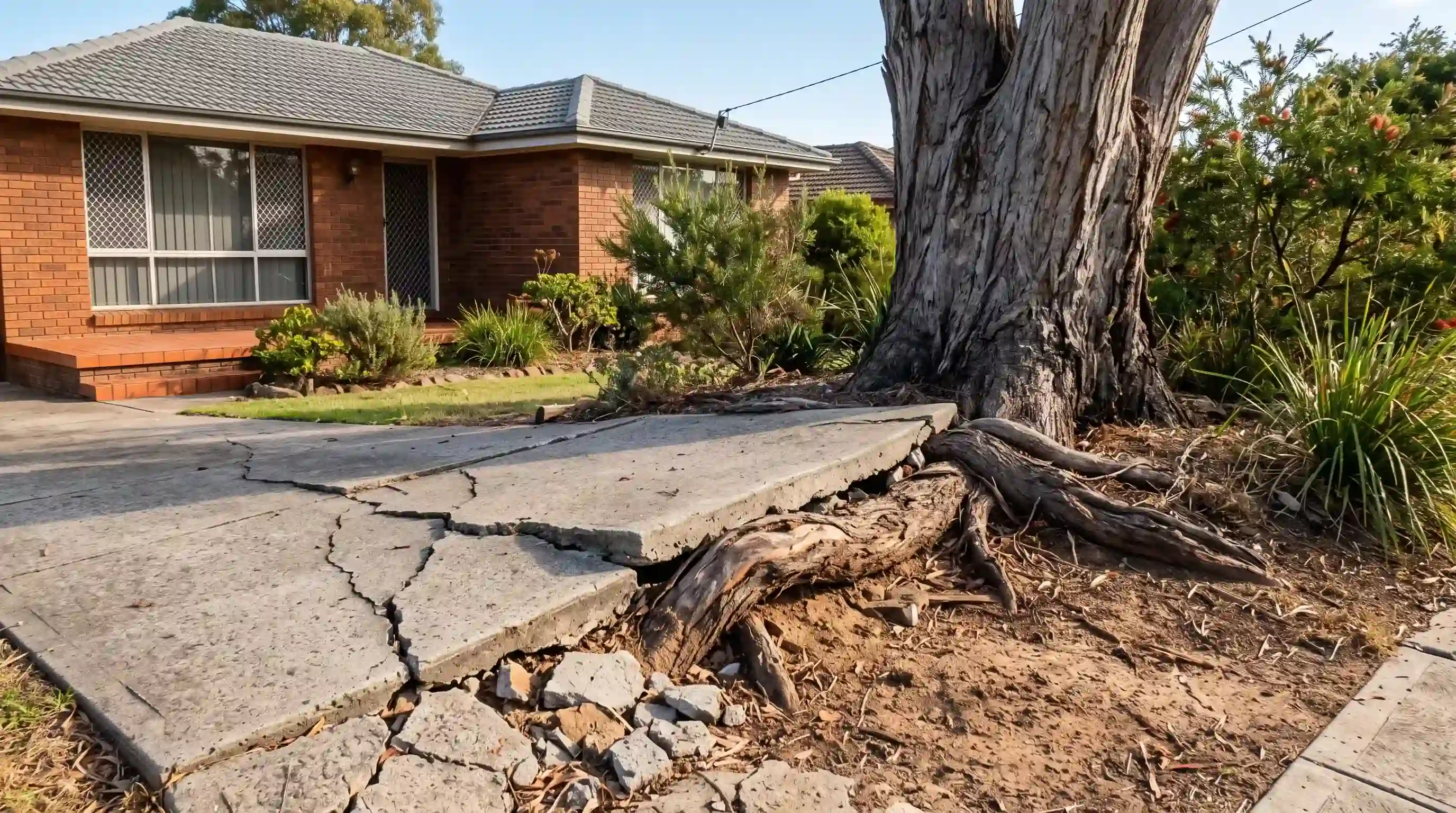
Root problems are especially common across the MidCoast after the May 2025 floods, which saturated soils in the Manning and Wallis Lake catchments for extended periods.
For each tree assessed, the arborist records specific measurements and observations:
Sometimes a tree looks fine from the outside but has serious problems hidden inside. When the visual assessment raises concerns, arborists use advanced tools to get precise data without harming the tree.
Sensors are placed around the trunk and sound waves are sent through the wood. Healthy, solid wood transmits sound quickly, while decayed or hollow sections slow it down. The data is processed into a colour-coded cross-section image (called a tomogram) that shows exactly where the sound wood is and where it has been lost. It tells the arborist whether the tree has enough structural wood left to withstand wind loads safely.
A fine 1.5 mm needle is drilled into the tree, and the device measures the resistance the wood offers. Dense, healthy wood shows high resistance on the graph. Decayed or hollow sections show a sharp drop. This is particularly useful for confirming the thickness of the remaining sound wood wall in a tree that appears to have internal cavities.
For trees near proposed construction, or where root stability is in question, arborists calculate the Tree Protection Zone (TPZ) and the Structural Root Zone (SRZ) under AS 4970-2025. These zones define how close building work can safely come to a tree without compromising its roots.
In the MidCoast, soil analysis is especially important because conditions vary so much across short distances. Sandy coastal soils drain fast but offer less anchorage. Heavy hinterland clays hold water longer, which can suffocate roots after prolonged rain.
These advanced tools turn what might be a guess into a measured, evidence-based assessment. That is the difference between hoping a tree is safe and knowing it.
After the site visit and any diagnostic testing, the arborist prepares a formal written report. This is a professional document that can be submitted to council, used in insurance claims, or presented in legal proceedings.
A standard residential report is typically completed within 5 to 10 business days after the site visit. More complex reports for development applications or multiple trees can take longer. Council then takes up to 28 days to process a permit application once they receive the report.
If you are planning work before storm season or ahead of a building project, factor in these timeframes. Starting early avoids being caught waiting when you need action.
The type of an arborist report depends on why you need it, how many trees are involved, and how complex the situation is.
Illegal tree removal fines in NSW can reach hundreds of thousands of dollars for serious breaches. A tree failure that injures someone or damages a neighbouring property can expose you to personal liability. And an insurance claim without professional documentation may simply be rejected.
Request a quote to find out what an assessment would cost for your specific situation.
MidCoast Council does not require an arborist report for every tree on every property. The requirement depends on whether your property is covered by the Vegetation Management Policy and the type of work you want to do.
If you are not sure whether you need a report, our team can advise you during an initial consultation. We handle the council permit process as part of our service, so you do not need to navigate it alone.
Beyond council compliance, a professional arborist assessment is your strongest form of legal protection as a property owner.
Under NSW law, you have a duty of care to maintain trees on your property so they do not cause foreseeable harm to others. If a tree you own damages a neighbour's property, injures someone, or blocks a road, the question will be: did you know (or should you have known) that the tree was dangerous?
A documented history of professional inspections shows that you took reasonable steps to identify and manage risks. Without that documentation, you are exposed.
After severe weather, insurance companies require professional evidence to process tree-related claims. An arborist report provides the "credible evidence" needed to show whether the failure was unavoidable or the result of neglect. Without a report, your claim may be delayed or denied.
If a dispute about a tree reaches the Land and Environment Court of NSW, both sides will need professional arborist evidence. Having an existing assessment on file means you are prepared rather than scrambling to get one after the fact.
When soil stays waterlogged for days or weeks, the fine feeder roots that anchor and nourish a tree begin to die from lack of oxygen. Even after the water drains away, the damage has been done. Arborists across the MidCoast are now seeing a wave of "deferred failures", where trees that appeared to survive the flood are now rapidly declining or toppling due to root rot caused by pathogens like Phytophthora.
These failures are especially dangerous because they are unpredictable. A tree can look green and healthy for months after a flood, then collapse without warning once its weakened root system can no longer hold.
If your property is near the Manning River, Wallis Lake, Wallamba River, or in any area that experienced significant flooding, a professional assessment is the only way to know whether your trees are genuinely stable or quietly deteriorating underneath.
Our team provides tree risk assessments across the MidCoast, including Taree, Wingham, Forster, Tuncurry, Old Bar, and Hallidays Point. If the situation is urgent, our 24/7 emergency service team can respond immediately.
A professional arborist assessment takes the guesswork out of tree management. Instead of wondering whether a tree is safe, you get a clear, documented answer from a qualified specialist who knows your area, your trees, and the regulations that apply to your property.
At MidCoast Tree Solutions, our team holds qualifications recognised by Arboriculture Australia. Our reports are accepted for permit applications, development approvals, and insurance claims.
We provide:
We service Taree, Forster, Tuncurry, Wingham, Gloucester, Old Bar, Hallidays Point, Harrington, Diamond Beach, Bulahdelah, Pacific Palms, Tea Gardens, Hawks Nest, and all surrounding areas.
We'll visit your property, assess the trees, and give you an honest recommendation at no cost.