How Long Does Tree Removal Take? A MidCoast Homeowner’s Guide
Most homeowners assume tree removal is a one-day job. You search arborist near me, call the first result, they turn up with a chainsaw and a chipper, and by the afternoon the tree is gone. For some trees, that is exactly how it works. But for many others, the real timeline is much longer than the cutting itself.
The total time it takes to remove a tree in the MidCoast region depends on two separate phases. The first is the administrative phase, which covers permits, exemptions, ecological clearances, and any specialist reports that council requires. The second is the physical on-site work, which is the actual cutting, rigging, and cleanup. Depending on your situation, the full process can range from a few hours to several months.
1. The Two Phases of Tree Removal (Quick Overview)
2. The Administrative Phase: Permits, Exemptions, and Approvals
3. When You Don’t Need a Permit at All
4. Ecological Overlays That Extend the Timeline
5. Powerline Clearances and Essential Energy Coordination
6. The Physical Removal: How Long the Actual Work Takes
7. Emergency Tree Removal: When Time Is Critical
8. Neighbour Tree Disputes and the Land and Environment Court
Summary
Key Takeaways
Exempt species and small trees can be removed in as little as one day with no permit wait.
Council permit applications cost $260 and take up to 28 days to process.
Specialist reports (arborist, engineer, ecologist) can add 2 to 6 weeks to the admin phase.
The 10/50 bushfire scheme bypasses council approval entirely in eligible zones.
Nesting wildlife can delay removal by 4 to 8 weeks during breeding season (August to January).
Physical on-site removal typically takes 30 minutes (small trees) to 3 days (very large or complex).
Emergency tree removal can proceed immediately but requires a retrospective permit within 72 hours.
Neighbour tree disputes through the Land and Environment Court resolve within about 3 months.
1. The Two Phases of Tree Removal (Quick Overview)
Every tree removal job in the MidCoast has two distinct phases. Understanding both helps you plan realistic timeframes and avoid costly surprises.
Phase 1: Administrative. This is where you confirm whether your property is mapped under MidCoast Council’s Vegetation Management Policy, determine if your tree qualifies for an exemption, or lodge a formal council permit application. Depending on your situation, this phase can take anywhere from zero days (unmapped property or 10/50 bushfire entitlement) to several months (ecological overlays, specialist reports, or court disputes).
Phase 2: Physical on-site work. This is the actual cutting, rigging, chipping, and cleanup. For a small tree under 5 metres, the physical work might take 30 minutes. For a large hardwood over 20 metres in a tight residential setting with negative rigging, it could take 1 to 3 days.
2. The Administrative Phase: Permits, Exemptions, and Approvals
The administrative phase is usually the longest part of the process. It begins when you check whether your property falls within the council’s Vegetation Management Policy mapping, which covers roughly 8,800 properties and about 12,000 hectares across the MidCoast region.
If your tree qualifies for an exemption under Schedule 3 (exempt species) or Schedule 4 (small trees, dead trees, minor pruning), you can submit a self-assessment through the council’s online system. A qualified arborist near me can confirm which pathway applies to your tree. Approval is typically issued within 1 to 2 business days. Once approved, you must display the exemption certificate on your front boundary fence for at least two days before and two days after the work is done.
If no exemption applies, you need to lodge a Vegetation Permit Application. The application fee is $260 (non-refundable) and the council has up to 28 days to process it. During this time a council officer will inspect your property and assess the tree against the policy criteria. The permit, once approved, is valid for 12 months.
During their assessment, the council can pause the 28-day clock and request additional reports at your expense. Common requests include a Level 5 arborist report (to assess structural integrity or disease), a plumber’s report (for root damage to sewer or water mains), or a structural engineer’s report (if roots or branches are affecting a building’s foundations). Each of these reports takes time to commission and complete, adding 2 to 6 weeks to the total administrative timeline.
Our team includes AQF Level 5 Consulting Arborists who can prepare these reports in-house, which helps reduce the wait. Competitive arborist prices start from a site visit and assessment. Request a free quote to find out how we streamline this process.
Several pathways let you bypass the council permit process entirely. If any of these apply, the administrative phase effectively drops to zero and you can proceed straight to the physical work.
The 10/50 Bushfire Vegetation Clearing Scheme
If your property is in a designated bushfire-prone area, the NSW Rural Fire Service 10/50 scheme lets you remove trees within 10 metres of your home and clear understorey vegetation within 50 metres, without any council approval. You need to check your eligibility on the RFS online portal on the day you plan to do the work, because the maps are updated regularly. Our fire and hazard management team can verify eligibility and carry out the clearing safely.
If your property is not mapped under the Vegetation Management Policy, the council’s tree permit rules do not apply. Larger regional towns are generally excluded from the mapping. If you live in the main urban area of Forster, Taree, Gloucester, Tea Gardens, or Bulahdelah, you likely do not need a permit. You can arrange tree removal straight away.
Even on mapped properties, Schedule 3 species can be removed without a formal permit. Our tree removal service team can identify these species on site. The full Schedule 3 list and self-assessment steps are covered in our Council Approval guide. The most common exempt trees include:
Camphor Laurel (Cinnamomum camphora), one of the most common exempt trees across the region.
Cootamundra Wattle (Acacia baileyana), highly invasive outside its small native range.
Golden Wreath Wattle (Acacia saligna), aggressively colonises disturbed ground.
Bunya Pine (Araucaria bidwillii), produces heavy cones that pose a genuine safety hazard.
Weeping Fig and Rubber Tree (Ficus species), with aggressive root systems known to damage foundations and sewer mains.
Trees under 5 metres tall or with a trunk circumference under 600 millimetres (measured at 1 metre above ground level) are generally not protected, unless they are a threatened species or hollow-bearing. Separately, trees within 3 metres of an approved building under a Complying Development Certificate (CDC) can often be removed as part of the approved building works without a separate vegetation permit. If you are unsure whether a council permit is needed for your small tree, our team can assess it on site. For smaller jobs, our tree pruning services may be all you need.
If your property sits within an ecological overlay or contains habitat for threatened species, the administrative timeline can stretch well beyond the standard 28 days. This is one of the most common reasons tree removal projects stall in the MidCoast.
Koala Habitat Areas
Properties in Hawks Nest, Tea Gardens, Smiths Lake, and surrounding coastal villages often fall within mapped koala habitat. The council’s Biodiversity Framework 2021-2030 identifies primary koala feed tree species that receive the highest level of protection. These include Swamp Mahogany (Eucalyptus robusta), Tallowwood (Eucalyptus microcorys), Forest Red Gum (Eucalyptus tereticornis), and Small-fruited Grey Gum (Eucalyptus propinqua).
If your tree is a primary koala feed species, the council may require a Species Impact Statement before approving removal. Preparing this document involves ecological surveys that can take 4 to 8 weeks depending on the season and site conditions.
If the tree you want to remove contains active bird nests or is likely to be used during the breeding season (August through January), the council can impose a delay of 4 to 8 weeks until the nesting cycle is complete. This is particularly common for hollow-bearing trees, which provide critical habitat for species like powerful owls, glossy black cockatoos, and various parrot species.
If a tree contains hollows that are home to possums, gliders, or microbats, the council may require a wildlife relocation through WIRES (NSW Wildlife Information, Rescue and Education Service) before work can begin. This adds time for the WIRES volunteers to attend the site, assess the animals, and relocate them safely. During busy periods, this can take 1 to 2 weeks to coordinate.
Planning your tree removal outside breeding season (February to July) is the simplest way to avoid these delays. If you are searching for an arborist near me who understands local wildlife requirements, our team can advise you on the best timing. Request a free assessment.
5. Powerline Clearances and Essential Energy Coordination
Trees growing near overhead power lines add another layer of coordination to the timeline. In the MidCoast region, the electricity network is managed by Essential Energy, and they have strict clearance zones that affect how and when tree pruning and removal can happen.
Clearance Zones
Essential Energy requires minimum clearance distances between vegetation and power lines. For low-voltage lines, the minimum clearance is generally 0.5 metres. For high-voltage lines (11kV and above), the required clearance increases to 1.5 metres or more depending on the voltage. No work should be carried out within these zones without Essential Energy coordination.
There is an important distinction that affects both cost and timing. Trees that have naturally propagated (self-seeded) near power lines are trimmed by Essential Energy at no cost to the property owner, as part of their regular vegetation management programme. However, trees that were deliberately planted by the property owner are the owner’s responsibility. You will need to arrange and pay for the trimming or removal yourself.
If your tree requires Essential Energy to attend the site (for example, to temporarily disconnect or insulate power lines while the tree is removed), the coordination can add 2 to 4 weeks to your timeline. This is on top of the time needed for your vegetation permit application. During storm season or periods of high demand, this wait can be longer. Our tree cutting services team regularly coordinates with Essential Energy across the MidCoast, from Wingham to Nabiac, and we can manage this liaison on your behalf.
6. The Physical Removal: How Long the Actual Work Takes
Once all administrative approvals are in place, the physical on-site work is usually the fastest part of the process. The time it takes depends on the tree’s size, species (hardwood vs softwood), location, and access conditions. Here is what to expect for standard residential tree removal jobs across the MidCoast.
Tree Size and Cutting Time
Tree Size
Height
Typical Cutting Time
Cost Range
Small
Under 5 metres
30 minutes to 2 hours
$500 – $900
Medium
5 to 10 metres
2 to 5 hours
$800 – $2,000
Large
10 to 20 metres
5 to 10 hours (1 day)
$2,000 – $5,000
Very large
Over 20 metres
1 to 3 days
$4,000 – $8,000+
Factors That Affect Cutting Time
Negative rigging. In tight residential spaces where branches cannot free-fall, arborists use negative rigging techniques to lower sections on ropes. This is slower but essential for protecting houses, fences, sheds, and gardens. A large tree in a tight backyard in Tuncurry or Old Bar will take significantly longer than the same tree in an open paddock.
Hardwoods vs softwoods. Dense hardwood species like ironbark, tallowwood, and blackbutt take longer to cut through and are heavier to handle. Softwoods and palms are faster. The species also affects the cost to take down a tree because of the extra wear on equipment and the additional labour required.
Access. If a crane, elevated work platform, or specialised machinery is needed, setup and pack-down time adds to the day. Properties in Diamond Beach, Pacific Palms, and Hallidays Point with steep driveways or narrow access can require additional planning.
Stump Grinding
Stump grinding is typically done as a separate step after the tree is removed. Make sure your vegetation permit covers stump removal before grinding begins. A standard tree trunk grinder takes 30 minutes to 2 hours to process a stump, depending on size, root spread, and whether there are underground services nearby. Many homeowners choose tree removal stump removal on the same day to avoid a second visit. We offer competitive tree trimming prices and stump grinding packages across the MidCoast.
Waste Removal
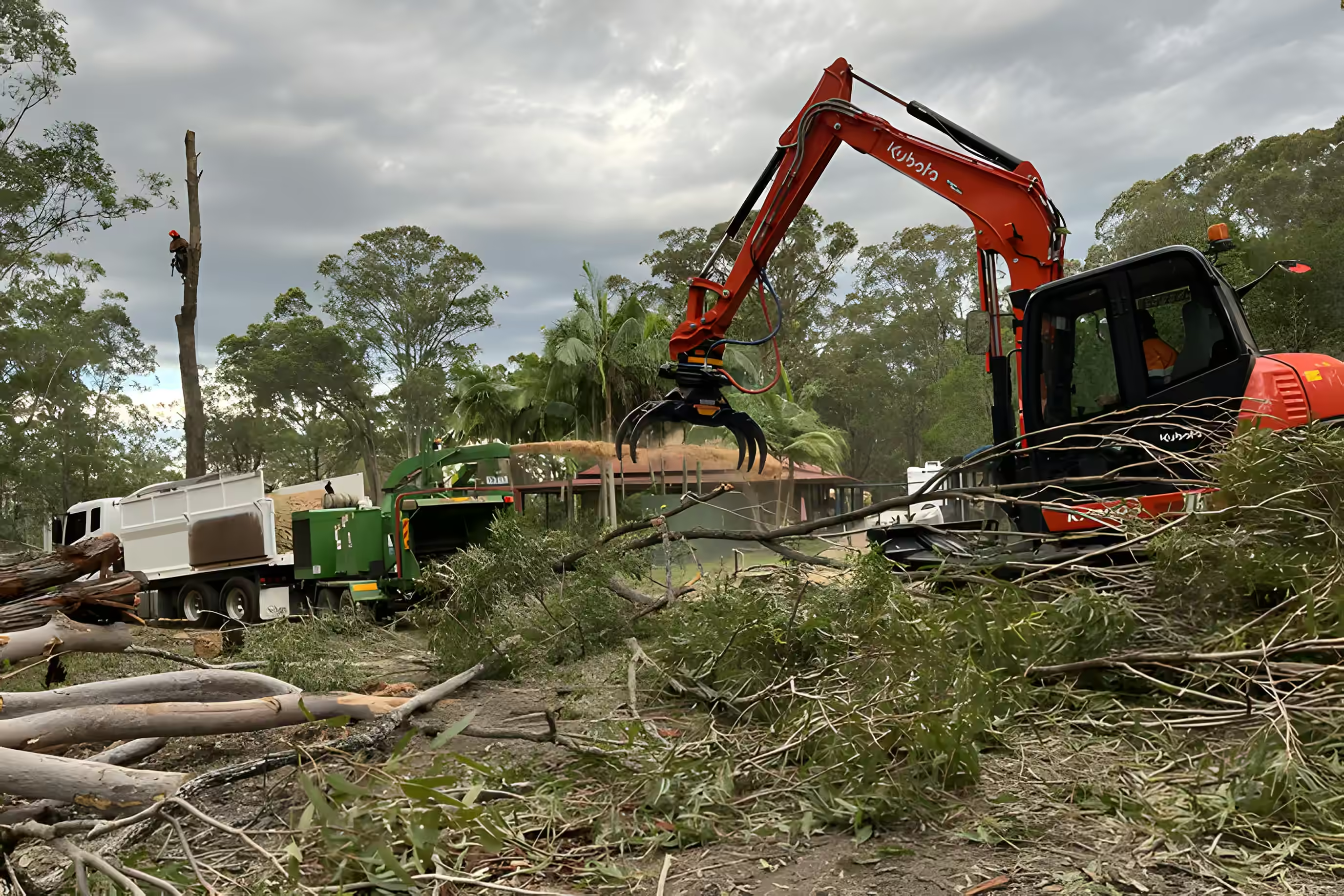
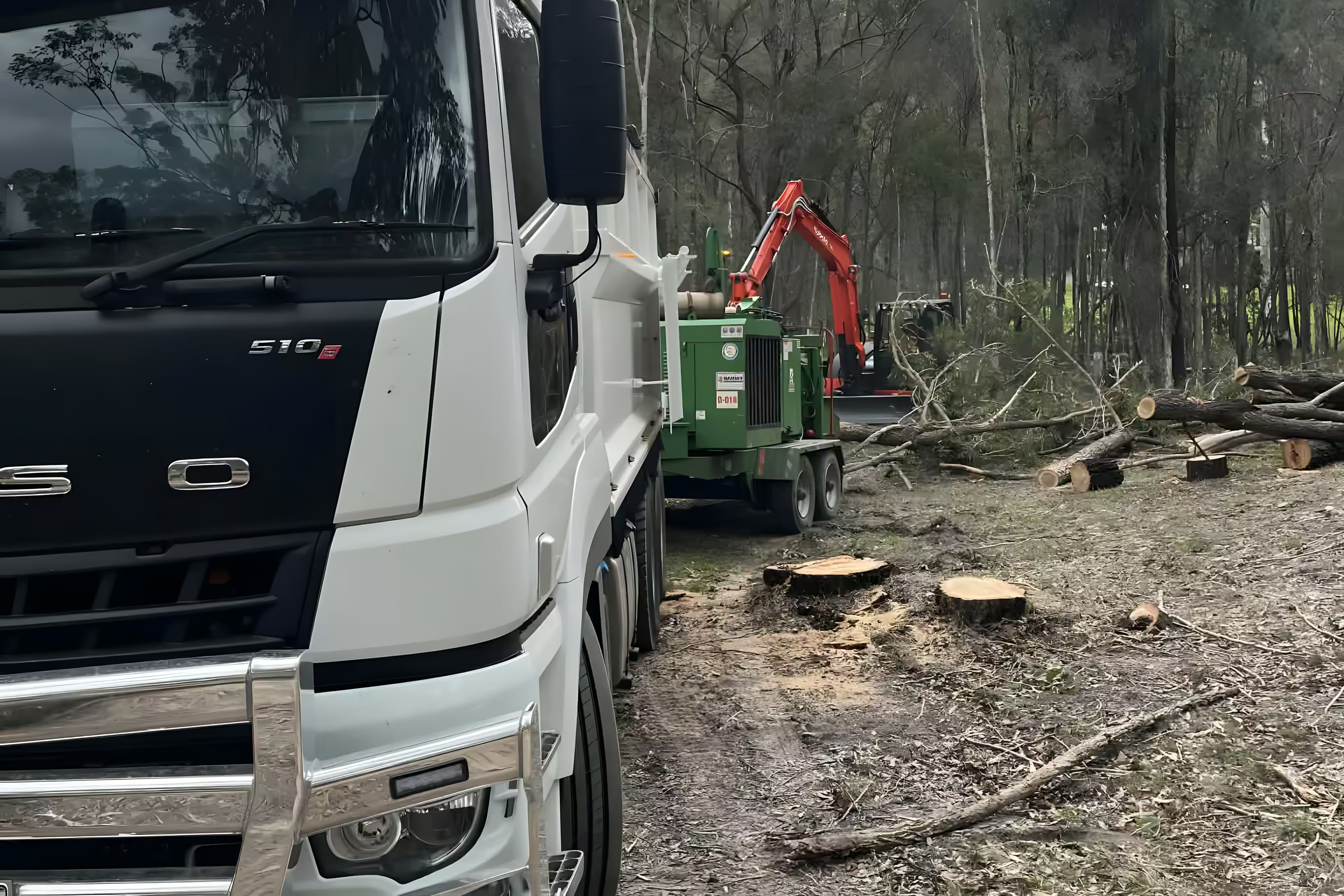
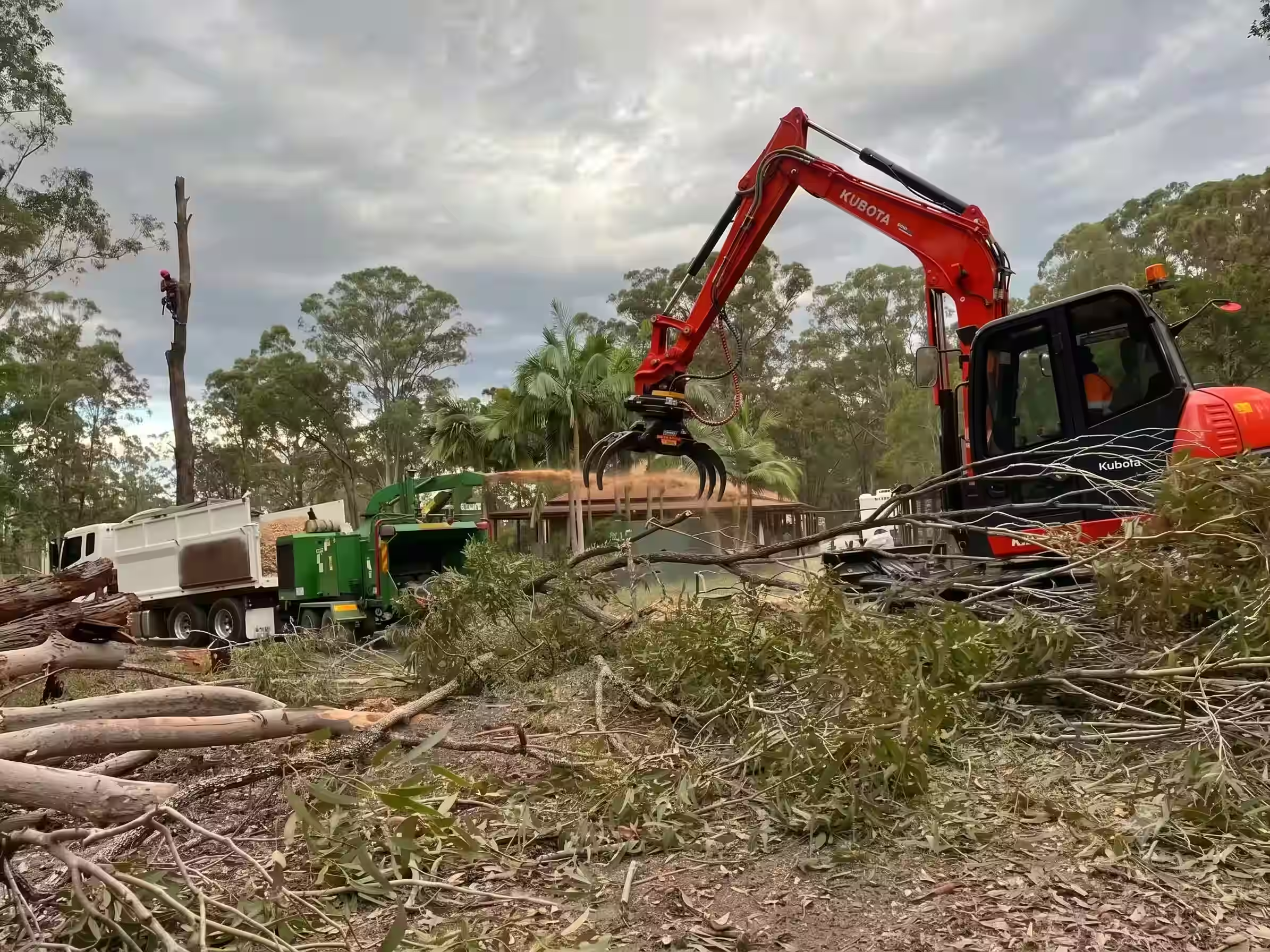
For small jobs, waste can go into your council FOGO (Food Organics and Garden Organics) bin. For larger removals, we bring industrial chippers that process branches and foliage on site. Logs are either removed for milling, firewood, or disposal. On commercial and land clearing jobs, waste removal can add half a day to a full day depending on volume.
7. Emergency Tree Removal: When Time Is Critical
When a tree fails during a storm or poses an immediate danger to life or property, the normal administrative timeline goes out the window. Emergency tree services can proceed immediately without waiting for council approval. This is the one scenario where physical work happens first and paperwork follows.
What Qualifies as an Emergency
Emergency removal is legally limited to making the immediate danger safe. Common situations include:
A tree or large branch has fallen onto a house, car, fence, or road.
A tree trunk has split and is at immediate risk of falling onto an occupied area.
Storm damage has left a tree leaning dangerously toward a building or power line.
A root plate has lifted, indicating the tree is about to uproot completely.
In these cases, the SES (State Emergency Service) or RFS (Rural Fire Service) may attend first to make the area safe. For full removal and cleanup, you need a qualified arborist near me who offers emergency tree services and can respond quickly.
The 72-Hour Retrospective Permit Rule
If your property is mapped under the Vegetation Management Policy and the emergency results in the full removal of a protected tree, you must lodge a retrospective Vegetation Permit Application with the council within 72 hours. To support your application, you need:
Evidence required: SES/RFS reference number, timestamped photos of the hazard, and a Level 5 arborist report confirming the tree could not be saved. Our council permit page has the full retrospective application walkthrough.
MidCoast Tree Solutions provides 24/7 emergency tree services and we document every emergency callout with photos and arborist notes. This makes the retrospective permit process straightforward. If you need emergency arborists near me in the MidCoast, we handle the paperwork so you can focus on repairs. We service Smiths Lake, Stroud, and surrounds.
Emergency Timeline Summary
On-site response: Same day. Emergency arborists can typically attend within hours of a callout.
Physical work: Immediate. Make-safe work starts as soon as the crew arrives.
Retrospective permit: Must be lodged within 72 hours of the emergency work.
Council processing: The retrospective application follows the standard 28-day assessment timeframe, but the tree has already been safely removed.
8. Neighbour Tree Disputes and the Land and Environment Court
If the tree you want removed belongs to your neighbour, the timeline becomes significantly longer. Neighbour tree disputes are governed by the Trees (Disputes Between Neighbours) Act 2006 and are heard in the NSW Land and Environment Court (Class 2 jurisdiction).
Step 1: Written notice to your neighbour (Day 1). Before you can file an application with the court, you must give your neighbour at least 21 days written notice outlining the issue and what you want done. This notice must specify the tree, describe the damage or risk it is causing, and state what orders you will seek from the court.
Step 2: File the court application (Day 22+). If the neighbour does not resolve the issue within the 21-day notice period, you can file an application with the Land and Environment Court.
Step 3: Preliminary hearing by phone (2 to 3 weeks after filing). The court schedules a preliminary hearing, usually conducted by phone, where a Commissioner discusses the case with both parties and explores the possibility of agreement without a full hearing.
Step 4: On-site final hearing (4 to 5 weeks after preliminary hearing). If the matter is not resolved at the preliminary stage, the court schedules an on-site hearing where a Commissioner inspects the tree and hears evidence from both parties. Arborist reports are usually required at this stage.
Step 5: Court orders (typically within days of hearing). The Commissioner issues orders, which may include removal, pruning to specific standards, or no action. The total process from initial notice to final orders typically takes about 3 months.
The court weighs several factors when deciding whether to order tree removal:
Whether the tree has caused, is causing, or is likely to cause damage to property.
Whether the tree poses a risk of serious injury to any person.
Whether the tree is a significant habitat tree or has heritage value.
Whether the applicant has taken reasonable steps to resolve the matter directly with the tree owner.
Shirlaw v McClenaughan [2025] NSWLEC 1803: A Practical Example
In Shirlaw v McClenaughan [2025] NSWLEC 1803, an Oyster Bay homeowner applied to the Land and Environment Court after a branch from a neighbour’s blackbutt tree fell through their kitchen ceiling. Commissioner Galwey refused the application and declined to make any orders. The respondents had already completed professional pruning that significantly reduced the tree’s overhang, and the Court was satisfied the tree was unlikely to cause further damage in the near future. This case illustrates a key principle: the court will not order tree work unless there is clear, ongoing risk that cannot otherwise be managed.
If you are dealing with a neighbour’s tree that is damaging your property, start by getting a professional arborist assessment to document the issue. A clear, independent report from a qualified arborist strengthens your position whether you resolve the matter privately or through the court. Our tree pruning and tree removal team can also advise on whether the tree is protected under the Vegetation Management Policy.

.avif)