Stump Grinding vs. Full Stump Removal: Which Does Your Property Need?
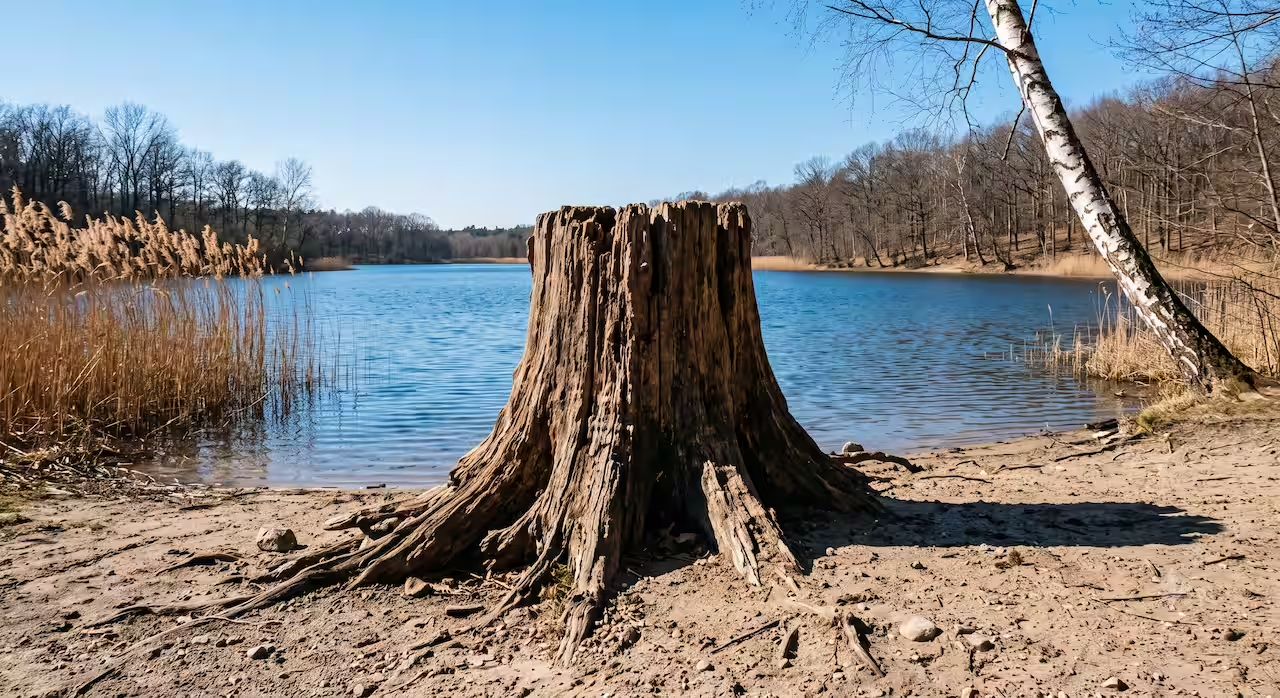
After a tree removal job, most homeowners are left with the same question: what do you do about the stump? It sits there in the middle of your lawn, too low to trip over but too high to mow around. It looks harmless. But beneath the surface, a decaying stump is actively attracting termites, locking up soil nutrients, and blocking future landscaping plans.
The two professional options are stump grinding and full stump removal. They sound similar but they are completely different operations with different machinery, different costs, and different outcomes for your property. Choosing the wrong one can mean wasted money, subsidence under a new driveway, or a fresh termite colony 50 metres from your house.
1. Stump Grinding vs. Full Removal: The Key Differences
2. When Stump Grinding Is the Right Choice
3. When You Need Full Stump Removal
4. The Termite Factor: Why Stumps Are a Serious Risk in MidCoast NSW
5. What Happens to Your Soil After Grinding
6. Underground Services: The Hidden Risk Beneath Every Stump
7. Cost Comparison: Grinding vs. Full Removal
8. How to Decide: A Quick Decision Framework
Summary
Key Takeaways
Stump grinding shaves the stump to 150 to 300 mm below ground. It is fast, affordable ($230 to $600), and works for most residential properties.
Full stump removal excavates the entire root ball to 1 to 2 metres deep. It costs $900 to $1,850+ and is essential for construction sites.
Decaying stumps attract subterranean termites that forage up to 50 metres from their nest, putting nearby homes at risk.
One in three Australian homes will experience termite activity. Standard insurance does not cover the damage.
Fresh wood chips from grinding cause nitrogen drawdown in the soil. Remove the grindings and add nitrogen fertiliser before replanting.
Always lodge a Before You Dig Australia enquiry before any stump work to avoid hitting underground gas, water, or electrical lines.
MidCoast Council's Vegetation Management Policy covers roots as well as canopy. Damaging live roots without a permit is a serious offence.
1. Stump Grinding vs. Full Removal: The Key Differences
Both methods deal with the same problem, a leftover tree stump, but they work in fundamentally different ways. Understanding the difference upfront will save you time and money. If you have recently had tree cutting services completed on your property, the stump decision is the natural next step.
Stump Grinding
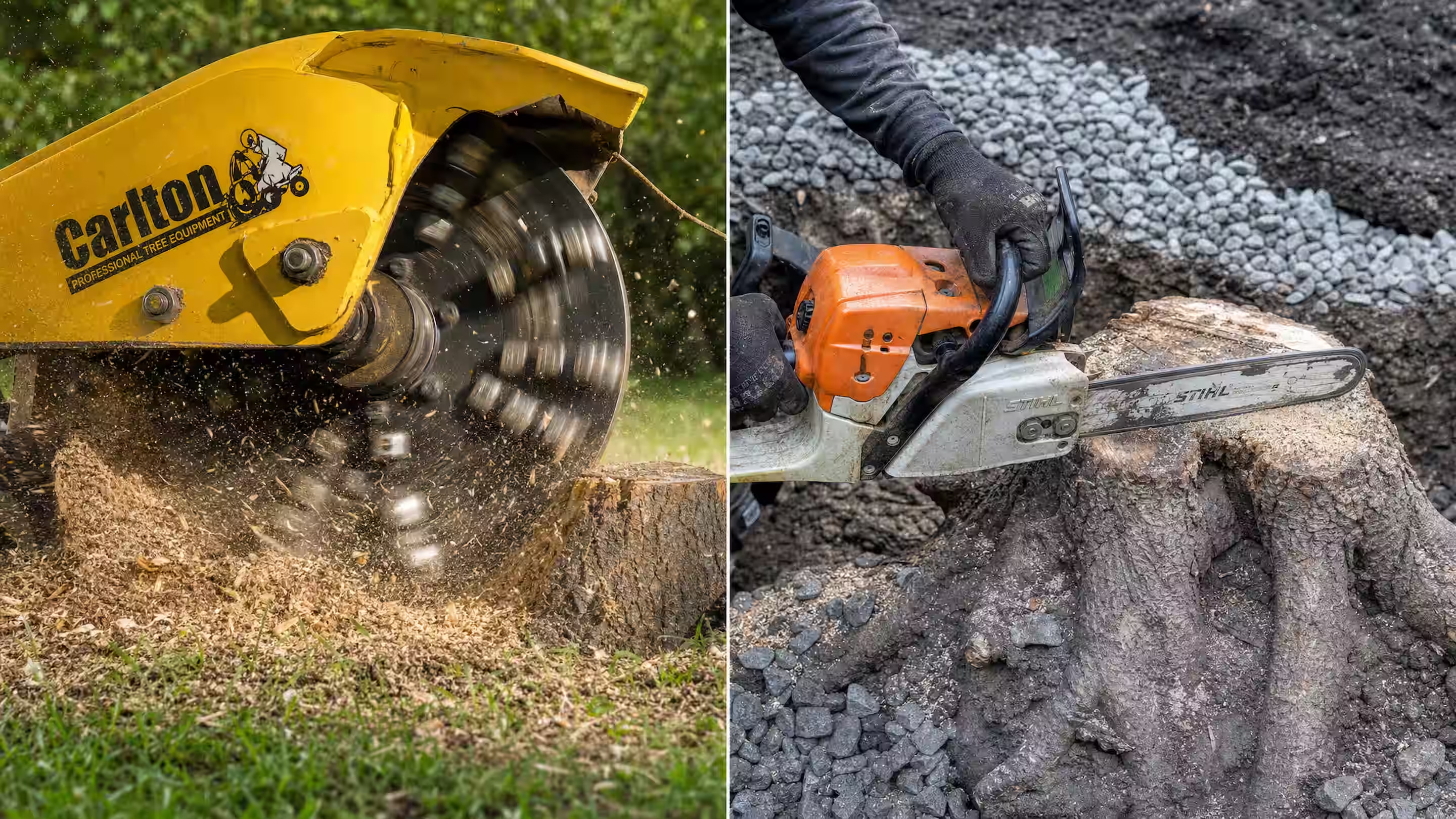
A tree trunk grinder is a specialised machine with a high-speed rotating cutting wheel fitted with carbide-tipped teeth. The operator sweeps the wheel across the stump, shaving the wood into a mixture of fine chips and soil. A standard residential grind reaches 150 to 200 mm below ground level, which is enough for lawn or garden bed restoration. For properties planning driveways or paving, a deeper construction grind to 300 to 450 mm is used. The key point is that the bulk of the root system stays in the ground. Only the visible stump and the top portion of the root crown are removed.
Portable, track-mounted grinders can fit through narrow side gates (under 800 mm wide) and work safely on slopes up to 15 degrees. This makes stump grinding the go-to option for tight suburban backyards across Tuncurry, Old Bar, and Diamond Beach.
Full Stump Removal (Excavation)
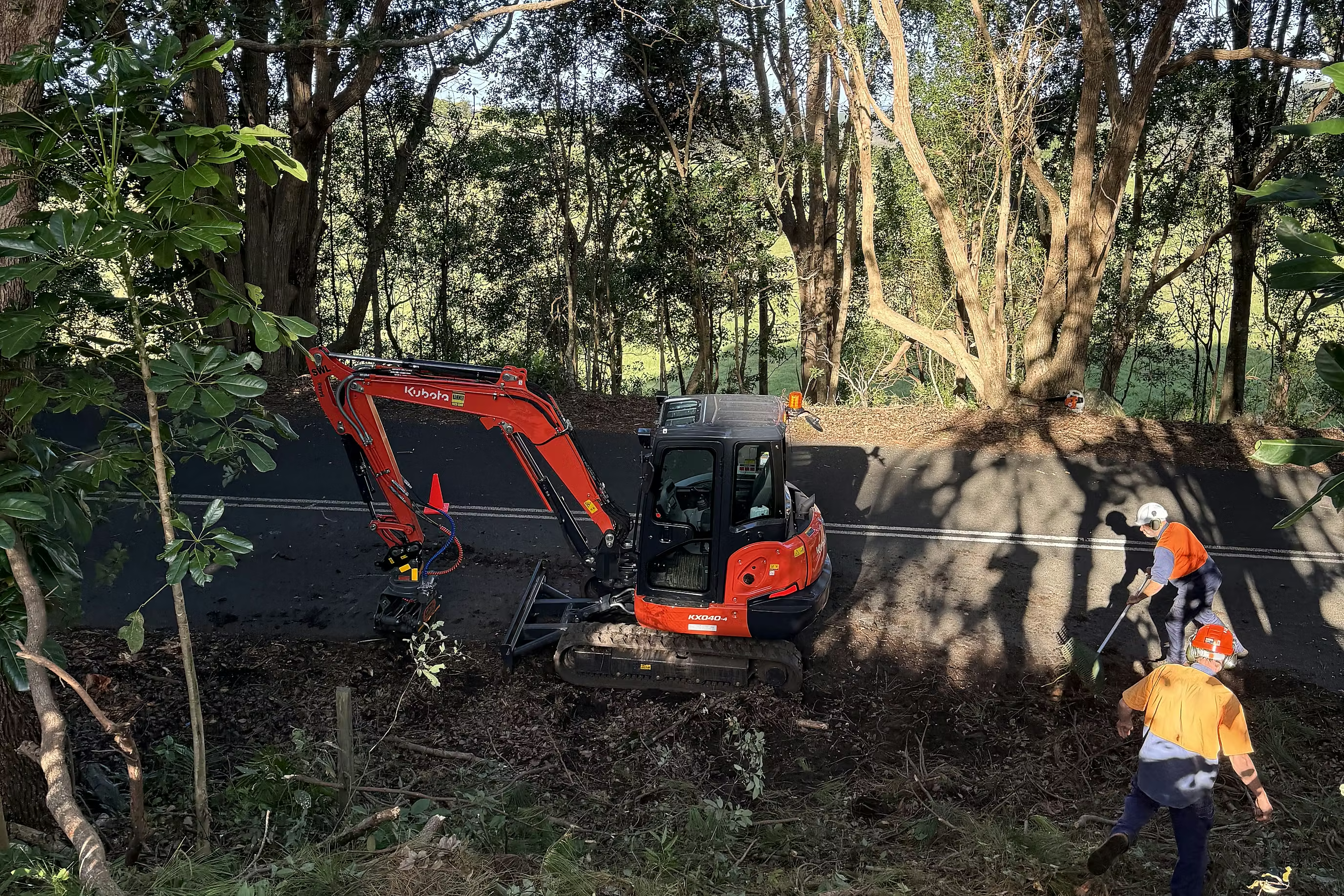
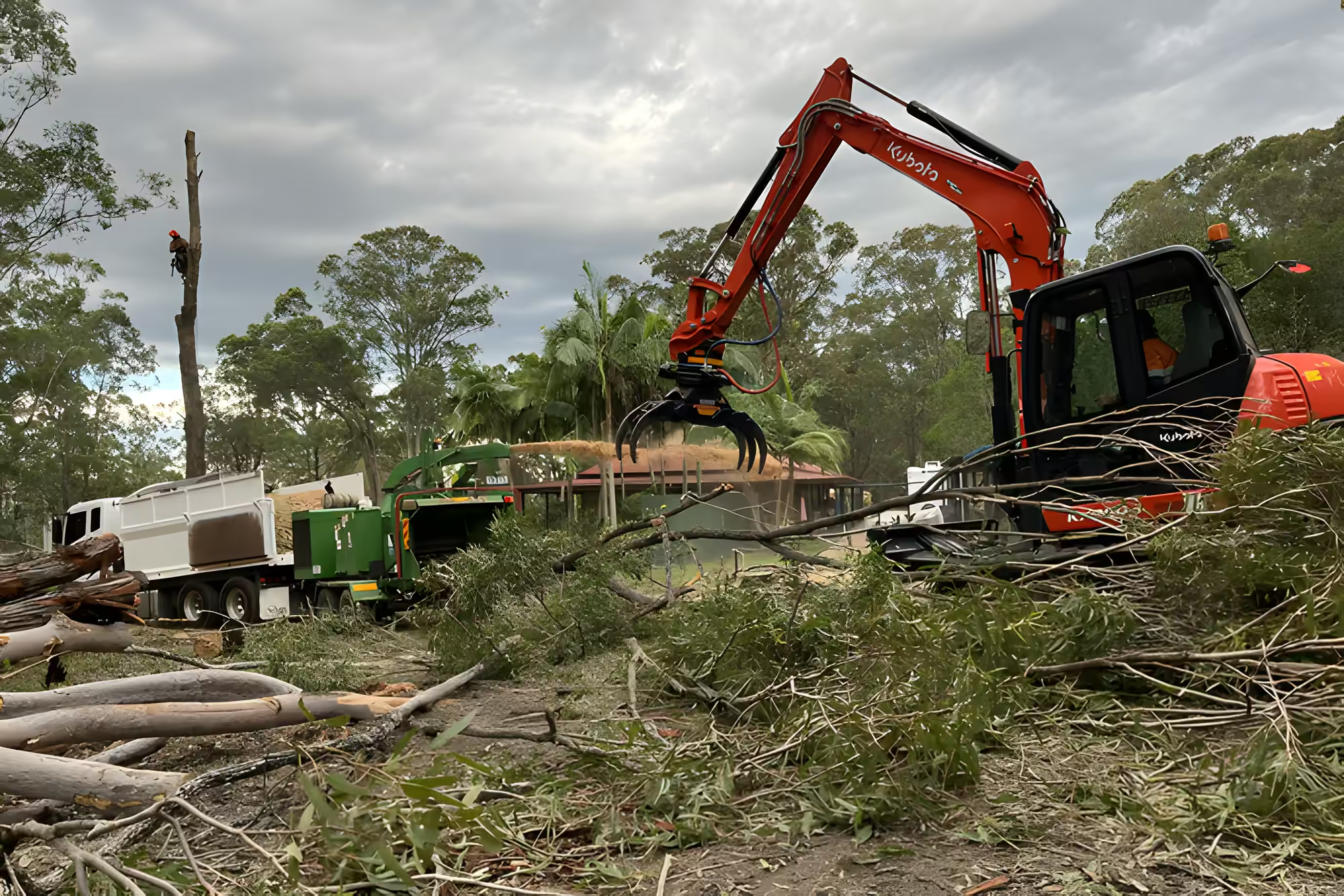
Full removal is a civil engineering operation. A mini-excavator, backhoe, or Bobcat with hydraulic ripping claws digs out the entire root ball, the central taproot, and the major lateral roots. The excavation depth depends on the species but commonly reaches 1 to 1.5 metres, sometimes deeper for trees with aggressive tap root systems. The process leaves a large hole that must be backfilled with clean structural fill and compacted to prevent subsidence.
Because the excavator needs room for arm swing and debris stockpiling, this method is disruptive. It tears up lawns, damages garden beds, and is generally unsuitable for tight residential settings next to fences, retaining walls, or established gardens.
Side-by-Side Comparison
Factor
Stump Grinding
Full Stump Removal
Depth
150 to 450 mm below ground
1.0 to 2.0 metres (species-dependent)
Machinery
Track-mounted or pedestrian stump grinder
Excavator, Bobcat, or backhoe
Surrounding damage
Low; limited to stump diameter
High; extensive lawn and soil disturbance
Root system
Stays in the ground (decays over 5 to 10 years)
95 to 100% extracted
Backfill needed
Minor; woodchip-soil mix
Major; structural fill and compaction
Best for
Lawns, gardens, aesthetic clearing
Foundations, driveways, pools, retaining walls
Typical cost (60 cm stump)
$230 to $600
$900 to $1,850+
2. When Stump Grinding Is the Right Choice
For the vast majority of residential properties in the MidCoast, stump grinding is the right answer. It is faster, cheaper, and far less disruptive than full excavation. Here are the most common situations where grinding is all you need.
Lawn Restoration and Garden Beds
If you simply want to level the area and lay new turf or plant a garden bed, a standard grind to 150 to 200 mm below grade is sufficient. The hole is filled with a soil and chip mixture, topped with fresh topsoil, and you can turf or plant within a few weeks. This is the most common reason homeowners in Nabiac, Pacific Palms, and Lansdowne call for our stump grinding service.
Termite Risk Reduction
A decaying stump is one of the most attractive food sources for subterranean termites on any property. Grinding pulverises the stump and collapses the subterranean galleries that termites build inside the wood. The fine chips dry out quickly and lose the dense structural integrity needed to support a colony. For most properties, grinding eliminates the primary pest risk without the cost of full excavation. We cover termites in detail in Section 4.
Multiple Stumps on One Property
After storm damage or a large-scale tree removal job, you might have three, five, or even ten stumps scattered across your block. Grinding multiple stumps in a single visit is highly efficient because the grinder moves quickly between them. A skilled operator can process a standard 60 cm softwood stump in under 30 minutes. Full excavation of multiple stumps would require days of earthmoving and a much larger budget.
Same-Day Tree Removal and Stump Grinding
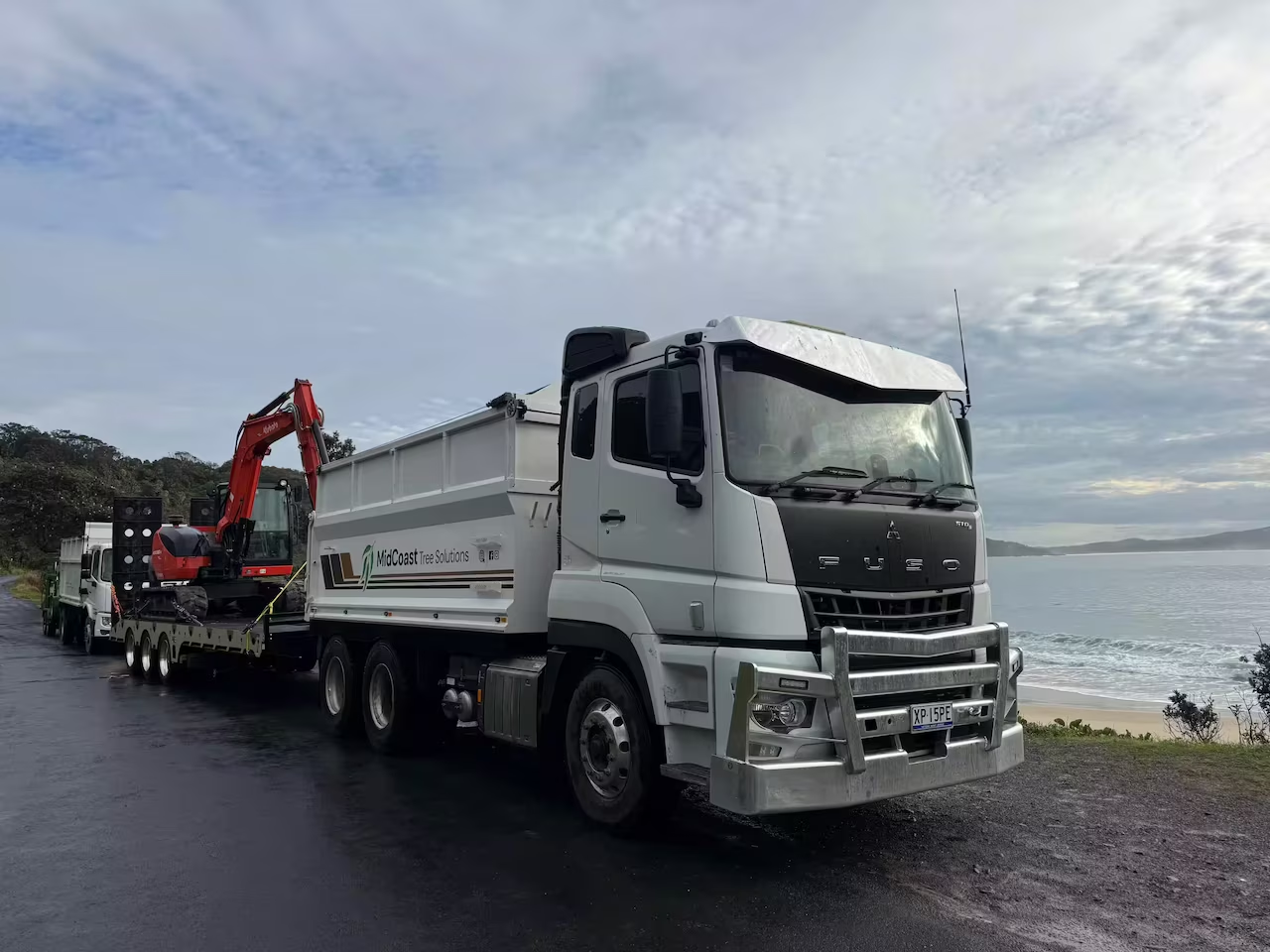
Many homeowners choose tree removal stump removal on the same day to avoid a second visit and keep the cost to take down a tree as low as possible. When you book tree removal with MidCoast Tree Solutions, we can bring the tree trunk grinder on the same truck. The arborist completes the felling and chipping, then the grinder finishes the stump before the crew leaves. One visit, one invoice, no leftover stump.
3. When You Need Full Stump Removal
Full stump removal costs more and causes more disruption, but there are situations where grinding simply will not do the job. If any of the following apply to your property, excavation is the better investment.
Construction and Civil Works
If you are planning to build a house extension, retaining wall, swimming pool, concrete driveway, or any load-bearing structure over or near the stump location, full removal is essential. Leaving a root ball underground beneath a slab or footing creates a ticking clock for subsidence. As the wood decays over 5 to 10 years, the soil above it settles unevenly. This can crack foundations, buckle driveways, and destabilise retaining walls.
For land clearing projects across the MidCoast, particularly in growth corridors around Taree and Harrington, full extraction is almost always specified by engineers and surveyors.
Replanting in the Same Spot
If you want to plant a new tree in the exact location of the old one, grinding will not give you enough clearance. The remaining root network forms a dense underground barrier that prevents new roots from expanding. As the old roots decay over years, they create anaerobic pockets and shift the soil pH, leading to root rot in your new tree. Full removal clears the underground space entirely. Once the void is backfilled with fresh, nutrient-balanced topsoil and compacted, a new tree can go straight in.
If you are happy to offset the new planting by 1.5 to 3 metres from the original spot, grinding is fine and the old root system will decompose naturally over time.
Invasive Root Species
Some species are notorious for resprouting aggressively from root fragments left in the ground after grinding. If your stump comes from one of these trees, full extraction is the only way to guarantee it does not grow back.
4. The Termite Factor: Why Stumps Are a Serious Risk in MidCoast NSW
This is the section that should concern every property owner in the MidCoast. The combination of warm, humid coastal weather, consistent rainfall, and extensive native bushland makes our region one of the highest termite risk zones in Australia. The entire MidCoast Local Government Area sits within the National Construction Code's high to very high termite risk classification.
CSIRO research shows that approximately one in three Australian homes will experience termite activity during the building's lifespan. Subterranean termites cause over $1.5 billion in structural damage across Australia every year. The average cost to repair a moderate infestation ranges from $7,000 to $25,000, while severe structural failures can exceed $100,000.
A dead tree stump undergoes natural fungal decay. As the cellulose and lignin break down, the wood softens and retains moisture, turning the stump into an ideal nesting site. Subterranean termites continuously forage through the top 300 mm of soil, searching for the moisture and chemical signatures that decaying wood emits.
Once they locate a decaying backyard stump, they establish a satellite nest. From this base, they build protected mud shelter tubes across garden beds and concrete footings, eventually breaching the barriers of nearby homes. In the MidCoast, termites do not have a true winter dormancy, so this foraging activity continues 12 months a year. Properties in Hawks Nest, Tea Gardens, Smiths Lake, and Bulahdelah are particularly exposed due to the surrounding bushland corridors.
A tree trunk grinder physically collapses the subterranean galleries and shelter tubes that termites build inside the stump. The resulting fine wood chips dry out rapidly and lose the structural density needed to support a colony. Without the concentrated cellulose buffer, foraging termites are forced to abandon the site. For the majority of residential properties, stump grinding eliminates the primary pest risk. In cases of extreme infestation or highly durable wood species, full excavation remains the definitive method.
5. What Happens to Your Soil After Grinding
This is something most homeowners do not think about until their freshly laid turf turns yellow. When a tree trunk grinder processes a stump, it produces a large volume of carbon-rich wood chips and sawdust. If you leave this material in the hole and plant straight on top of it, the new plants will struggle. Here is why.
Nitrogen Drawdown Explained
When raw wood chips are mixed into soil, soil-dwelling bacteria and fungi rapidly multiply to decompose the carbon. To build cellular proteins, these microorganisms consume large amounts of plant-available nitrogen from the surrounding soil. This process is called nitrogen drawdown. A balanced soil carbon-to-nitrogen ratio sits around 10:1 to 15:1. Introducing fresh sawdust can spike the ratio to over 400:1, starving nearby plants of the nitrogen they need to grow.
The result is stunted growth, yellowing leaves (chlorosis), and poor root establishment in any new turf or shallow-rooted shrubs planted directly over a freshly ground stump.
If you choose stump grinding and plan to replant or turf the area, follow these steps:
Remove the grindings. Shovel out the loose mixture of wood chips and soil. Use the material as surface mulch on established, deep-rooted garden beds where it will not compete with shallow root zones.
Backfill with fresh soil. Fill the cavity with a premium, open, friable garden mix rather than packing the wood chips back in.
Add nitrogen fertiliser. Blend slow-release urea or ammonium nitrate into the new soil. This satisfies the nutritional demands of the remaining wood-decaying microbes and prevents them from starving your new plants.
Wait before planting. Allow 2 to 4 weeks for the soil to settle and the nitrogen balance to stabilise before laying turf or planting.
After grinding, no. The bulk of the old root system is still underground, forming a physical barrier to new roots. If you want a new tree in the same spot, you need full removal. If you are happy to offset by 1.5 to 3 metres, grinding works well. Our tree pruning and planting team can advise on the best position for your replacement tree.
6. Underground Services: The Hidden Risk Beneath Every Stump
Every suburban property has a network of underground infrastructure running beneath the lawn: gas lines, water mains, sewer pipes, electrical conduits, and telecommunications cables. Tree roots actively seek out the moisture and warmth of buried utilities, often wrapping tightly around pipes and exploiting hairline cracks. In older MidCoast suburbs with aging clay or terracotta sewer networks, such as parts of central Taree or Wingham, root systems can completely encase the pipes.
A heavy-duty stump grinder operates at high speed with immense torque. If the cutting wheel strikes a shallow PVC water pipe or electrical conduit, it will sever the line instantly, causing flooding or electrocution risks. Striking an underground gas line can rupture the pipe, leading to gas accumulation and an explosion hazard. With full excavation, pulling a root ball that has grown around a gas or water main will physically lift and rupture the service pipes, even without direct contact from the bucket.
The Before You Dig Process
Any professional stump grinding or removal operation must follow a strict asset protection sequence:
Before You Dig Australia (BYDA) enquiry. Lodge a formal enquiry before any ground disturbance. BYDA provides site-specific utility plans showing the indicative locations of all registered public assets.
Electronic locating. A professional arborist or utility locator uses electromagnetic pipe locators or Ground Penetrating Radar to mark the precise paths of all services on the ground surface.
Non-destructive potholing. If a utility line is within the critical zone of the stump, mechanical grinding is prohibited. The contractor must hand-dig or use hydro-vacuum excavation to expose the pipe safely.
Under NSW Work Health and Safety law, stump grinding and removal commonly trigger the classification of High Risk Construction Work (HRCW). Contractors must compile a Safe Work Method Statement (SWMS) detailing physical exclusion zones (at least 15 metres around operating machinery), mandatory PPE, and emergency procedures. The 2026 SafeWork NSW Tree Works Code of Practice now governs all aspects of this work. Always use a qualified arborist near me who carries current SWMS documentation and appropriate insurance.
For most homeowners, the decision ultimately comes down to cost. Tree cutting services prices and stump grinding costs vary based on stump diameter, species hardness, site accessibility, and cleanup requirements. Here is what to expect in the MidCoast for a standard 60 cm diameter stump.
Wood density. Dense Australian native hardwoods like ironbark, blackbutt, and turpentine cause heavy wear on grinding teeth. Expect a 30% to 50% premium over softwoods and palms.
Site access. Tight access requiring a smaller pedestrian grinder, or slopes between 10 and 15 degrees, can add $100 to $200 to the job. Properties in Stroud or Cundletown with narrow driveways are common examples.
Underground services. If hand-grinding or hydro-vacuum potholing is needed near marked utilities, the additional labour can increase costs by $200 to $500.
Multiple stumps. Most arborists offer discounted per-stump rates when grinding several stumps in one visit. Ask for a multi-stump quote when you request your free estimate.
Arborist Prices: What Is Included
When comparing arborist prices for stump work, check what is included in the quote. A professional quote from a qualified arborist near me should cover the Before You Dig check, the grinding or excavation itself, debris management, and basic site cleanup. Some operators quote a low per-centimetre rate but charge extras for mobilisation, debris removal, and soil backfill. Our stump grinding quotes are all-inclusive with no hidden fees.
8. How to Decide: A Quick Decision Framework
Not sure which method your property needs? Run through these questions:
Choose Stump Grinding If:
You want to restore the area for lawn, garden beds, or general landscaping.
You are not planning to build any structure over the stump location.
You want to reduce termite risk quickly and affordably.
You have multiple stumps and want them all done in one visit.
The tree species is not known for aggressive root suckering.
You are happy to plant a replacement tree offset by 1.5 to 3 metres from the original spot.
Choose Full Stump Removal If:
You are building a house extension, retaining wall, pool, or driveway over the spot.
You need to plant a new tree in the exact same location.
The stump is from an invasive species like Camphor Laurel, White Poplar, or Willow that will resprout from root fragments.
An engineer or surveyor has specified full root extraction for your development site.
The stump has a severe active termite infestation that grinding alone cannot eliminate.
If you are still unsure, the simplest step is to have a qualified arborist inspect the stump. We offer free on-site assessments across the entire MidCoast. Request a quote and we will recommend the right approach for your specific situation.
A Note on MidCoast Council Regulations
Many homeowners assume that council regulations only cover the above-ground canopy of a tree. In reality, MidCoast Council's Vegetation Management Policy explicitly covers the subterranean portions. Under the policy, cutting, tearing, or severing live structural roots without a permit is classified as tree injury and can attract serious fines.
If the tree was dead, dying, or storm-damaged, the stump is generally exempt from permit requirements. You can lodge a self-assessment through the council's online portal to confirm the exemption. For live trees that were removed under a formal permit, check whether your council permit covers stump work as well. Our team can advise on the regulatory requirements specific to your property.