Case Study
Land Clearing for Shed Development — Charlotte Bay, Mid North Coast
DA-approved vegetation clearing, stump grinding, and site preparation for a shed development at Charlotte Bay on the NSW Mid North Coast.

Selective vegetation clearing, hazard tree removal, and site preparation for a new lakeside dwelling at Smiths Lake on the NSW Mid North Coast.
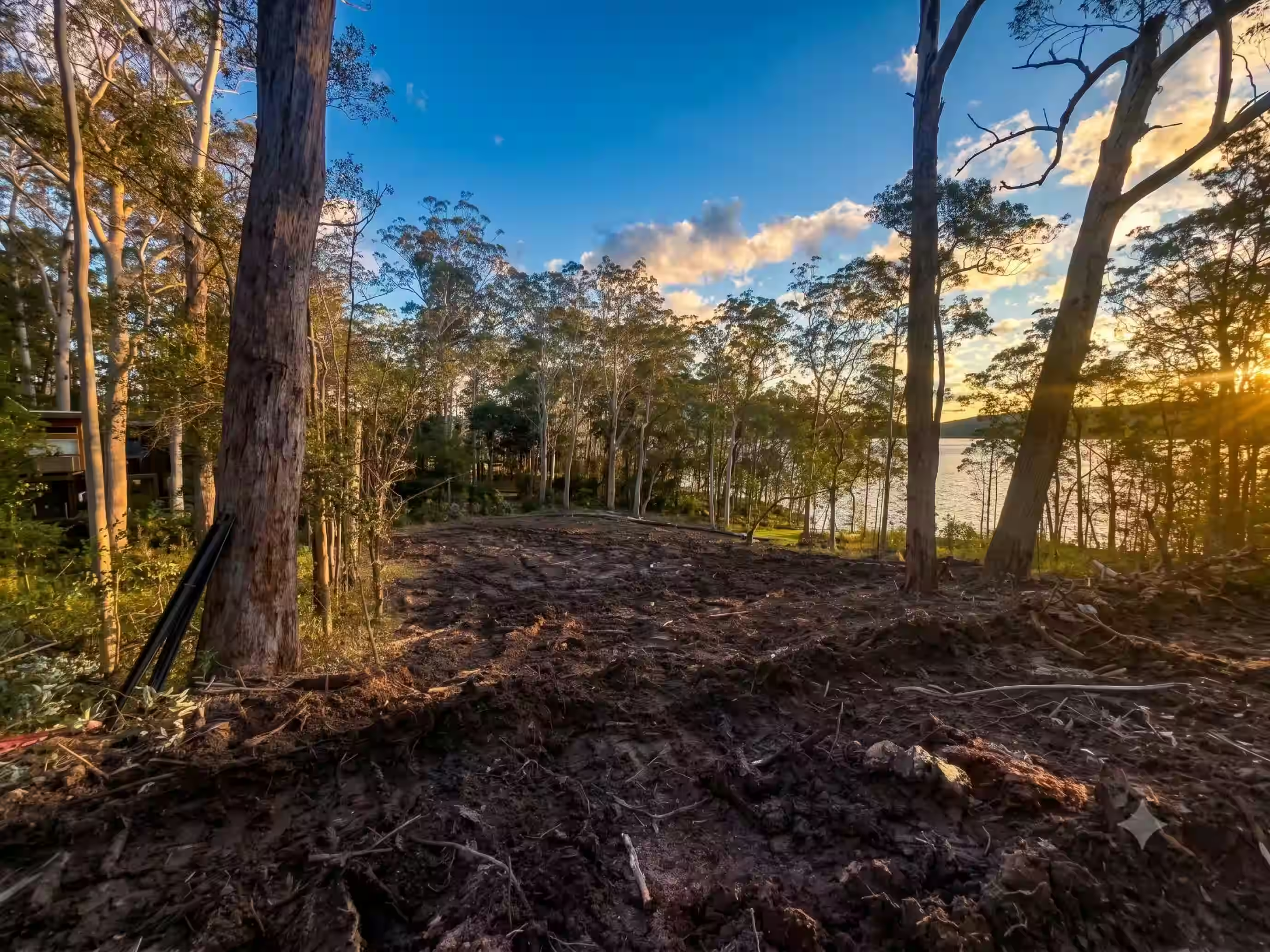
| Location | Smiths Lake, NSW (Mid North Coast) |
| Project Type | New residential build — site preparation |
| Client | Tyrrell Developments |
| Services | |
| Outcome | Build-ready house pad delivered safely on a steep waterfront block |
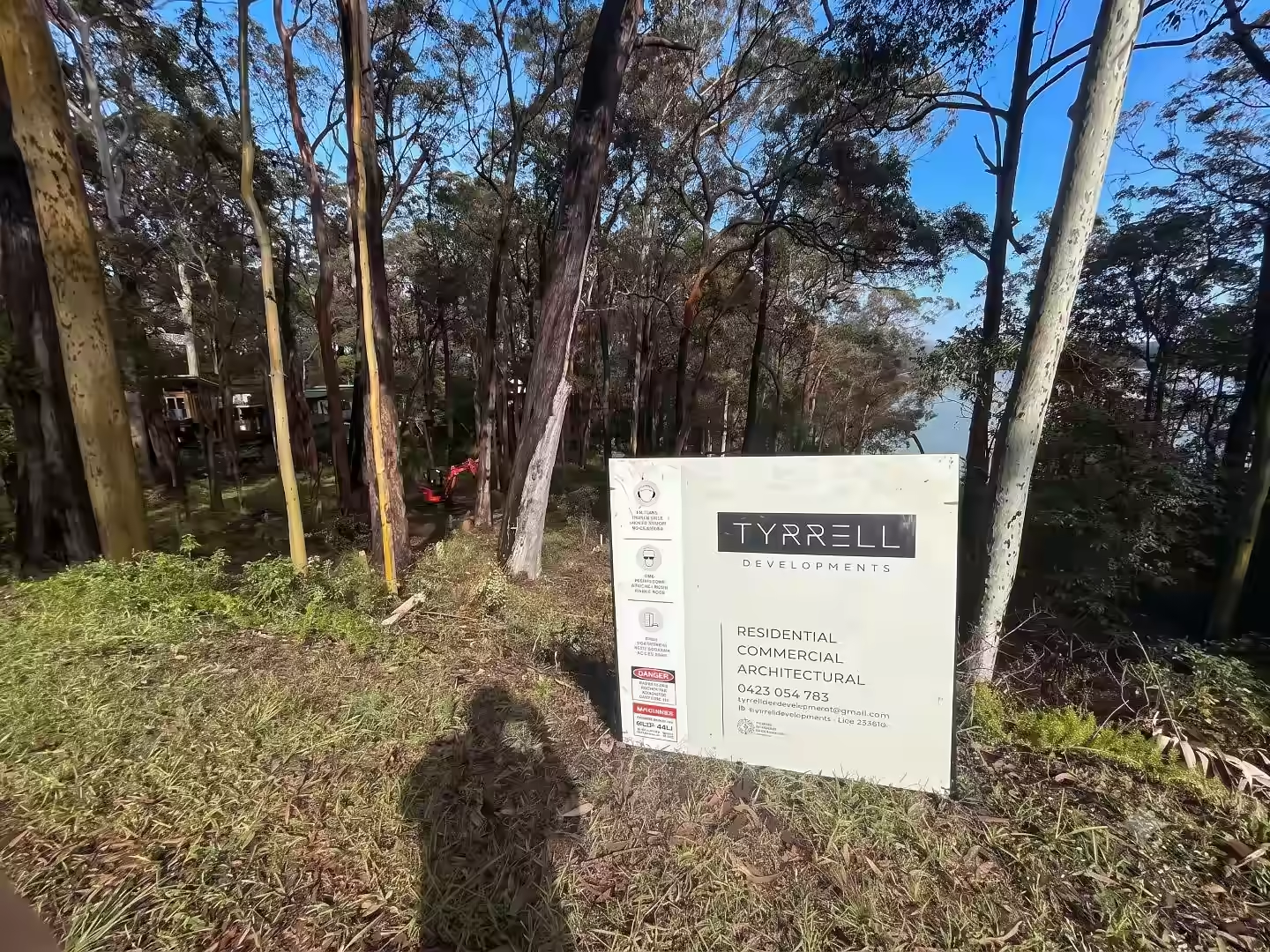
MidCoast Tree Solutions was engaged by Tyrrell Developments to carry out vegetation clearing, hazard tree removal, and site preparation for a new residential dwelling overlooking Smiths Lake.
The block featured dense native vegetation, mature eucalypts, significant stump systems, and difficult ground conditions. The objective was to create a safe, practical building envelope while preserving the natural bushland character and lake views that define the site.
The waterfront location introduced several complications beyond a standard residential clearing job. The block sits on a steep grade with limited machinery access from the street. Wet ground conditions persisted throughout the project, reducing traction and increasing the risk of soil disturbance.
Large mature eucalypts within the footprint required controlled dismantling rather than conventional felling — surrounding vegetation outside the construction boundary had to be retained undamaged. Several trees contained habitat hollows, requiring pre-clearing fauna inspections and managed wildlife relocation before works could proceed.
The DA conditions required all clearing activity to stay within the approved building footprint. Any encroachment beyond the boundary would risk compliance action with MidCoast Council.
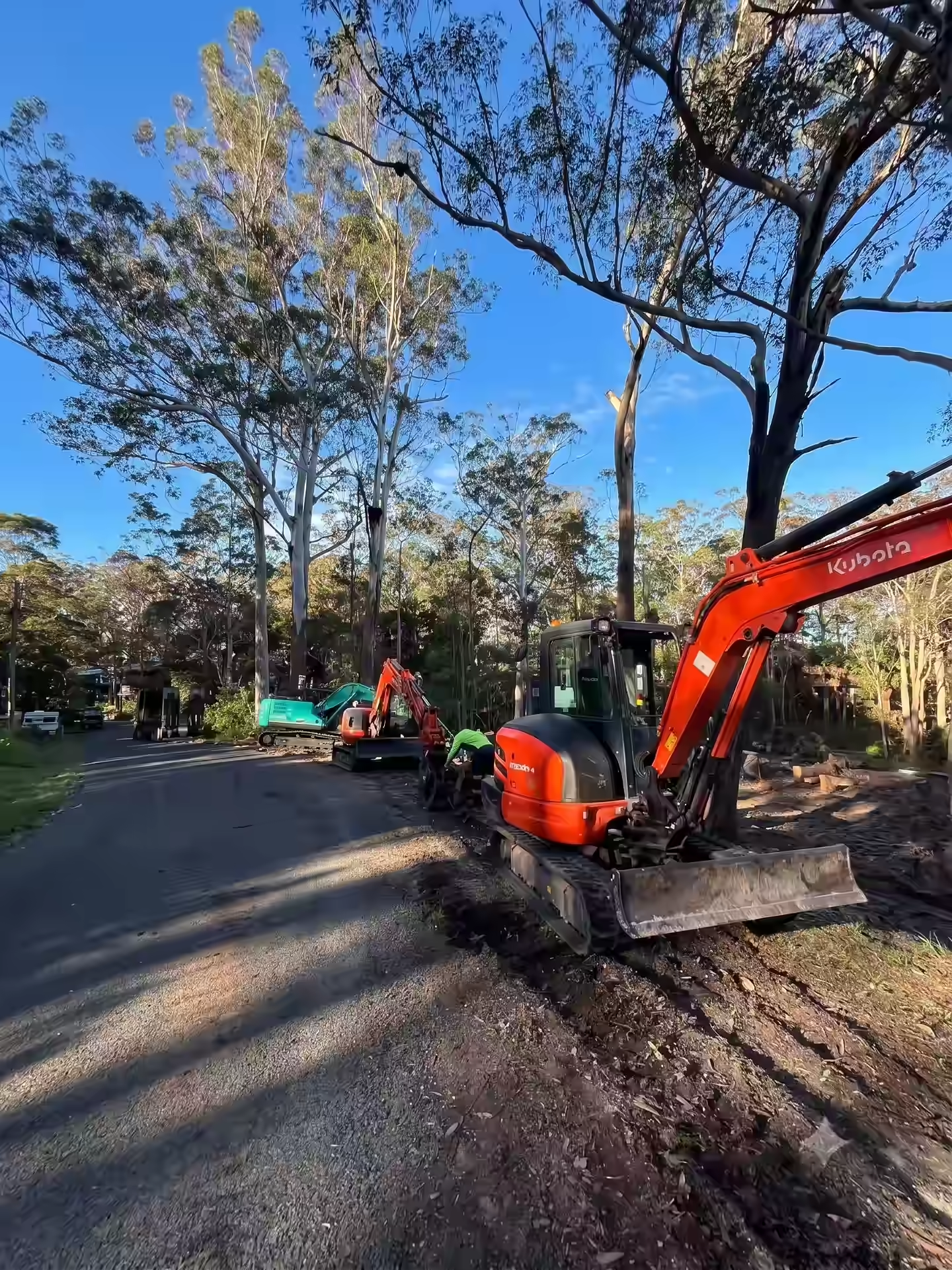
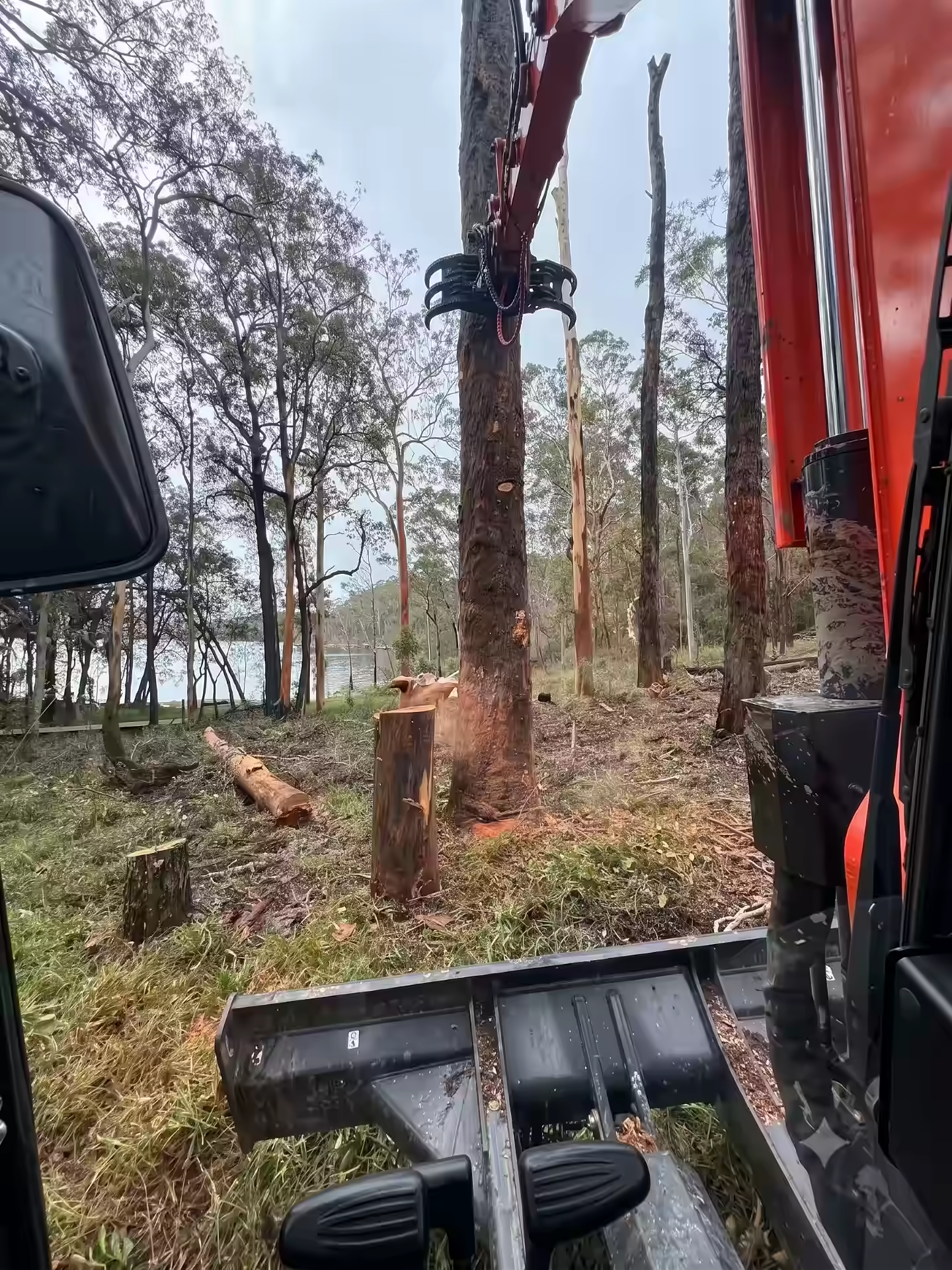
The crew developed a staged methodology suited to the steep terrain and environmental constraints at Smiths Lake.
Before any machinery entered the site, the team walked the full clearing zone and marked the DA boundary with survey tape. Each tree was assessed for size, species, lean direction, and proximity to the retention boundary. Trees with visible hollows were flagged for arborist-led habitat inspection before removal.
Qualified climbing arborists dismantled the larger eucalypts in sections, lowering limbs with rigging to control where material fell. This prevented damage to surrounding vegetation and allowed machinery to work safely beneath. On the lower sections of the block, the 14-tonne excavator fitted with a grapple saw handled mechanised removal where ground conditions allowed.
Several trees contained active habitat hollows. Fauna inspections were completed prior to felling, with wildlife identified and relocated appropriately. Hollow-bearing sections were set aside where practical, in line with best-practice habitat management.
After tree removal, all stumps within the building footprint were ground below finished ground level. Root balls from the larger eucalypts were excavated and removed to prevent interference with future slab and footing works.
Cleared timber was processed on-site where space allowed. Larger logs were loaded and trucked off-site using haulage equipment. Smaller material was chipped on location to reduce truck movements on the narrow access road.
Once all vegetation and stumps were cleared, the site was graded to create a level building pad with construction vehicle access. The finished site was handed over to the builder ready for the next stage of works.
The project successfully transformed a heavily vegetated, steep waterfront block into a clean and accessible building site, ready for the next stage of construction.
Matching equipment to the terrain was essential for delivering this project safely. Steep access, wet ground, and proximity to retained vegetation ruled out standard clearing approaches. Here’s what was deployed at Smiths Lake:

MidCoast Tree Solutions delivers residential and commercial site preparation across the Mid North Coast. The team holds AQF Level 5 arboricultural qualifications, carries full public liability and workers’ compensation insurance, and operates a fleet of purpose-built excavators and forestry equipment.
From first site walk to builder handover, MidCoast manages the full clearing scope — vegetation removal, hazard tree dismantling, stump grinding, habitat management, and site levelling — so the build program stays on track.
We service Smiths Lake and surrounding areas including Forster, Pacific Palms, and the wider Mid North Coast region.
Request a free onsite quote for your next project.

Steep terrain changes every part of the job. Machinery needs wider pads cut into the slope to operate safely, and operators work at reduced speed to maintain stability. On grades above 20 degrees, tracked excavators may need winch-assist anchoring. Access roads often have to be built or reinforced before heavy equipment can reach the clearing zone. Material can’t be pushed downhill freely without risking damage to vegetation outside the footprint, so it has to be lifted and placed — which means more precise machine work and tighter coordination between ground crew and operators compared to an equivalent job on flat ground.
Before any tree with visible hollows is felled, a qualified ecologist or experienced arborist inspects the hollow using a torch, mirror, or borescope camera. They’re looking for nesting birds, microbats, possums, or gliders. If fauna is present, the animal is carefully relocated to a nearby retained tree with suitable habitat. Some councils and DA conditions require a pre-clearing fauna survey report. Timing matters too — breeding season clearances face stricter controls, and some species like powerful owls or glossy black-cockatoos trigger additional referral requirements under the Biodiversity Conservation Act 2016.
A grapple saw is a hydraulic cutting head mounted on an excavator arm that grips, cuts, and places a tree in one motion. The operator has full directional control over where the stem lands, which is critical on steep sites or near retention boundaries. Traditional chainsaw felling relies on cuts, wedges, and the tree’s natural lean — accurate on open ground, but riskier when the margin for error is tight. On the Smiths Lake project, arborist climbing crews handled the large trees near the boundary using sectional dismantling and rigging, while the grapple saw cleared smaller trees and regrowth within the footprint where machine access was possible.
Yes, if the grinder encroaches into the root protection zone (RPZ) of a neighbouring tree. The RPZ is calculated as 12 times the trunk diameter at breast height — so a tree with a 40 cm trunk has a roughly 4.8-metre protection radius. Grinding within this zone can sever structural roots and compromise the tree’s stability or long-term health. On the Smiths Lake project, stumps near the retention boundary were ground conservatively, stopping short of the RPZ line. In some cases, root material was left in place below the surface rather than risk undermining an adjacent tree that the DA required to be kept.
We'll visit your property, assess the trees, and give you an honest recommendation at no cost.