Is My Tree Dead or Just Dormant? How to Tell the Difference
A bare, leafless tree isn't always a dead one, and cutting down a resting tree by mistake costs you shade, habitat, and money for nothing. Here are the simple tests arborists actually use to tell the difference, and what to do once you know the answer.
Every winter, MidCoast homeowners look at a bare, leafless tree and wonder if it has finally given up. Every spring, a few of those same trees quietly leaf back out again as if nothing happened. Telling a dormant tree from a dead one is not always obvious from the driveway, and guessing wrong is costly either way. Remove a tree that was only resting and you have lost mature shade and habitat for nothing. Leave a genuinely dead tree standing and you are looking at a structural failure waiting to happen.
The good news is that arborists rely on a handful of simple, physical tests, not guesswork, to tell the difference, and none of them need special equipment.
This guide walks through those tests, why some MidCoast natives can look completely dead and still bounce back, what the last year's wild weather has done to local root systems, and what council and the law expect from you once you know the answer.
Key Takeaways
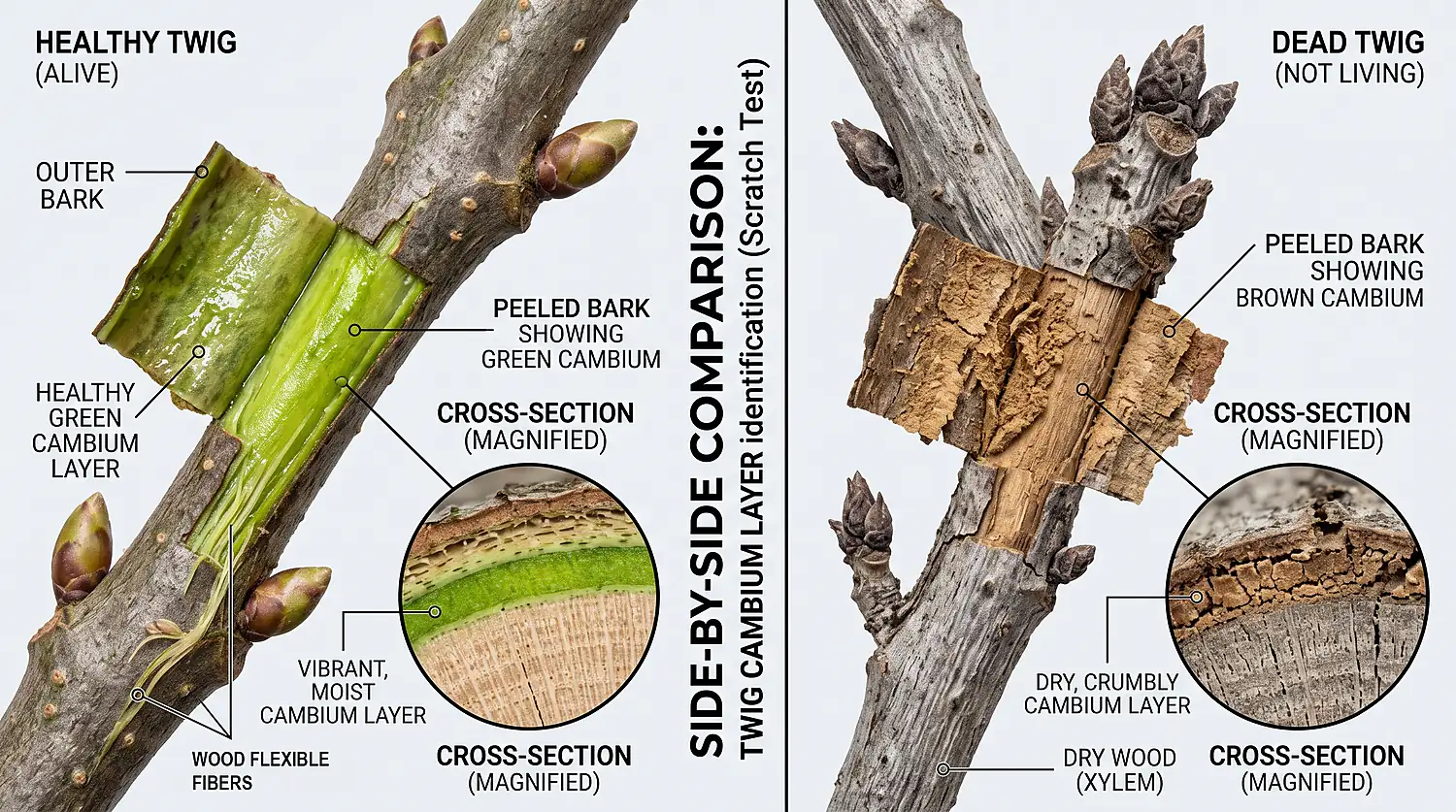
The quickest test is the cambium scratch test: nick the bark, green and moist means alive, brown and dry means dead.
Test more than one spot, twigs, branches, and the base, a dead branch at the top does not always mean the whole tree is dead.
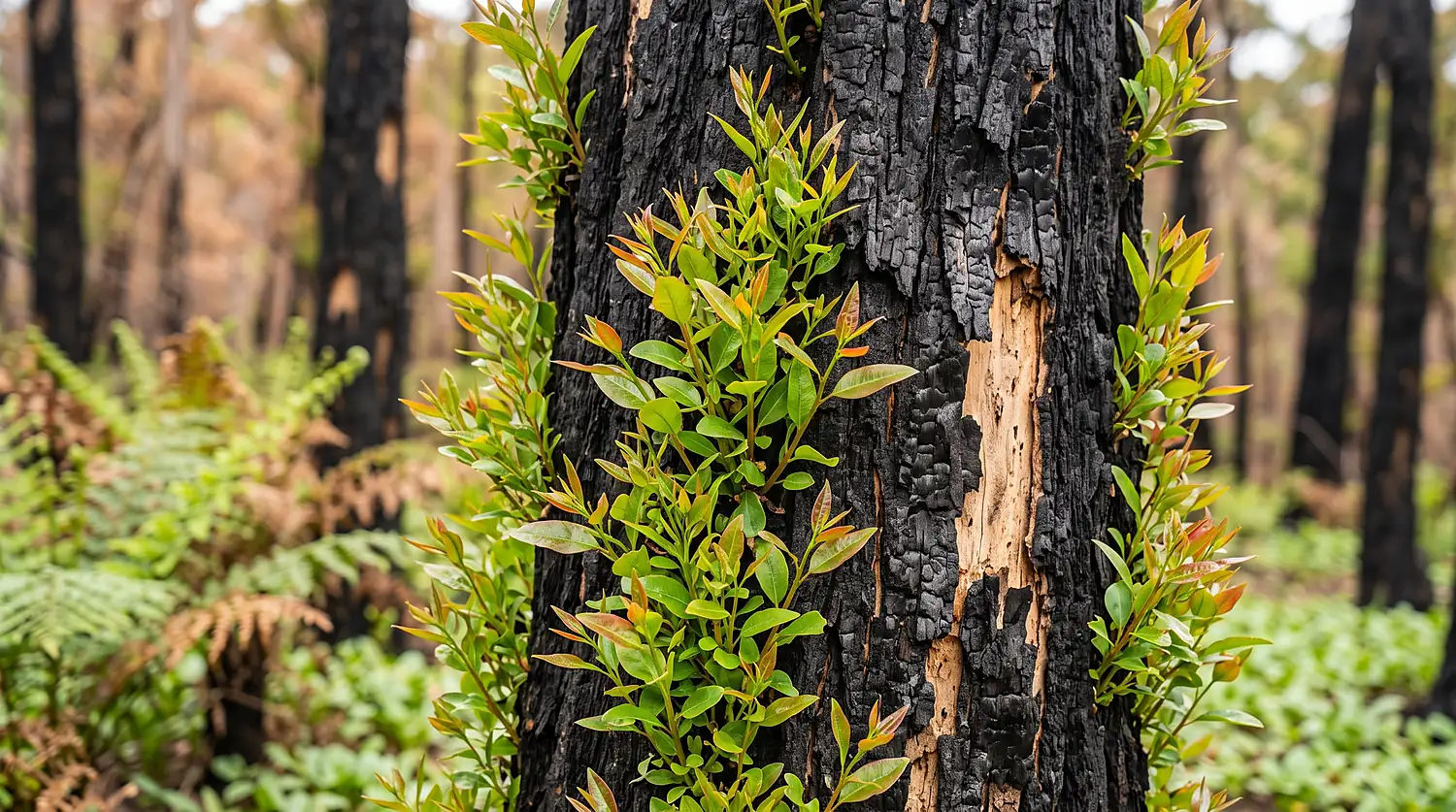
Native eucalypts can look completely dead after drought, flood, or fire and still recover through epicormic shoots along the trunk, don't assume the worst too quickly.
Evergreens like she-oaks and banksias don't have that same recovery trick, once their canopy fully browns off, it is usually terminal.
Heavy 2025 rainfall in the Manning Valley catchment has left a lot of MidCoast trees under root stress that may not show up until months later.
A genuinely dead tree is usually exempt from needing a council permit to remove, unless it has hollows, is a protected species, or is a koala habitat tree.
If a dead or dangerous tree is on a neighbour's property, formal written notice is the step that protects you legally if it later falls and causes damage.
1. The Four Tests Arborists Actually Use
You do not need a lab test to work out whether a tree is alive. Arborists rely on four simple physical checks, usually done in order, from the smallest twig up to the trunk.
1. The Cambium Scratch Test
Take a sharp, clean blade, or even a thumbnail, and scratch a small patch of bark on a twig or branch. Underneath is the cambium, a thin layer just under the bark that carries water and nutrients around the tree. If it is bright green, moist, and slightly slippery, that part of the tree is alive. If it is brown, dry, and crumbly, or flakes away easily, that part is dead. Test more than one spot, an outer twig, a larger branch, and near the base of the trunk, since a dead branch at the top does not necessarily mean the whole tree is dead.
2. The Bud Test
On trees with visible buds, gently squeeze a terminal bud (the bud at the tip of a twig) between your fingers. A living, dormant bud feels plump and firmly attached, and springs back when you release it. A dead bud feels dry and shrivelled, cracks under light pressure, and comes away from the stem easily.
3. The Twig Snap Test
Bend a thin twig, under about a centimetre thick, between your fingers. A living twig has enough moisture in its fibres to flex smoothly without breaking. A dead twig snaps cleanly and abruptly, with almost no bend beforehand.
4. Bark and Fungus Check
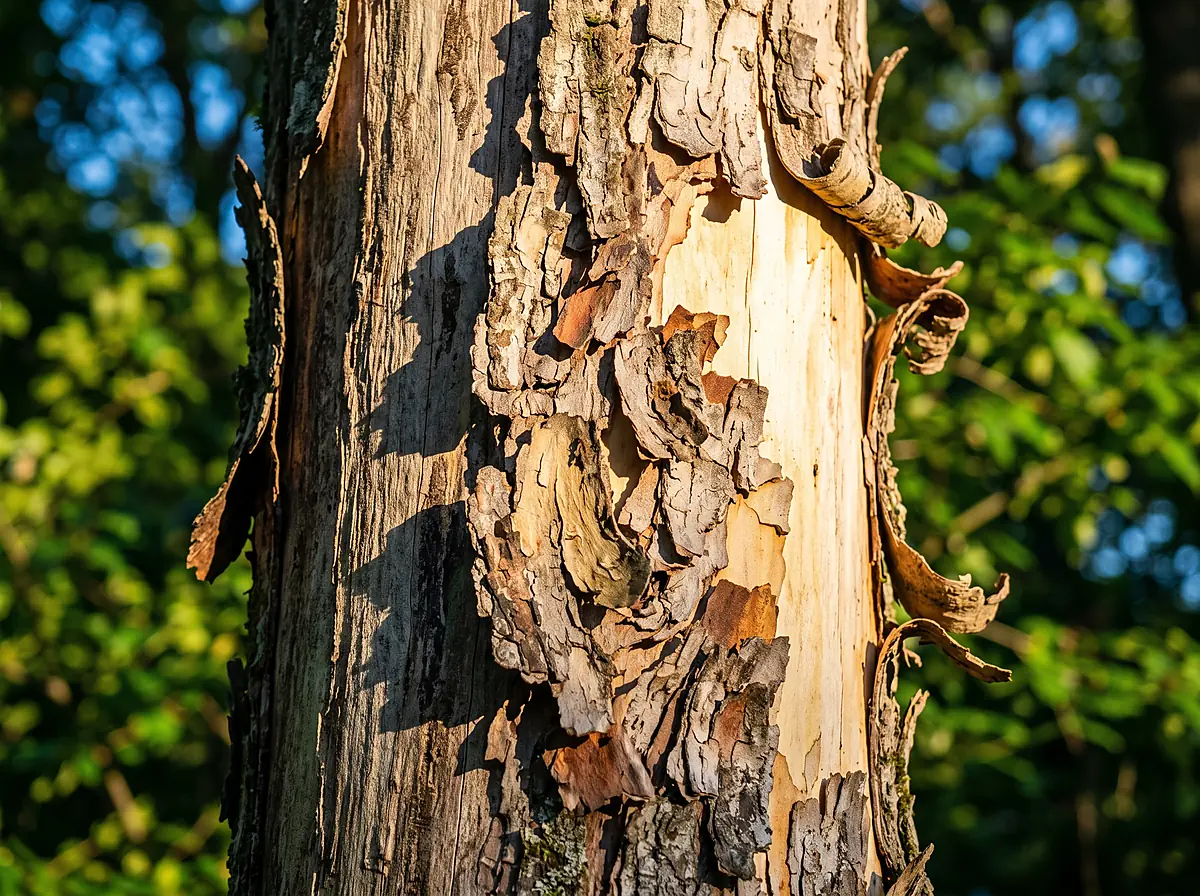
Step back and look at the trunk and root flare, where the trunk widens out at ground level. Bark that is sloughing off in sheets, splitting vertically, or sounds hollow when tapped with a mallet points to serious internal decay. So does the presence of bracket fungi, shelf-like fungal growths on the trunk or root flare, which only appear where wood is already breaking down inside. A tree can look green up top and still be structurally compromised underneath if fungal brackets are present low on the trunk.
What to Check
Alive or Dormant
Dead
Cambium (scratch test)
Bright green, moist
Brown, dry, crumbly
Terminal buds
Plump, firmly attached
Shrivelled, falls off easily
Thin twigs
Bend without breaking
Snap cleanly, no flex
Bark
Tight to the trunk
Sloughing, splitting, hollow sound
Fungus
None present
Bracket fungi on trunk or roots
Source: General arboricultural diagnostic standards; MidCoast Council, Vegetation Management Policy
2. Why Eucalypts Can Look Dead and Still Recover
Gum trees, Eucalyptus, Corymbia, and Angophora species, do not lose their leaves each winter like a deciduous tree. Instead, they go into a kind of survival shutdown after extreme stress: severe drought, prolonged flooding, or fire. A stressed eucalypt can drop its entire canopy and look like a bare, grey skeleton, which understandably alarms a lot of homeowners.
The trick is that eucalypts keep dormant buds hidden under thick bark all along the trunk and branches, called epicormic buds. If the cambium underneath is still green, the tree will often push out tufts of new growth directly from the trunk and branches to rebuild its canopy from scratch. This epicormic growth can look strange, fuzzy little clumps of leaves sprouting straight from bare bark, but it is a strong sign the tree is recovering, not dying.
A eucalypt is only confirmed dead once the cambium at the base of the trunk is dry and brown, and no epicormic shoots appear over a full growing season. Cutting one down the moment it drops its leaves after a flood or drought is often premature.
If a stressed tree turns out to be otherwise healthy but simply in the wrong spot, for example, a recoverable tree sitting too close to a new driveway or extension, removal isn't the only option. Our tree transplanting service can relocate a viable tree elsewhere on the property instead of taking it out altogether.
3. Evergreens and Deciduous Trees: Reading the Signs Correctly
Not every MidCoast tree plays by the same rules as a eucalypt, so the same bare canopy can mean something very different depending on the species.
Coastal evergreens, like She-Oaks, Coast Banksia, and Norfolk Island Pines, keep their foliage year-round. If one of these starts browning off or thinning out, that is not seasonal, it is a sign of genuine stress, usually root rot, salt damage, or physical root damage. Unlike eucalypts, these species have little to no ability to resprout from bare wood once their branch tips dry out completely, so widespread browning in one of these trees is a more reliable warning sign.
Introduced deciduous trees, jacarandas, maples, and similar exotics common on rural MidCoast properties and in town gardens, are the opposite case. They are supposed to drop all their leaves every autumn and winter as part of a completely normal cycle. Don't judge one of these by its bare branches in July, run the cambium scratch and bud tests instead, and only worry if those come back negative.
4. Why So Many MidCoast Trees Are Under Stress Right Now
2025 was an unusual year for weather across the region. While the statewide rainfall average for NSW actually came in slightly below the long-term average, parts of the Manning Valley catchment behind the MidCoast recorded some of the highest rainfall totals ever measured at those sites, and mean temperatures also ran warmer than the long-term average.
Source: Bureau of Meteorology, New South Wales in 2025, bom.gov.au/climate/current/annual/nsw/summary.shtml
Prolonged waterlogging is hard on root systems. Saturated soil pushes oxygen out of the ground, and fine feeder roots that can't get oxygen simply die off. Wet soil is also the ideal environment for root-rotting pathogens like Phytophthora and Armillaria, which attack roots that are already weakened. The tricky part is the delay: a tree can hold onto stored energy and stay green for months after a flood, only to collapse suddenly during the next warm, dry spell when its damaged root system can't keep up with demand.
Coastal properties, particularly around Old Bar and Pacific Palms, face a related but different problem. Storm surges and East Coast Lows erode the dunes and expose root systems directly, particularly for She-Oaks and Banksias growing close to the shoreline. Once a root system is exposed and drying out, or the tree is visibly leaning after erosion has undercut it, that is a structural problem, not a stress response it can recover from.
5. What Counts as a “Dead Tree” Under Council Rules
Confirming a tree is dead does not automatically mean you are free to cut it down. MidCoast Council's Vegetation Management Policy defines a dead tree quite specifically as one that is “no longer capable of performing life processes in order to survive,” and even trees that clearly meet that definition can still need a formal permit.
A dead tree still needs a permit if it:
Has hollows, cracks, or cavities that could shelter wildlife, these are protected as fauna habitat regardless of the tree's condition.
Is part of a Threatened Ecological Community, or is a documented koala food tree (species like Forest Red Gum or Swamp Mahogany).
Is a significant local species, a mangrove, or a Cabbage Tree Palm over 2 metres tall.
If none of those apply, and the tree is under 5 metres tall with a trunk girth under 600 mm (measured at 1 metre above the ground), it generally qualifies for a self-assessed exemption rather than a full permit. A handful of declared weeds, such as Chinese Tallow Tree and Cocos Palm, are also exempt outright to encourage their removal.
If a permit is needed, as at the time of writing the standard council inspection fee is $260, with assessment taking up to 28 days. Permits and exemptions are valid for 12 months, and if you are using a self-assessed exemption, you need to display the certificate on your front fence for two days before and two days after the work. Confirm current fees and timeframes with council before you apply, as they're reviewed each financial year. Our council permit guide covers the full process.
6. Your Legal Responsibility for a Dead or Hazardous Tree
Owning a tree comes with a duty of care, a legal obligation to make sure it doesn't pose an unreasonable risk to neighbours, passers-by, or their property. If a dead or visibly hazardous tree fails and causes damage, whether you are liable often comes down to three questions.
Did you own or control the land the tree was growing on?
Did you know, or should you reasonably have known, that the tree was a risk? Visible signs like total leaf loss, fungal brackets, or a serious lean count here.
Did you fail to do anything reasonable about it, such as calling an arborist or applying for a permit?
If all three apply and the tree then fails, you can be held liable for the resulting damage. On the other hand, if a genuinely healthy tree comes down in an extreme, unforeseeable storm with no prior warning signs, that is generally treated as an unpreventable event rather than negligence.
Source: Common law duty of care principles; Trees (Disputes Between Neighbours) Act 2006 (NSW)
7. Dealing With a Dangerous Tree on a Neighbour's Property
If the dead or hazardous tree is not on your land, you cannot just deal with it yourself. Common law lets you trim branches back to your boundary, but only the parts that actually cross onto your side, and you cannot enter their property without permission.
Start with a direct conversation. If that doesn't resolve it, send formal written notice, ideally by registered post or email with delivery confirmation, describing the specific defects you have observed (dead limbs, fungal brackets, leaning, and so on) and requesting action within a reasonable timeframe, typically 14 to 21 days. Attaching an independent arborist's report makes the notice far more persuasive, and far harder for a neighbour, or their insurer, to later argue they were never warned.
If nothing changes, the Trees (Disputes Between Neighbours) Act 2006 lets you apply directly to the NSW Land and Environment Court, but only once you can show you made a genuine attempt to resolve things directly first. The Act only covers private land, not council-owned trees. If the tree owner later sells the property, a court order made against them can, in some circumstances, remain binding on the new owner, but the specifics (such as what notice needs to be given) are worth confirming with a solicitor rather than assumed.
This section explains how the law generally works in NSW and is not legal advice. For anything beyond a straightforward conversation with a neighbour, it is worth getting advice from a solicitor.
Source: Trees (Disputes Between Neighbours) Act 2006 (NSW)
8. What to Do Next
If you are still not sure whether your tree is dormant or dead, a short, structured process gets you an answer:
Run the cambium, bud, and twig tests at several points on the tree, not just one branch.
Check the MidCoast Council mapping portal to see if the tree is covered by the Vegetation Management Policy before you do anything permanent.
If it is genuinely dead, confirm whether it qualifies for a self-assessed exemption or needs a formal permit.
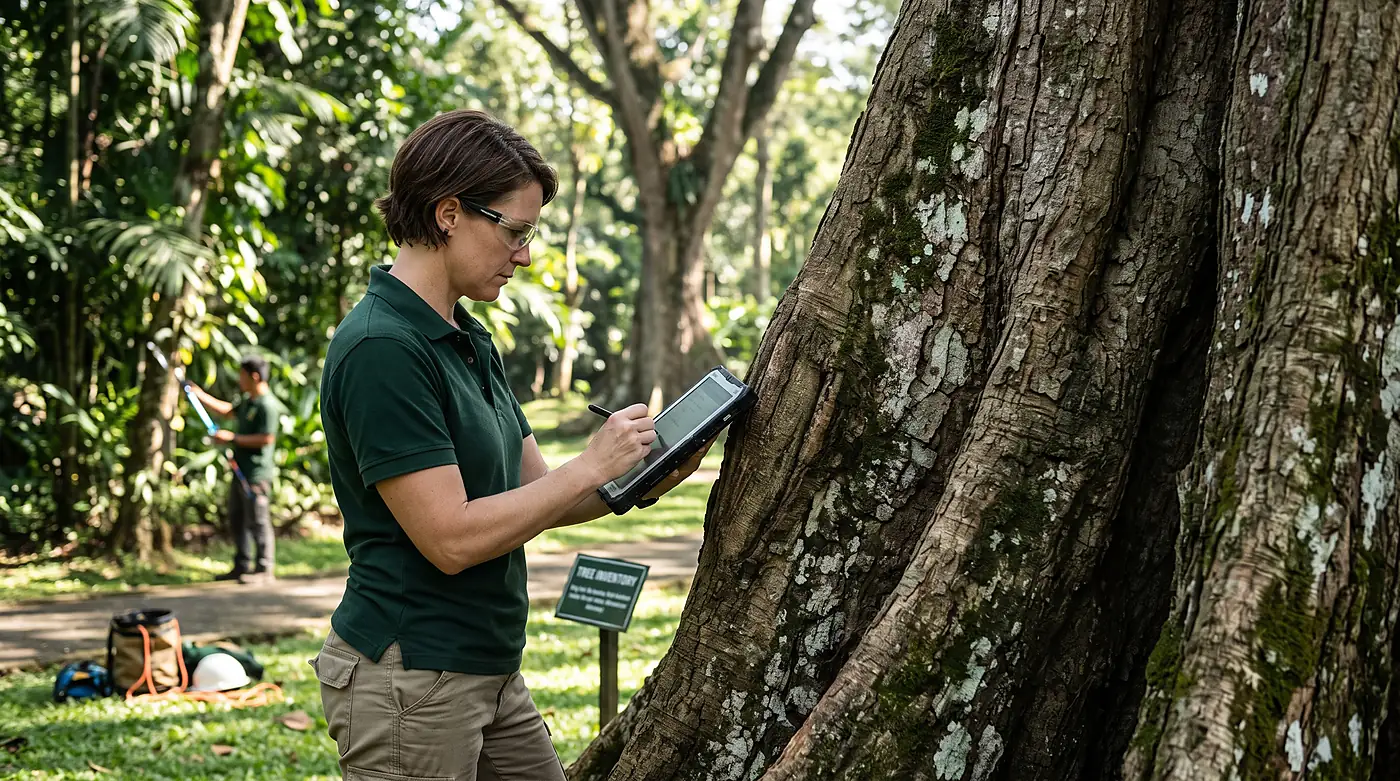
If you are still unsure, or the tree is large enough that a wrong call is risky, get a professional opinion, some problems, like early-stage root rot, aren't visible from the ground.
If you would like a second opinion before you commit to removal (or before you decide to leave a tree standing), request a free quote and we will come and take a proper look.
NOT SURE IF YOUR TREE IS DEAD OR JUST RESTING? WE CAN HELP.
A professional assessment removes the guesswork, and gives you a documented record if council or a neighbour dispute ever comes into it. Our AQF Level 5 Consulting Arborists, the highest field-based arborist qualification, can assess your tree on site and give you a clear answer either way.
We are MidCoast Council panel providers and Arboriculture Australia members. If the tree does need to come down, we can quote on tree removal for a single tree or a larger job, and grind out the stump in the same visit with our stump grinding service. If you've got several dead or storm-affected trees across a larger block, our land clearing team can handle that in one visit.
We work across the entire MidCoast region, from Forster and Tuncurry to Taree, Wingham, Old Bar, and everywhere in between.