What Counts as a "Dangerous" Tree in NSW? Storm Damage, Leaning Trees, and Council Exemptions
There's no single legal definition of a dangerous tree, and no magic lean angle that makes the call for you. Here's how the assessment actually works, what to do if a tree is failing right now, and where a council exemption genuinely applies.
A tree doesn't have to be obviously dead to be dangerous, and a tree that leans doesn't automatically qualify as an emergency either. Homeowners across the MidCoast are often left guessing after a storm, or after noticing a tree leaning a little further than it used to, about whether they can act now or need to wait on council.
This guide is about the legal side of that question: how "dangerous" is actually defined under NSW rules, which exemption pathway applies, what to do if a tree is failing right now, and where emergency tree removal is genuinely justified without a permit, and where it isn't. If you're trying to spot the physical warning signs on a specific tree first, our guide to the 5 signs a tree is about to become a hazard covers the visual checklist in detail; this guide picks up from there and covers what the law actually lets you do about it.
Key Takeaways
There's no single legal definition of a "dangerous" tree. Most backyard cases fall under the general exemption pathway for vegetation that's dead, dying, or a genuine risk to life or property.
If a tree is actively falling or has already come down, treat it as an emergency first: call 000 or the SES, take dated photos, and get a written AQF Level 5 arborist assessment.
There's no magic lean angle that makes a tree dangerous. Arborists use TRAQ (Tree Risk Assessment Qualification) to weigh likelihood of failure, likelihood of impact, and consequences together.
Size isn't the deciding factor. A large tree can still be genuinely exempt as dangerous, and a small tree still needs a proper risk basis, not just its measurements.
Removing a protected tree without a genuine basis is a real offence in NSW, so a documented arborist assessment matters if you're relying on the dangerous-tree exemption.
MidCoast has seen genuinely severe weather, including the May 2025 Manning River flooding at Taree, part of why storm-damaged and leaning trees are such a common call locally.
If your property is in the mapped area and more work is needed beyond an emergency, there's a 72-hour window to lodge follow-up paperwork with Council.
1. There's No Single Legal Definition of "Dangerous"
A lot of homeowners assume there must be an official checklist somewhere that defines exactly what makes a tree "dangerous." There isn't, at least not as a single term. What actually exists are two separate, overlapping legal pathways, and which one applies depends on the tree.
The general pathway, most backyard cases
Under State planning policy for vegetation in non-rural areas, councils build exemption and self-assessment pathways for vegetation that is dead, dying, or a genuine risk to human life or property. This is the pathway almost every homeowner is relying on when they talk about removing a "dangerous tree." It doesn't require the tree to be a protected or threatened species, just genuinely dead, dying, or hazardous.
The narrower pathway, protected species only
A separate, more recent Code of Practice applies specifically where the tree is a threatened or protected species, or sits in mapped sensitive habitat. It defines "imminent risk" as a risk of serious injury or property damage that's impending or likely to occur at any moment, and requires written confirmation from council that it accepts the risk, at least 72 hours' written notice before the work (outside a genuine emergency), removal by an AQF Level 5 qualified arborist, and replacement planting of the same or a closely related species. This pathway is narrower and won't apply to most ordinary backyard trees.
In practice, the question that matters for most MidCoast homeowners isn't which pathway applies in theory. It's whether the tree is genuinely dead, dying, or hazardous enough to justify acting, and whether you can back that up with real evidence.
Source: NSW Planning Portal, Vegetation in non-rural areas; NSW Environment & Heritage, Unsafe Plants in Non-rural Areas Code of Practice 2024
2. If a Tree Is Actively Falling or Has Fallen Right Now
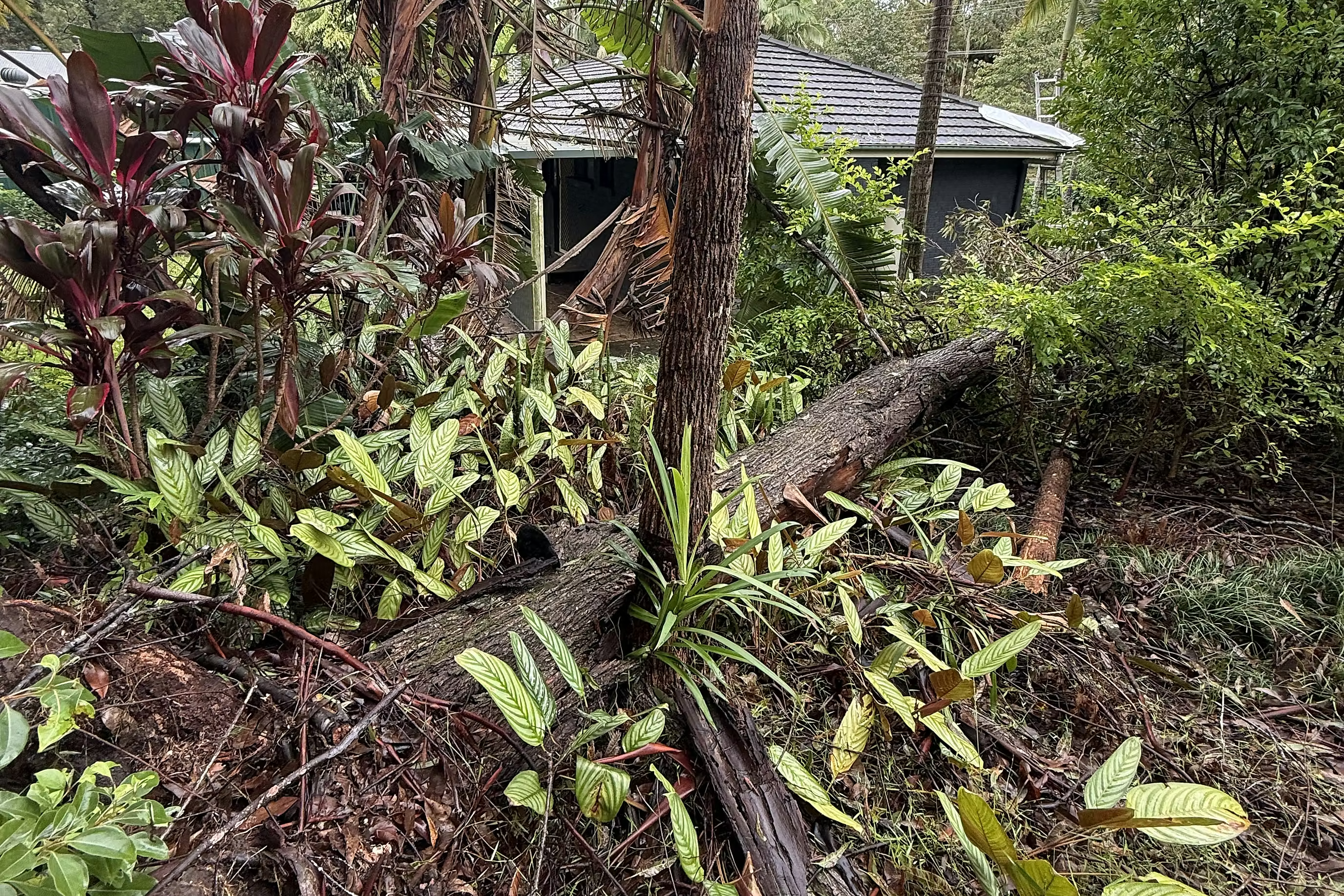
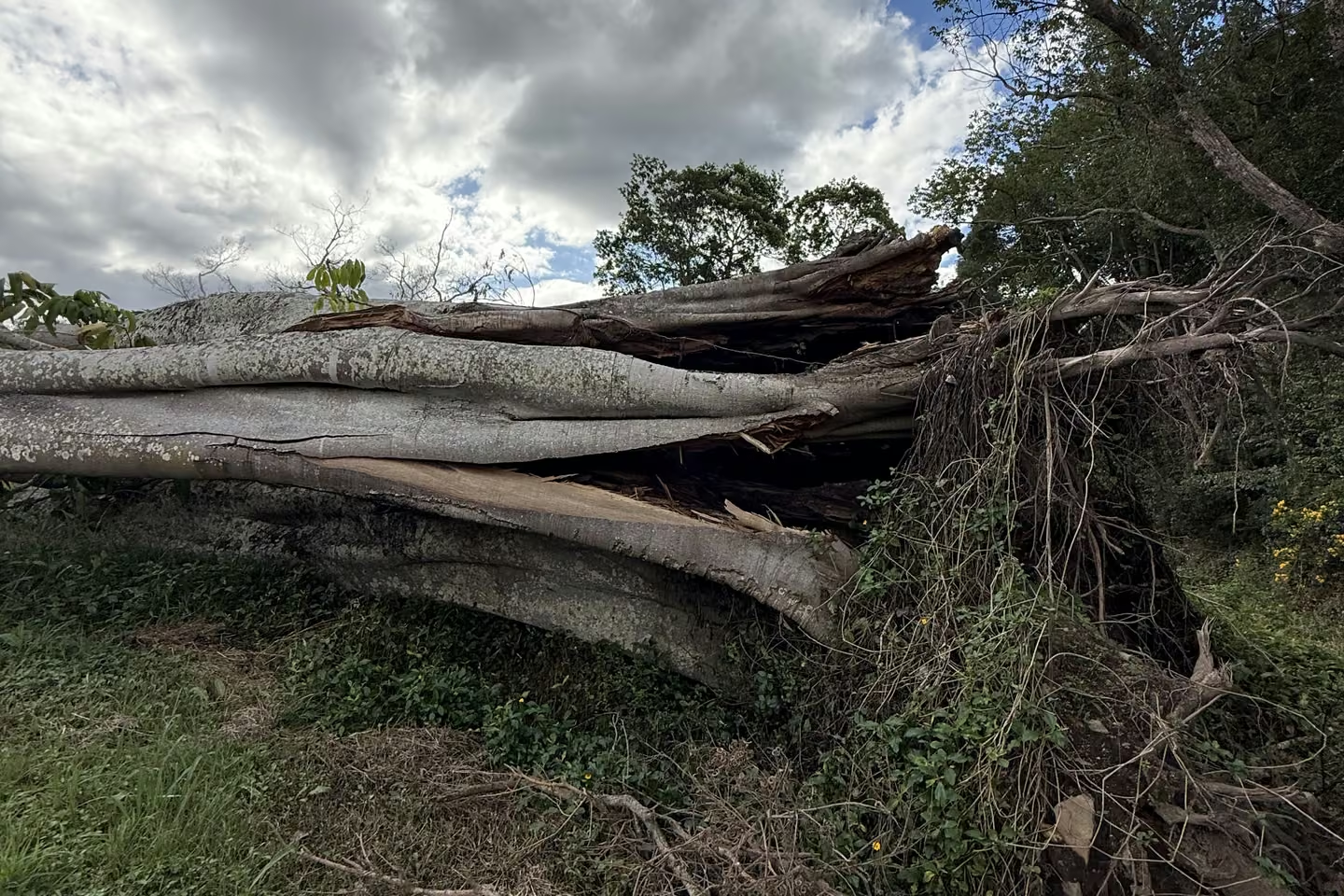
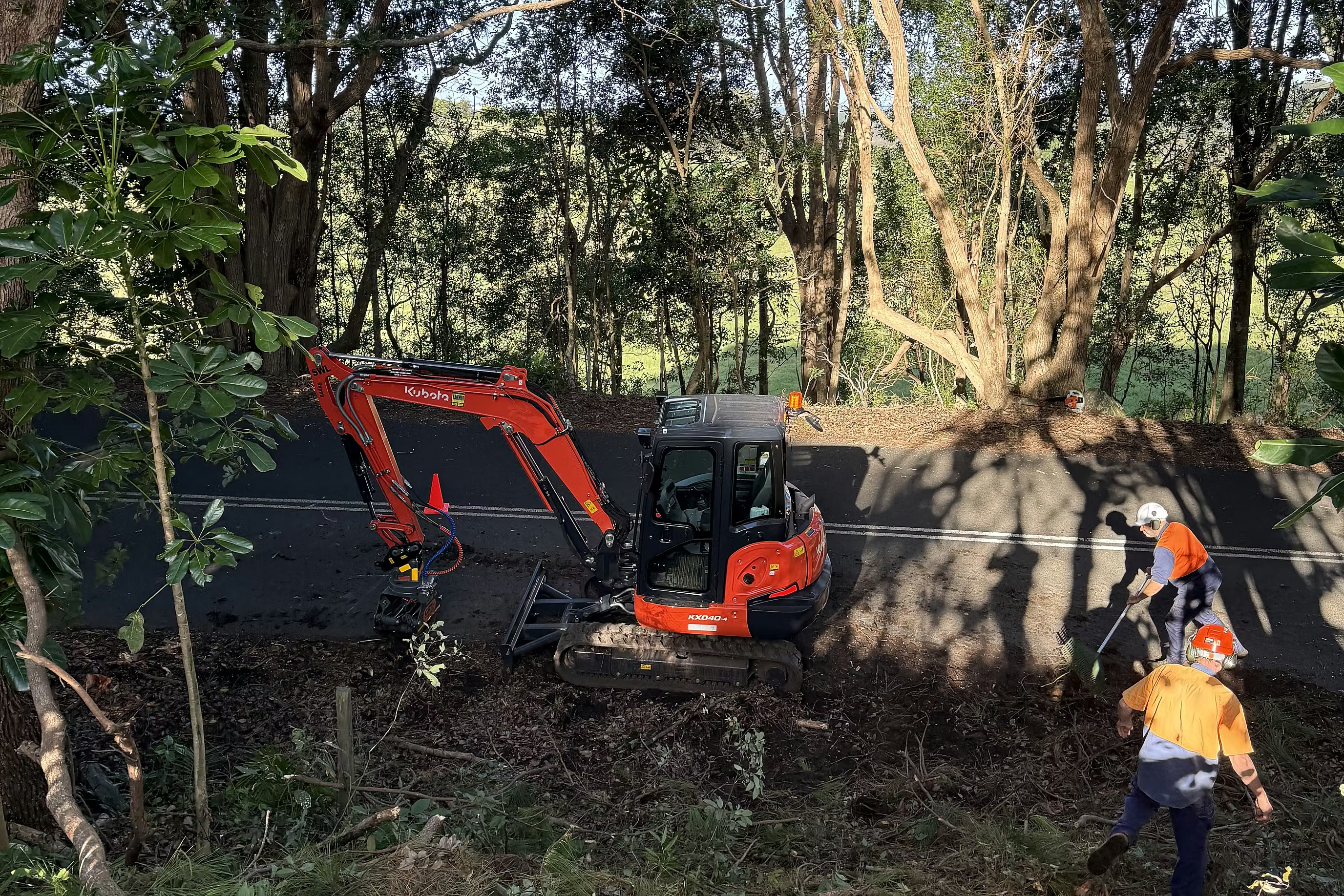
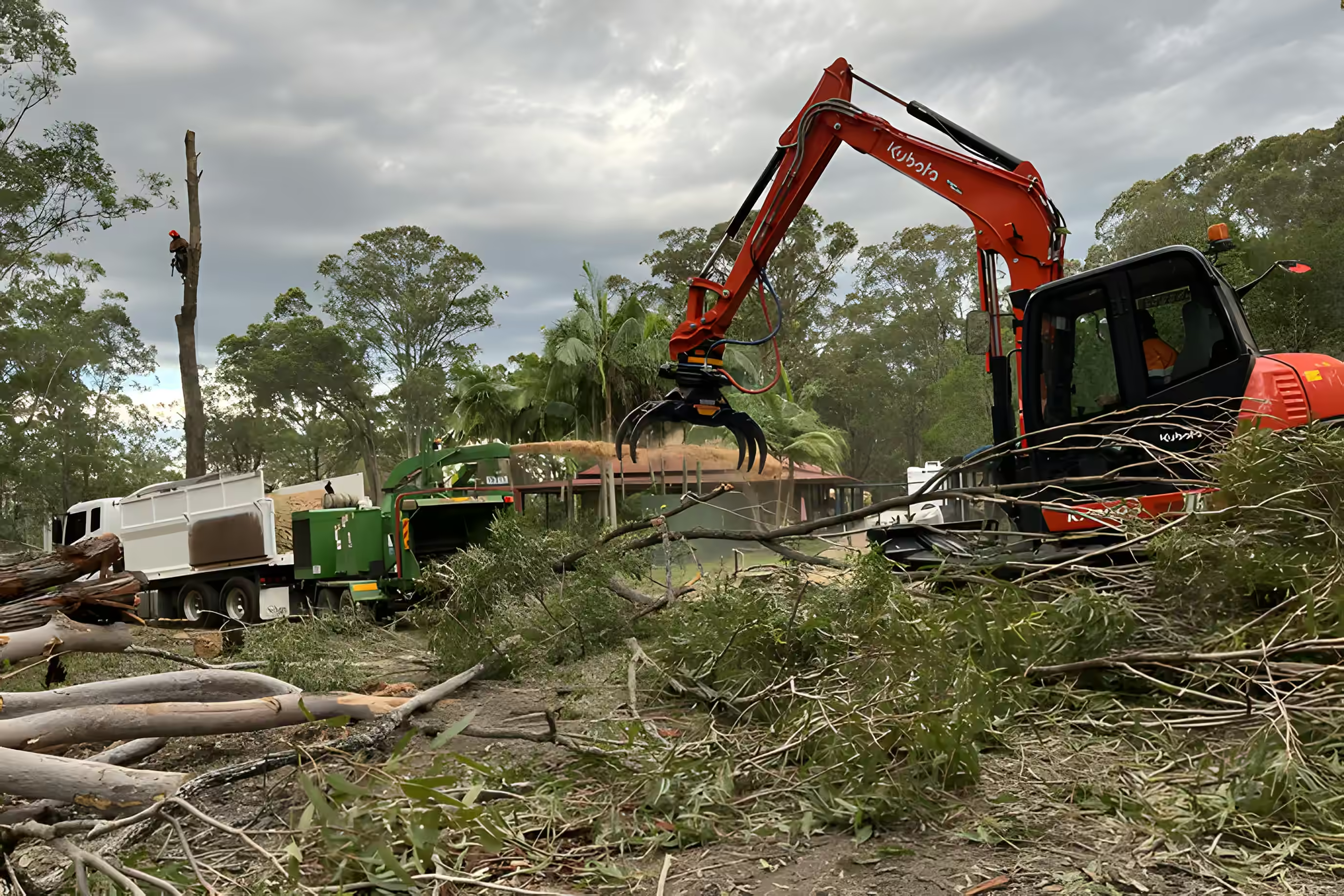
If a tree is failing right now, split, uprooting, or already down, treat it as an emergency tree removal situation first and worry about paperwork second. Call 000 or the SES and get a reference number, take dated photos of the tree and any damage, and get a written assessment from an AQF Level 5 qualified arborist confirming the tree was structurally compromised and couldn't be saved.
If your property sits inside the mapped Vegetation Management Policy area and more work is needed beyond the immediate emergency, there's a 72-hour window to lodge the follow-up paperwork with council. We've covered that process step by step, along with what evidence to gather, in our council approval guide. Dangerous trees on council land can be reported directly to Council on 02 7955 7777, available after hours.
Keep everything you gather, photos, reference numbers, the arborist's written assessment, on file. It's the difference between a straightforward after-the-fact exemption and a drawn-out dispute later.
Source: MidCoast Council, Frequently asked questions, removing backyard trees
3. Leaning Trees: Why There's No Magic Angle
A tree leaning a bit more than it used to is one of the most common reasons homeowners start looking into removal, and one of the easiest places to get the assessment wrong. There is no single numeric lean angle that makes a tree dangerous, not in Australian Standards, and not in NSW planning law.
What arborists actually use is TRAQ (Tree Risk Assessment Qualification), an internationally recognised methodology that AQF Level 5 arborists are typically trained in. TRAQ scores three factors, likelihood of failure, likelihood of impact, and the consequences if it does fail, each on a scale, then combines them into an overall rating from low through extreme. A lean on its own doesn't automatically score as dangerous under this framework; it has to be weighed alongside root-plate condition, defect severity, speed of onset (a sudden lean is a different picture to one the tree has carried for years), and whether there's an actual target, a house, a driveway, a powerline, in the fall zone.
We've covered the full physical checklist for spotting a tree at risk, canopy thinning, fungal growth, root-plate movement and cracked earth, split trunks, in our guide to the 5 signs a tree is about to become a hazard, and the structural side of root damage specifically in our guide to tree roots and structural risk. This section is about what those signs mean legally: the test underneath all of them is still the one from Section 1, is the tree a genuine risk to human life or property? An arborist's TRAQ-based assessment is what substantiates that answer, not a rule of thumb about degrees of lean, and not a checklist of symptoms on its own.
Source: International Society of Arboriculture, How Tree Risk Assessment Methods Work, Arboriculture & Urban Forestry journal; AS 4970-2009, Protection of trees on development sites
4. Does Size Matter? Not for a Genuinely Dangerous Tree
MidCoast Council's general exemption schedule sets size thresholds for low-risk species: broadly, trees under 5 metres or under 600mm girth don't need a permit, along with a handful of named exempt species. We've covered that general schedule, along with the exempt species list and how the self-assessment process works, in our council approval guide.
What's less well understood is that this size threshold applies to that general, low-risk exemption category, not to the dead, dying, or dangerous category specifically. A large, hazardous tree, well above 5 metres, well over 600mm girth, can still be exempt if it truly meets the risk criteria. Size cuts the other way too: a small tree under the general threshold still needs a proper basis if you're claiming the dangerous-tree exemption rather than the low-risk one. The category you're relying on matters more than the tape measure.
Council's Vegetation Management Policy defines a dead tree simply as one that's no longer capable of performing life processes in order to survive, worth knowing if you're documenting your case.
No published MidCoast material sets a specific distance-from-dwelling threshold for the dangerous-tree category. If this matters for your situation, confirm directly with Council rather than relying on a figure you've seen elsewhere.
Source: MidCoast Council, Vegetation Management Policy v3 (adopted 24 July 2024), Schedule 4 and Dictionary
5. Getting It Wrong Has Real Consequences
Removing a protected tree without a genuine basis is a real offence in NSW, and the penalties can be significant. Exactly how significant depends on which charge and which court is involved, and the figures you'll see quoted online vary a lot; some reflect an older, since-superseded penalty structure. Rather than repeat a number that might already be out of date by the time you read this, the honest advice is: if you're relying on the dangerous-tree exemption, make sure you can back it up with a documented arborist assessment, and check current penalty figures with Council or a solicitor if it's relevant to your decision.
Separately, the NSW Government has flagged proposed reforms that would tighten the dead/dying/dangerous exemption and raise penalties further. As at the time of writing, this remains a proposal rather than commenced law, worth confirming the current status before assuming it applies.
6. MidCoast's Storm Reality
This isn't a hypothetical risk for local homeowners. In May 2025, the Manning River at Taree reached a record height, exceeding the previous 1929 record, after the region received well over 400mm of rain in two days. Wingham, Croki, and Manning Point were among the MidCoast communities directly affected, and thousands of households across the region received evacuation orders. Severe regional windstorms later in 2025 were a reminder that this part of the NSW coast sees genuinely serious weather, not just routine wind and rain.
None of that changes the legal test: a tree still has to be dead, dying, or hazardous. But it's real context for why storm-damaged and suddenly-leaning trees are such a common call for MidCoast homeowners, why emergency tree removal enquiries spike after weather like this, and why getting the assessment right matters.
Source: Risk Frontiers, NSW Mid North Coast Flooding, May 2025; Wikipedia, 2025 New South Wales floods
7. What to Do Next
If a tree is actively failing right now, call 000 or the SES first. Paperwork comes after safety.
Document everything: reference numbers, dated photos, and a written assessment from an AQF Level 5 arborist.
For a leaning tree that isn't an active emergency, get a proper TRAQ-based risk assessment rather than guessing from the angle alone.
Remember size isn't the deciding factor for the dangerous-tree category. A genuine risk assessment is.
If more work is needed beyond an emergency and your property is in the mapped area, check the 72-hour follow-up window.
If you're not sure whether a tree on your property counts as dangerous, request a free assessment and we'll take a look.
Tree Down or Looking Dangerous? We're Available 24/7.
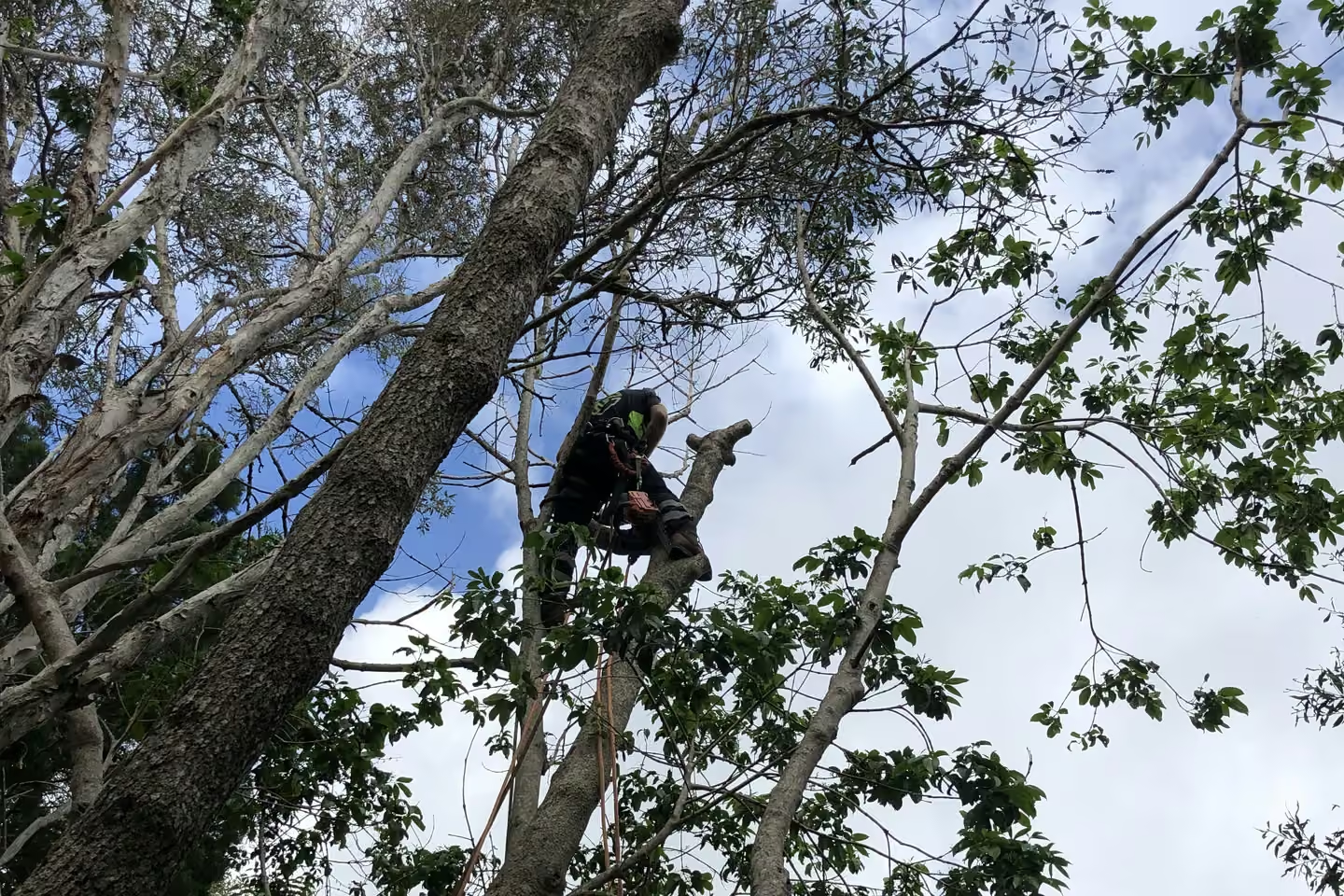
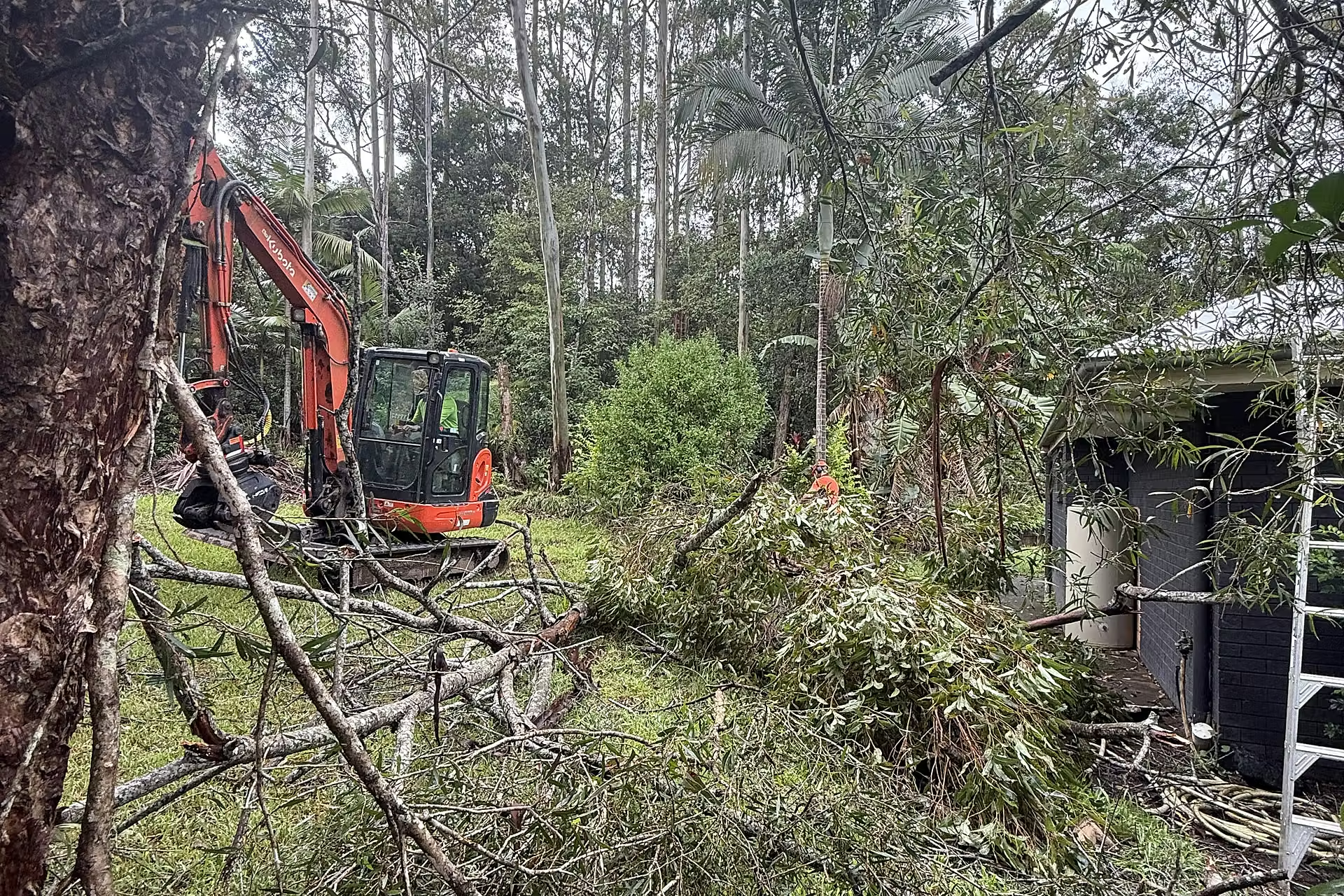
Whether a tree has come down in a storm or you're not sure if a lean is something to worry about, our team can assess it properly and document it the way council expects. Our 24/7 emergency tree removal service covers the whole MidCoast region, and our AQF Level 5 Consulting Arborists can provide the written risk assessment needed to support an exemption or permit application.
We are MidCoast Council panel providers and Arboriculture Australia members, so we know what council and the courts actually expect to see in a hazard assessment.