Case Study
Land Clearing for Shed Development — Charlotte Bay, Mid North Coast
DA-approved vegetation clearing, stump grinding, and site preparation for a shed development at Charlotte Bay on the NSW Mid North Coast.

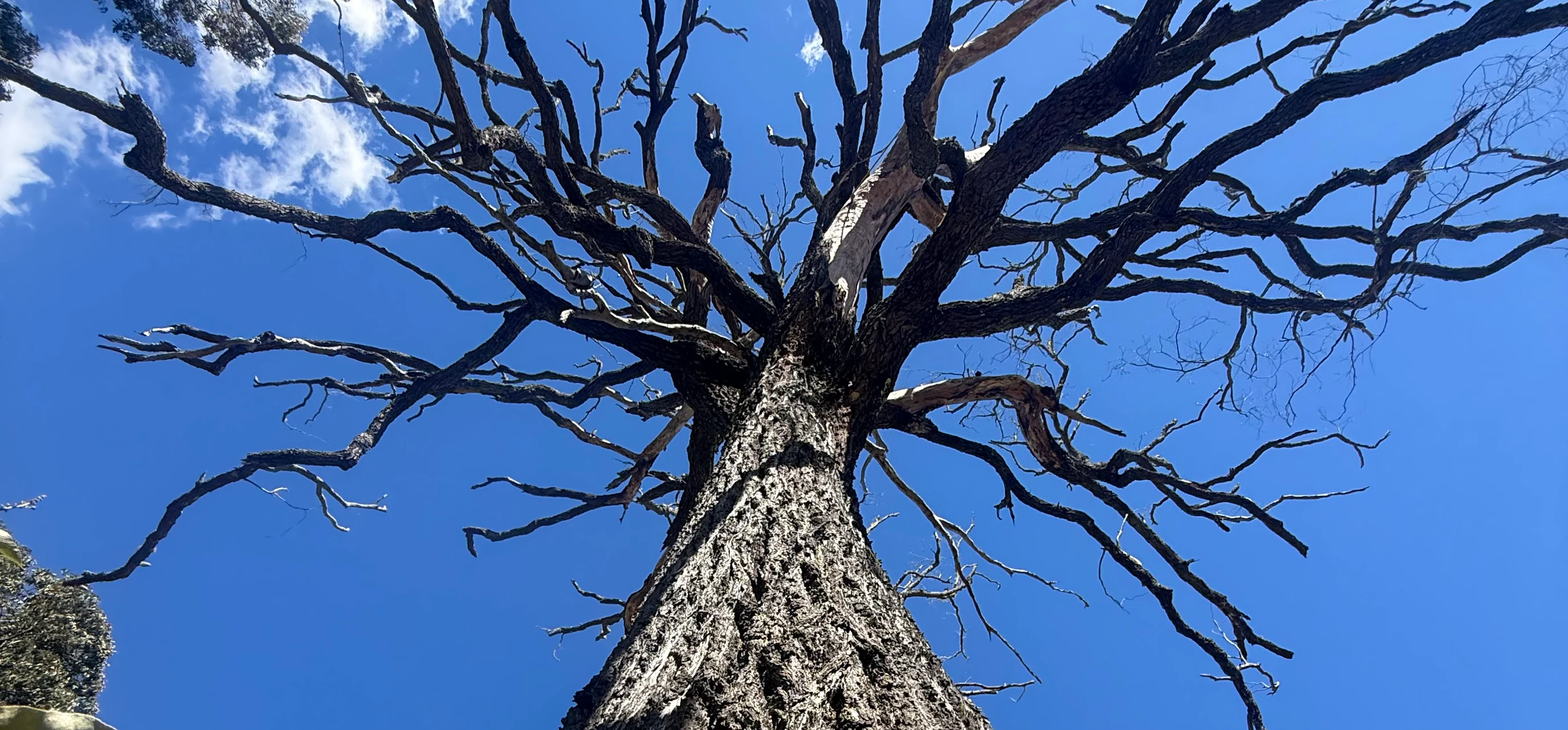
Removal of a large, hazardous dead Ironbark on a rural property at Firefly, NSW, revealing substantial internal hollowing that wasn't visible from the ground before the tree came down.
| Location | Firefly, NSW (Mid North Coast) |
| Project Type | Rural property: hazardous dead tree removal |
| Services | |
| Outcome | Large hazardous dead Ironbark safely removed and mechanically processed, eliminating the identified hazard |
MidCoast Tree Solutions was engaged to remove a large dead Ironbark on a rural property at Firefly, NSW.
The tree was completely dead and had developed a substantial crown containing numerous dead limbs. Its size, condition and proximity to an area of the property regularly accessed by people made it an increasing hazard if left unmanaged.
This project is a good example of why dead trees need to be considered in relation to both their condition and their surrounding environment.
Once a tree dies, deterioration begins. Roots, structural wood, unions and branches can progressively lose strength, and unlike a healthy tree, there is no longer living growth capable of responding to damage or producing new structural tissue.
Importantly, the extent of that deterioration isn't always visible externally. The Firefly Ironbark's size and condition, combined with its position near an area of the property people used regularly, meant the risk needed to be taken seriously well before the tree was processed.
Given the size and condition of the tree, the removal needed to be planned around controlling the tree during felling and then safely handling the substantial volume of timber once it was on the ground.
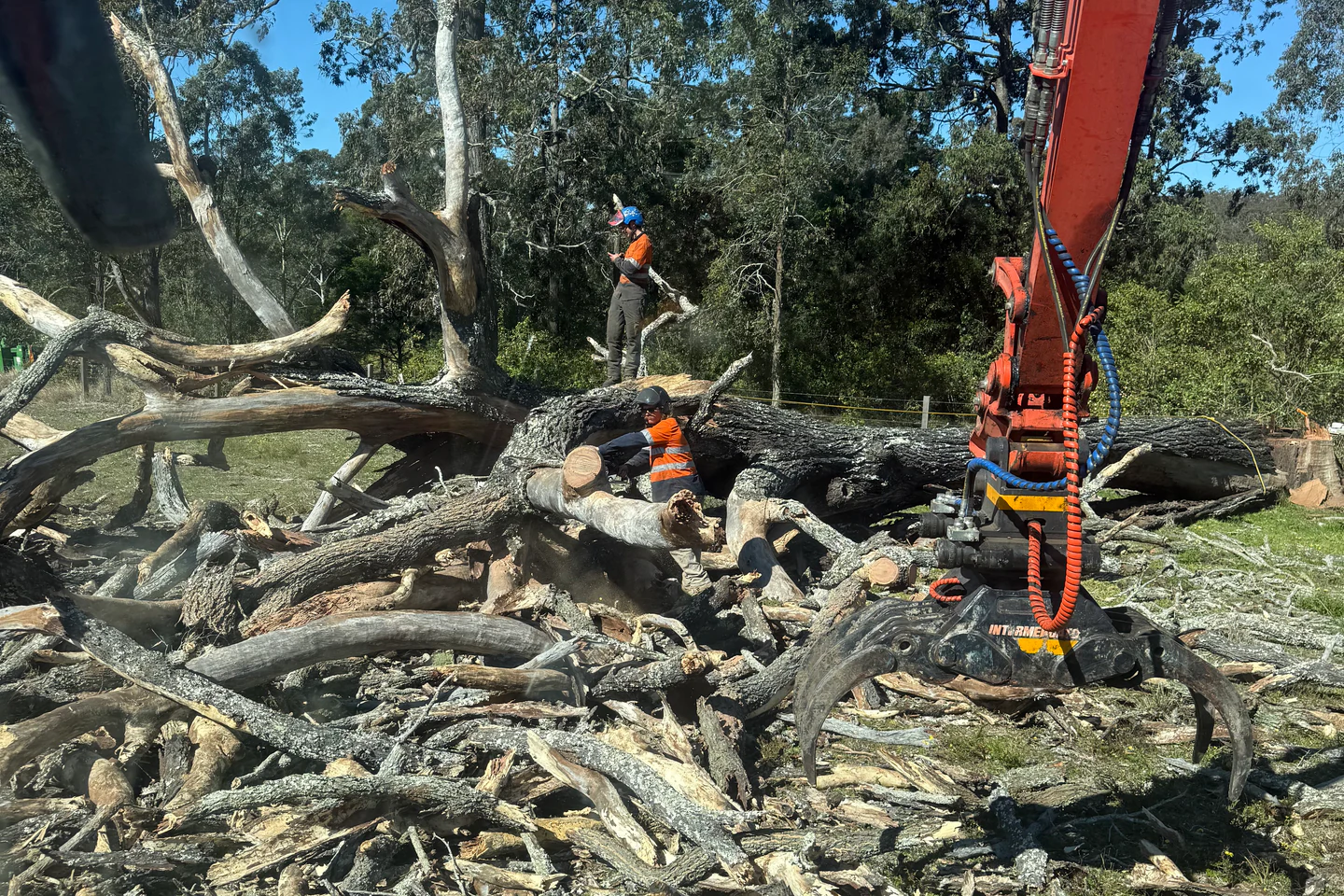
The tree's size, condition and the substantial dead crown were assessed against its proximity to a frequently accessed area of the property, shaping the removal method and equipment required.
The tree was safely brought to ground under control, ahead of mechanical processing of the trunk and crown.
The 8-tonne excavator, fitted with a rotating grapple, was used to process and handle the large trunk and crown sections. Mechanical handling allowed heavy and irregular sections of dead timber to be controlled without unnecessary manual handling by the ground crew.
Once the trunk was processed, the extent of internal hollowing within sections of the tree became clearly visible, confirming the deteriorated condition that had made the tree a hazard.
The large dead Ironbark at Firefly was safely removed and mechanically processed, eliminating the identified hazard from the property:
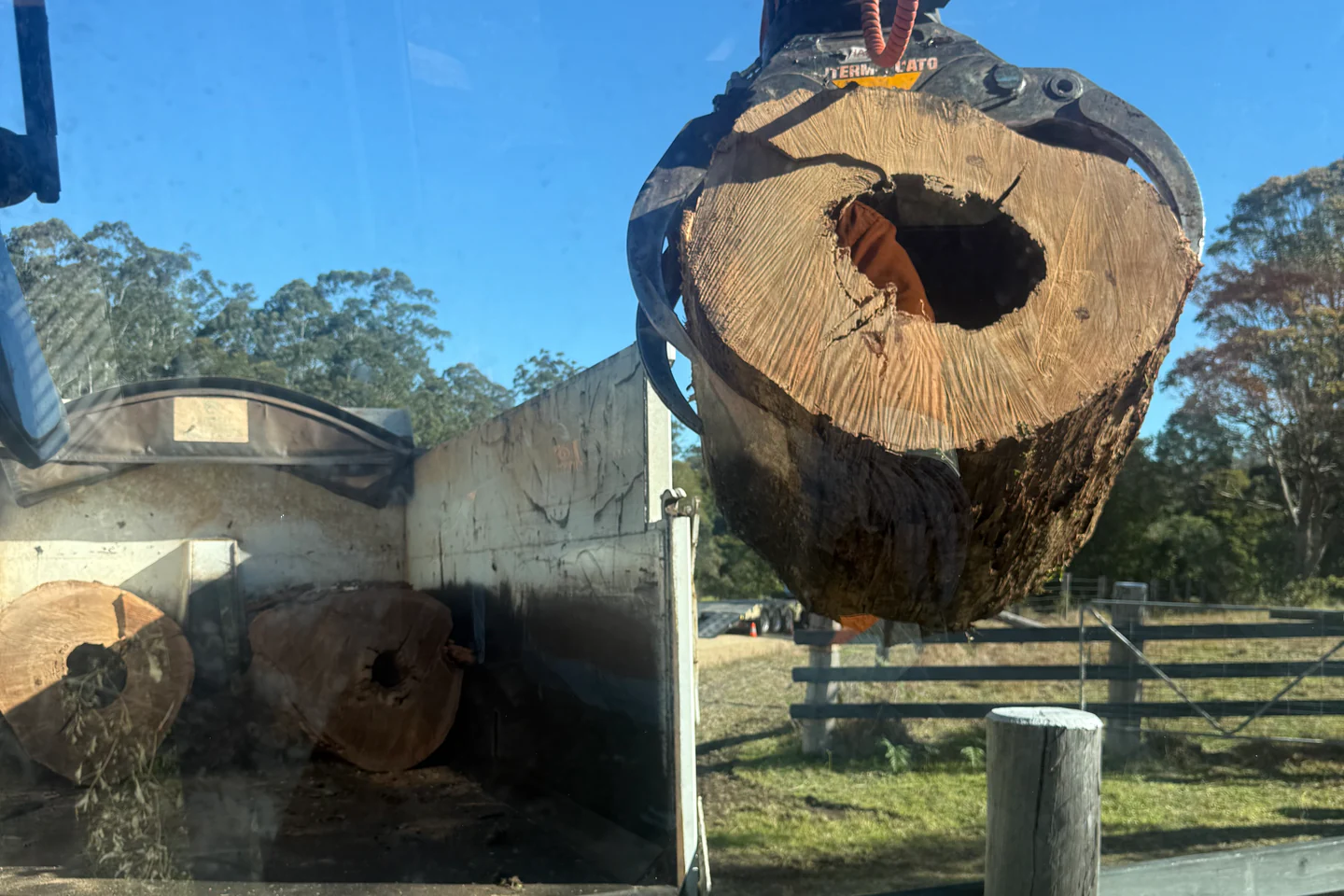
Matching equipment to the size and condition of the tree was essential for delivering this project safely.
If you have a large dead or declining tree on your property, it's worth considering what sits within its potential failure zone. A tree that appears harmless at the back of a paddock may become significantly more important if people, livestock, vehicles or infrastructure regularly pass underneath it. Likewise, a dead tree beside a home, driveway or public area deserves particular attention.
Having the tree assessed early can help identify potential hazards and determine whether pruning, monitoring, habitat retention or complete removal is the most appropriate course of action.
MidCoast Tree Solutions manages large and potentially hazardous trees across rural, residential and commercial environments on the Mid North Coast, using experienced personnel and specialised machinery. The team carries full public liability insurance.
From assessment through to tree removal and mechanical processing, MidCoast manages the full scope of hazard tree work, so property owners have straightforward advice on what a dead or declining tree actually needs.
MidCoast Tree Solutions services Firefly and the wider Mid North Coast region.
Have a large dead or declining tree on your property? Call MidCoast Tree Solutions on 0411 116 876 or request a free quote online.

Once a tree dies, deterioration begins straight away. Roots, structural wood, unions and branches progressively lose strength, and because there's no living growth left to respond to damage, dead trees become increasingly unpredictable over time. Individual branches may fail first, larger sections of the crown can subsequently fail, or deterioration within the trunk or root system can eventually contribute to failure of a substantial part, or potentially all, of the tree. On the Firefly Ironbark, substantial internal hollowing was found within the main stem during processing, which wasn't visible from the outside beforehand.
Yes. It's easy to assume a dead tree on acreage presents little risk because there are fewer buildings nearby, but rural properties introduce their own potential targets: houses and sheds, driveways and access roads, fences and gates, livestock and paddocks, machinery and parked vehicles, power infrastructure, frequently used work areas, and tracks and property entrances. The level of risk isn't determined simply by whether a property is rural or residential, it depends on what could be affected if the tree or part of it fails. A dead tree standing well away from people and infrastructure may sometimes be retained for habitat where appropriate; the same tree beside a house, driveway or frequently occupied area presents a very different risk profile.
In residential areas, the potential consequences of tree failure can increase considerably because there are generally more people and structures within the tree's potential fall zone. Dead or structurally compromised trees may overhang homes, driveways, vehicles, pools, play areas, footpaths, roads, neighbouring properties or powerlines, and even comparatively small dead branches can create a serious hazard when falling from height. For this reason, homeowners shouldn't necessarily wait until a dead tree begins dropping substantial limbs before having it professionally assessed.
It can. As deterioration progresses, climbing anchors, branches and structural sections may become less reliable, which can influence the techniques and equipment required to safely undertake the removal. Early assessment gives an arborist more opportunity to determine the most appropriate approach before deterioration becomes advanced, rather than reacting once the tree's condition has significantly worsened.
No. Dead trees can provide important habitat for native wildlife, particularly where hollows are present, and where a dead tree is sufficiently separated from people, buildings and other significant targets, there may be opportunities to retain it, or retain part of it as a habitat tree or habitat pole, following appropriate assessment. Professional tree management isn't simply about removing every dead tree. It's about weighing tree condition, the likelihood of failure, the surrounding targets, the potential consequences, and environmental value.
We'll visit your property, assess the trees, and give you an honest recommendation at no cost.