Hollow Trees, Nesting Birds and Koalas: How Wildlife Affects Tree Work on the MidCoast
Most tree work is planned around the tree itself. But on the MidCoast, what lives in the tree matters just as much. Here is how hollow-bearing trees, active nests and koala habitat change how tree work should be planned on your property.
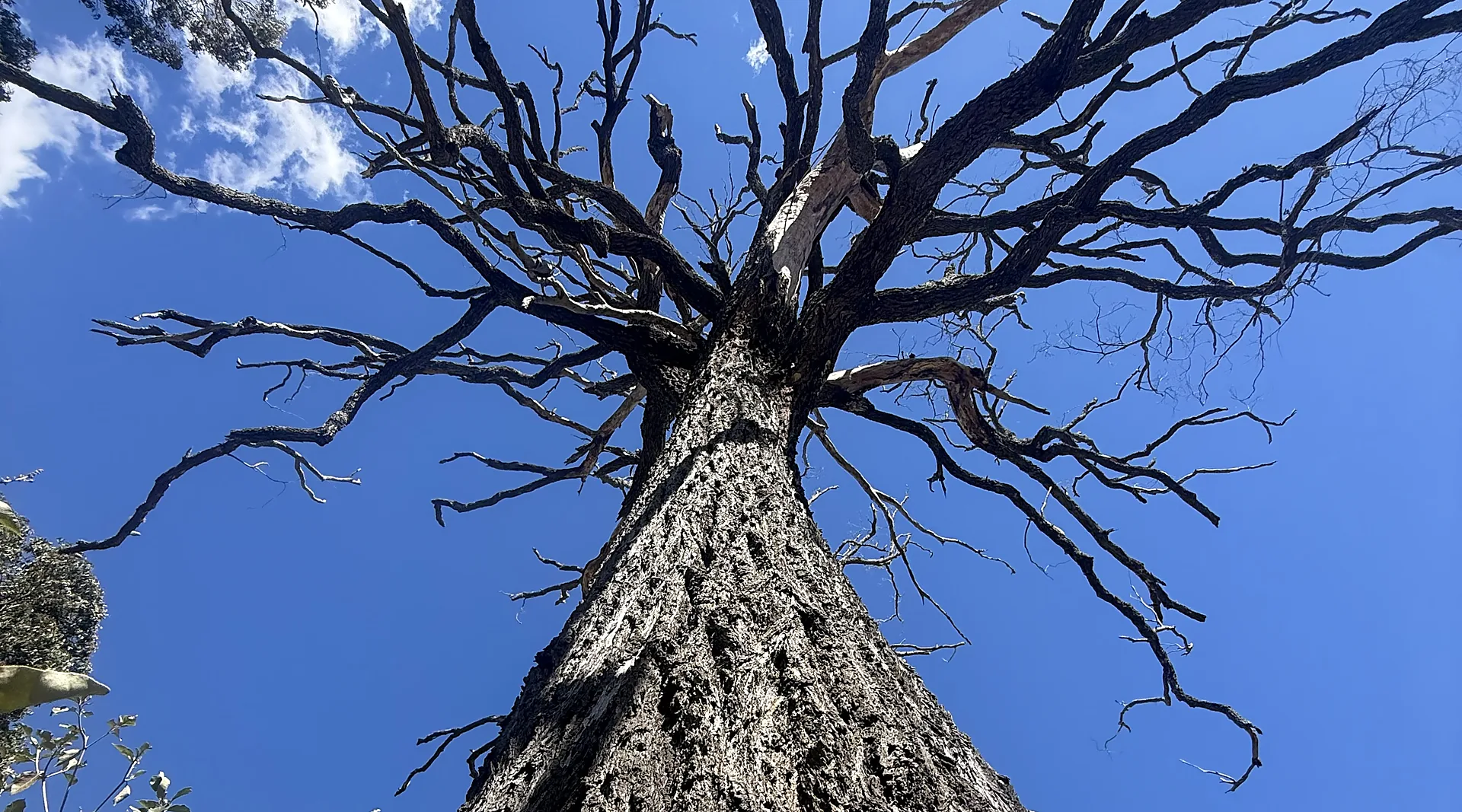
An old gum with a hollow halfway up the trunk. A pair of birds going in and out of a branch fork every morning. Koala scratches on the bark of the Tallowwood out the back. On the MidCoast, these are everyday sights, and each one can change how a tree should be looked after.
Most people think about a tree's health and safety before pruning or removing it. Fewer stop to check whether animals are living in it. Hollows, nests and koala visitors are easy to miss, and finding them before work starts makes all the difference.
This guide focuses on the wildlife side of tree work: hollow-bearing trees, nesting birds and koala habitat.
Key Takeaways
Loss of hollow-bearing trees is recognised as a major threat to wildlife in NSW. Hollows take a very long time to form, and trees with large hollows are rarely less than 220 years old.
In NSW, hollows are used by at least 46 mammals, 81 birds, 31 reptiles and 16 frogs. Around 40 of these species are threatened.
Animals living in a tree should be found before work starts. A careful check for hollows, nests and koalas protects wildlife and avoids delays mid-job.
Koala numbers have fallen sharply and they are now considered endangered. Tallowwood, Swamp Mahogany, Forest Red Gum and Grey Gums are among their preferred food trees on the MidCoast.
For hollow-bearing trees, a careful inspection, an ecologist's input on complex sites, and an animal handler on the day all help animals move on safely.
Reducing fire risk near the house and protecting wildlife can go together. The NSW RFS advises checking for hollows and nests before clearing.
Before removal, consider pruning, keeping part of the trunk as habitat, or adding nest boxes or carved hollows.
1. Why Hollow-Bearing Trees Matter So Much
Australia has no woodpeckers, so our wildlife cannot simply carve out a new home. Tree hollows form slowly, as fungi and termites eat away the heartwood and as branches break or fire scars the trunk. The NSW Threatened Species Scientific Committee notes that vertebrates digging out their own hollows is not an important part of the process here.
That takes time. The NSW Government's nest box guidance notes it can take up to a hundred years for a hollow to form. Eucalypts with large hollows, the kind used by owls and gliding possums, are rarely less than 220 years old. Once a tree like that is gone, the hollow is not coming back within anyone's lifetime.
Because of this, "Loss of hollow-bearing trees" is recognised as a major threat to wildlife in NSW. The NSW Threatened Species Scientific Committee found that hollows are used by at least 46 mammals, 81 birds, 31 reptiles and 16 frogs in NSW, and that around 40 of those species are threatened.
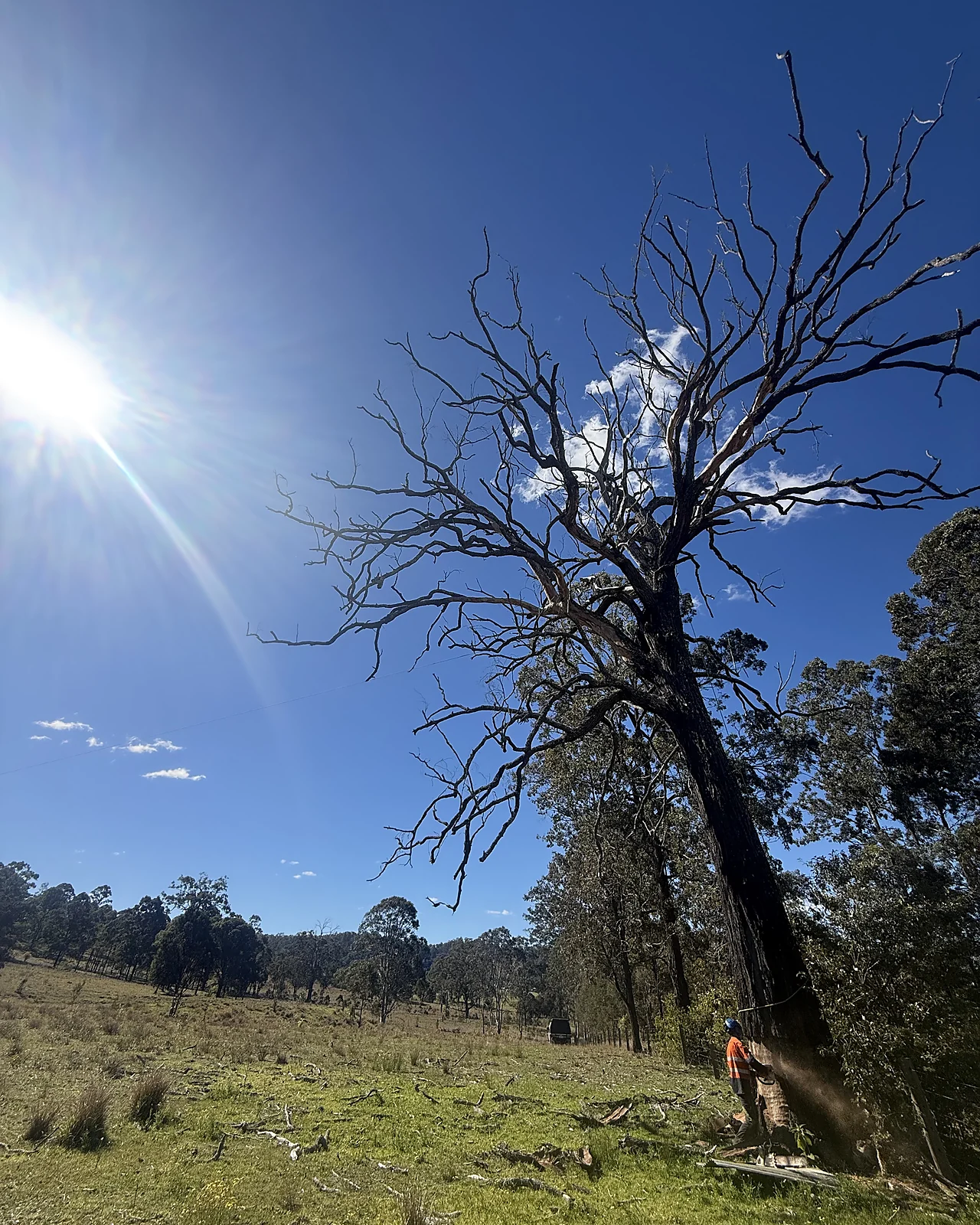
A dead tree is not automatically "just a dead tree" either. Standing dead trees often hold the most hollows on a property, and many are still in use.
Standing dead trees often hold the most hollows on a property.
2. MidCoast Wildlife That Depends on Tree Hollows
Many of the threatened animals that rely on hollows have been recorded in the MidCoast area. These are some of the ones most likely to come up when a hollow tree needs work:
The Glossy Black-Cockatoo also relies on she-oaks for food, which is one reason Forest Oak is worth keeping where it grows (see Section 5).
How to Tell if a Tree Has Hollows
Hollows are not always obvious from the ground, especially high in the canopy. Signs worth looking for include:
Openings in the trunk or branches. Holes, splits or cavities, often where a branch has broken off or the trunk has been scarred.
Broken branch stubs and spouts. Snapped or hollow-ended limbs, which often form small hollows as they decay.
Wear around an opening. Smooth, worn or scratched bark around a hole suggests animals are using it.
Activity at dusk or dawn. Possums, gliders and bats often leave hollows around dusk and return before sunrise.
Droppings, feathers or chewed material at the base. These can point to animals living above.
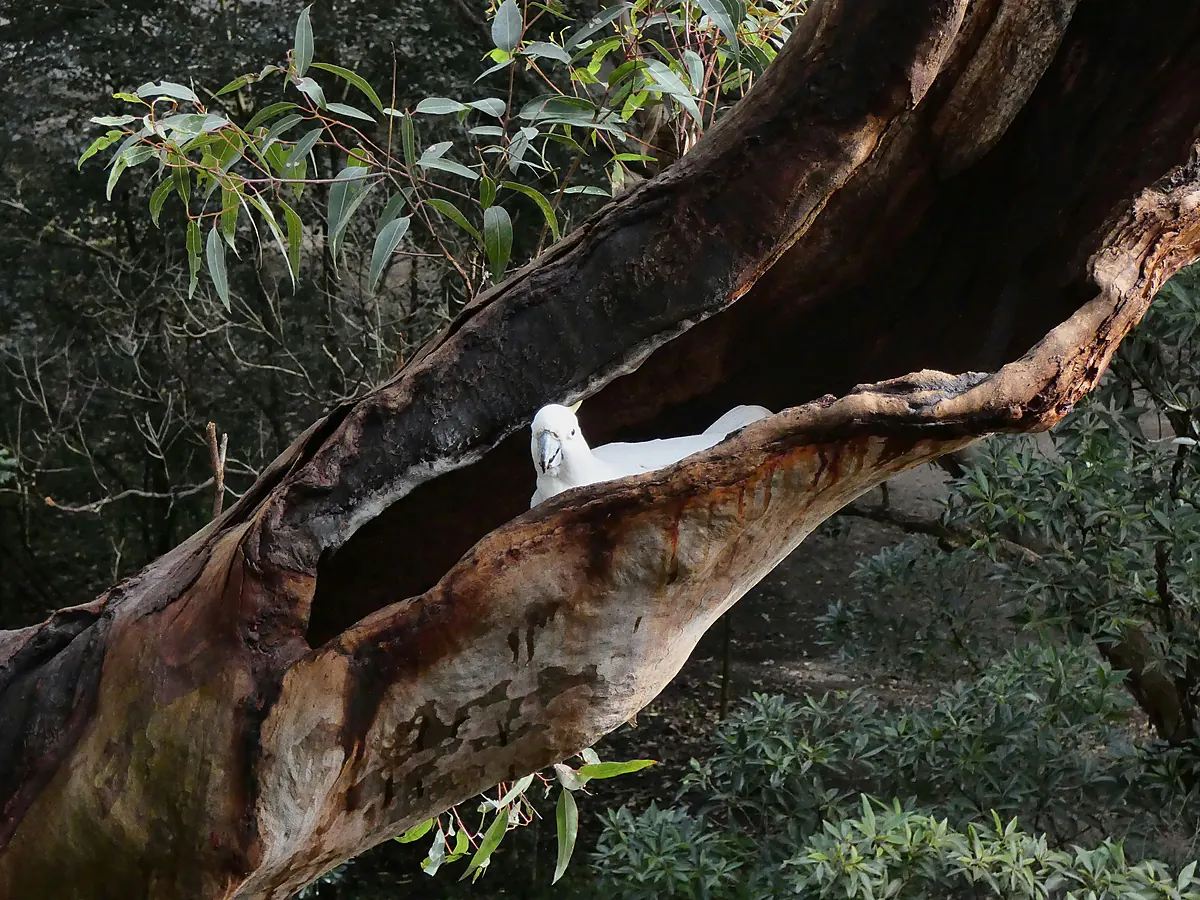
Cockatoos and other parrots use hollow limbs like this one.
Several threatened microbats also roost in tree hollows. They are small and easy to miss, which is one reason a hollow tree should be checked properly before any work starts. Common species like possums, kookaburras, rosellas and lorikeets use hollows too, and they deserve the same care.
3. Why Wildlife Comes First in Tree Work
Whether you live in town or on acreage, the animals using your trees are the same. A tree that looks empty from the ground can hold a nest, a family of gliders, or a roost of microbats.
Two things matter most when planning tree work:
Avoiding harm to animals. Felling or heavily pruning a tree while animals are inside can injure or kill them. Native birds, possums, gliders and bats are all easily hurt or displaced by tree work.
Protecting habitat. Hollows, nests and food trees are hard to replace. Keeping them, or replacing them where possible, helps local wildlife stay on your block.
In practice, this means checking a tree for wildlife before any work starts. If a tree has an active nest, a koala, or gliders denning in a hollow, the work needs to wait or be planned around the animals.
4. Nesting Birds: Timing Your Tree Work
There is no single "nesting season" that suits every bird. Different species breed at very different times of year:
Bird
Breeding Period
What It Means for Tree Work
Powerful Owl
Nests May to October. Young can fledge as late as December.
Large hollow trees can be in use through winter and spring.
Glossy Black-Cockatoo
Breeds mainly March to August. The single egg is laid March to May.
Autumn and winter work near large hollows needs care.
Many other native birds
Most nesting activity is in spring and summer.
Check canopy, forks and hollows before pruning in the warmer months.
Before any pruning or removal, look and listen. Signs of an active nest include birds repeatedly flying to the same spot, begging calls from chicks, fresh nest material, or droppings and feathers at the base of a hollow.
If you find an active nest, the safest approach is to hold off on any work that would disturb it until the young have left. If the tree is a genuine safety risk and cannot wait, get advice first, and have a licensed wildlife carer on standby (see Section 9).
5. Koalas and Koala Food Trees on the MidCoast
Koala numbers in NSW have fallen sharply, and after the 2019–20 bushfires the koala was recognised as endangered in NSW, Queensland and the ACT. The MidCoast is still home to important koala populations.
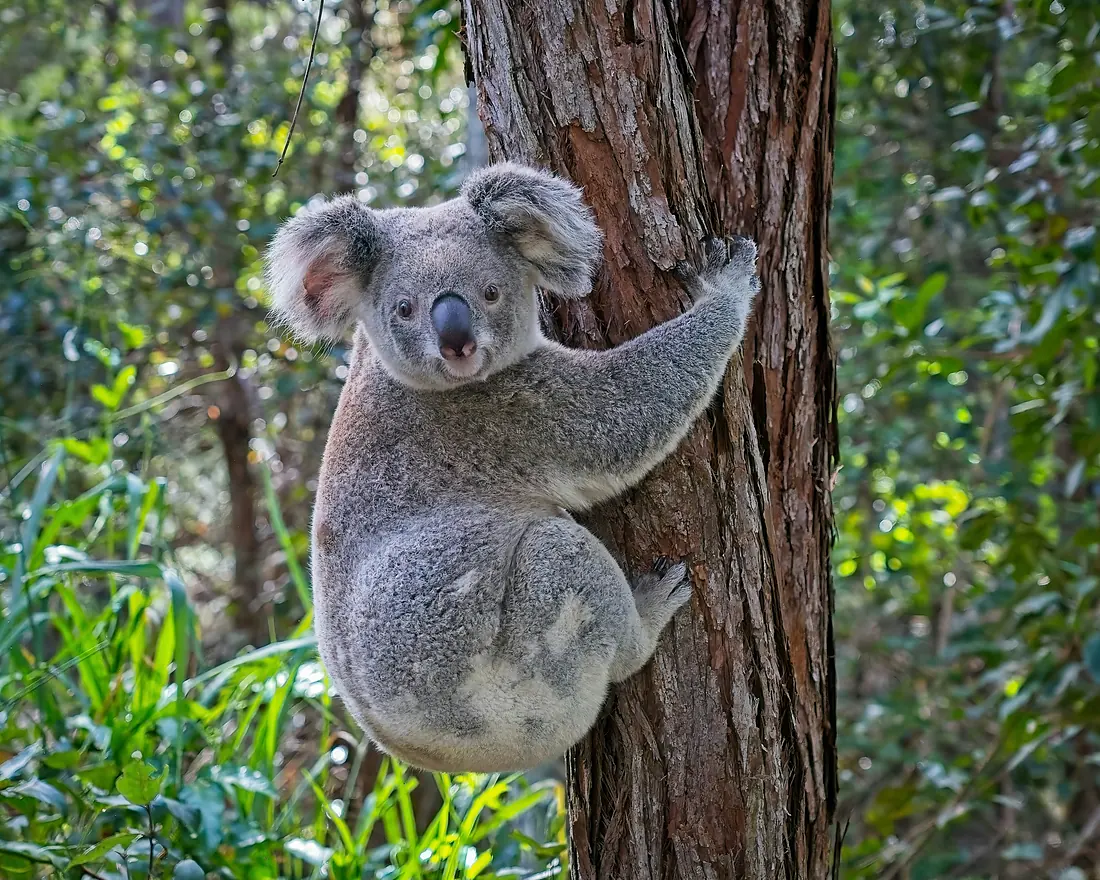
Koalas are listed as Endangered in NSW.
Hawks Nest and Hallidays Point are among the MidCoast areas where koalas are often seen, so koala food trees on these blocks deserve extra care.
Know Your Koala Food Trees
Koalas on the MidCoast prefer a handful of eucalypts. If you have any of these on your block, treat them as high-value trees and look for koalas before any work. Locally preferred koala food species include:
Tallowwood (Eucalyptus microcorys)
Swamp Mahogany (Eucalyptus robusta)
Forest Red Gum (Eucalyptus tereticornis)
Grey Gums (including Eucalyptus punctata and Eucalyptus propinqua)
Koalas also feed on a wider group of local eucalypts, and other trees such as Forest Oak are a key food source for the Glossy Black-Cockatoo. An arborist can help you identify which trees on your block matter most to wildlife.
If There Is a Koala in the Tree
Stop work and leave it alone. Do not try to move it, shake the tree, or work underneath it. Wait for it to leave on its own, and if it is injured or in danger, call a koala rescue group straight away.
Wildlife can turn up in trees anywhere on the MidCoast, from town blocks to bush acreage. Places such as Hawks Nest, Tinonee and Smiths Lake are known koala and Squirrel Glider habitat.
For a tree with hollows, nests or koala activity, a careful check usually involves:
A close inspection. An arborist checks the trunk and canopy for hollows, nests, scratches and other signs of animals, and looks at the tree's health and structure.
An ecologist on complex sites. Where a tree may be used by threatened species, a suitably qualified ecologist can assess what is living in it and how best to protect it.
An animal handler on the day. For hollow-bearing trees, having an experienced animal handler on site means any animals found during work can be moved safely.
Independent advice. A report from an AQF Level 5 arborist who is not tied to the company doing the work gives you an unbiased view of the tree.
Replacement planting. If a tree has to go, planting new local natives helps replace the habitat over time.
A good rule of thumb is to replace what is lost: plant extra koala food trees where one is removed, and add nest boxes where hollows are lost.
7. Reducing Fire Risk Around Habitat Trees
Many MidCoast homes sit close to bushland, so reducing fire risk around the house is important. But clearing vegetation near a home can still disturb animals living in it, so fire preparation and wildlife care work best when they are planned together.
Look before you clear. Fire preparation often happens in a rush before summer, which is also peak nesting season for many birds. Take time to check each tree first.
Check first. The NSW RFS advises checking trees for hollows and nests before clearing.
Reduce fuel, keep habitat. Removing dead wood, leaf litter and low shrubs near the house often lowers the risk without taking out a hollow tree.
Prune before you remove. Lifting the canopy away from the roof can make a big difference while keeping the hollows in place.
If a tree near your house is a fire risk and also has hollows or nests, talk to us first about how to reduce the risk without harming what is living in it.
8. Options Before You Remove a Habitat Tree
Removal is sometimes the right answer, especially if a tree is genuinely unsafe. But there are often ways to manage the risk and keep the habitat.
Assessing habitat trees during building works, installing nest boxes, and planting local natives are all options worth considering.
Prune Instead of Remove
Reducing long, heavy limbs, removing dead wood over a house or driveway, or lowering the height of a tree can lower the risk while keeping the hollows in place. In some cases, a dangerous tree can be reduced to a tall, stable trunk that keeps its lower hollows. Our tree pruning team works to AS 4373.
Replace Lost Hollows
If a hollow has to go, nest boxes and carved hollows can help, but they are not a like-for-like swap. The NSW Government's guidance notes:
Natural hollows insulate better and last far longer than boxes.
Boxes made from thin pine or interior plywood will not last more than about five years outside.
Boxes should be checked around twice a year to make sure bees have not taken them over.
Artificial hollows are an adequate short-term substitute while trees mature.
Hollows carved into living trees with a chainsaw need skilled professionals to do well.
On larger clearing jobs, such as subdivisions or road projects, NSW Government guidance for major works uses staged habitat removal. Vegetation without hollows is cleared first. Marked habitat trees are then left standing for at least 24 hours before being removed under an ecologist's supervision, giving animals the chance to move on overnight.
If work cannot be avoided, timing makes a big difference. Check the tree for hollows and nests first, and where possible, plan major work outside the breeding period of the animals using it (see Section 4).
Keep the contact details for local wildlife carers on hand on the day (see Section 9). If an animal is found during work, stop and let it move on, or call a carer for help.
Plan Replacement Planting
Replacing a lost habitat tree is a long-term job, so it pays to plant early. Choose local native species that suit your block, and in koala areas, consider including koala food trees such as Tallowwood or Swamp Mahogany. Our guide to the native trees to plant on your MidCoast property can help you choose.
9. If You Find Injured or Displaced Wildlife
If an animal is injured, or a nest or hollow is disturbed during tree work, stop work around the area and call a licensed wildlife rescue group. Keep people and pets away until help arrives.
Organisation
Covers
Phone
FAWNA NSW
Native wildlife in the MidCoast, Port Macquarie-Hastings and Kempsey council areas
Never handle a bat yourself. Bats in Australia can carry Australian bat lyssavirus. NSW Health advises that only people who are vaccinated and trained should handle bats. If you are bitten or scratched, NSW Health advises washing the wound thoroughly with soap and water for at least 15 minutes and seeking medical attention as soon as possible.
If a tree with hollows, nests or koala visitors needs attention, MidCoast Tree Solutions can assess it on site. We will tell you what the wildlife considerations are and what your options are, from careful pruning to removal planned around what is living in the tree.
Our arborists are AQF Level 5 qualified and we carry public liability insurance. Through our Habitat Works service, we also work with builders and landowners on habitat tree protection, nest box installation and replacement planting.