Do Mature Trees Increase or Decrease Your Property Value?
Mature trees can add to a property's appeal or put buyers off, and the difference often comes down to where the tree is. Here is what the research actually shows, and the practical checks that matter on a MidCoast block.
Ask a real estate agent about a big old tree in the front yard and you might hear that it adds character. Ask a nervous buyer and you might hear about roots, gutters and storms. Both can be right.
Mature trees bring shade, privacy and a sense of established gardens that new plantings take decades to match. They can also bring falling limbs, roots near footings and bushfire concerns. Buyers weigh up all of this, often without saying so.
This guide looks at what Australian and overseas research says about trees and property prices, why a tree's distance from the house matters so much, and what MidCoast homeowners and buyers, from Taree to Gloucester and Pacific Palms, should check before they decide a tree is an asset or a problem.
Key Takeaways
There is no single answer. Research suggests the same tree can add value in one spot and reduce it in another.
A 2026 UTS study of City of Sydney house sales found each extra street tree within 10 metres of the centre of a property was linked to a 2.96% lower price, while each extra street tree 10 to 20 metres away was linked to about a 1.16% higher price.
A Perth study found more tree canopy on the street verge increased property values, while canopy on the owner's own block did not reliably add value.
Trees close to a house on reactive clay can affect footings. AS 2870 site classes and an engineer's advice matter more than the tree's size alone.
In bushfire-prone areas, trees and vegetation close to a home increase its exposure to embers and heat, so placement and upkeep matter.
Koala food trees and hollow-bearing trees are valuable wildlife habitat, so it is best to plan around them rather than count on removing them.
A tree that is healthy, in a sensible position and properly maintained is the one most likely to be seen as an asset rather than raise questions.
1. The Short Answer: It Depends Where the Tree Is
Most research on trees and property value points the same way. Trees tend to add value when they improve a street or a neighbourhood and sit at a comfortable distance from the house. They tend to reduce value when they are close enough to raise worries about damage, maintenance or safety.
So the better question is not "Do trees add value?" but "Does this tree, in this spot, look like a benefit or a cost to a buyer?" The rest of this guide looks at what shapes that answer.
2. What Australian Research Shows
The 2026 UTS Street Tree Study
In February 2026, the University of Technology Sydney published research led by Associate Professor Song Shi, with co-authors from University College London, in the journal Cities. The team looked at more than 1,500 house sales in the City of Sydney between 2021 and 2024, matched against nearly 50,000 public trees recorded by the council.
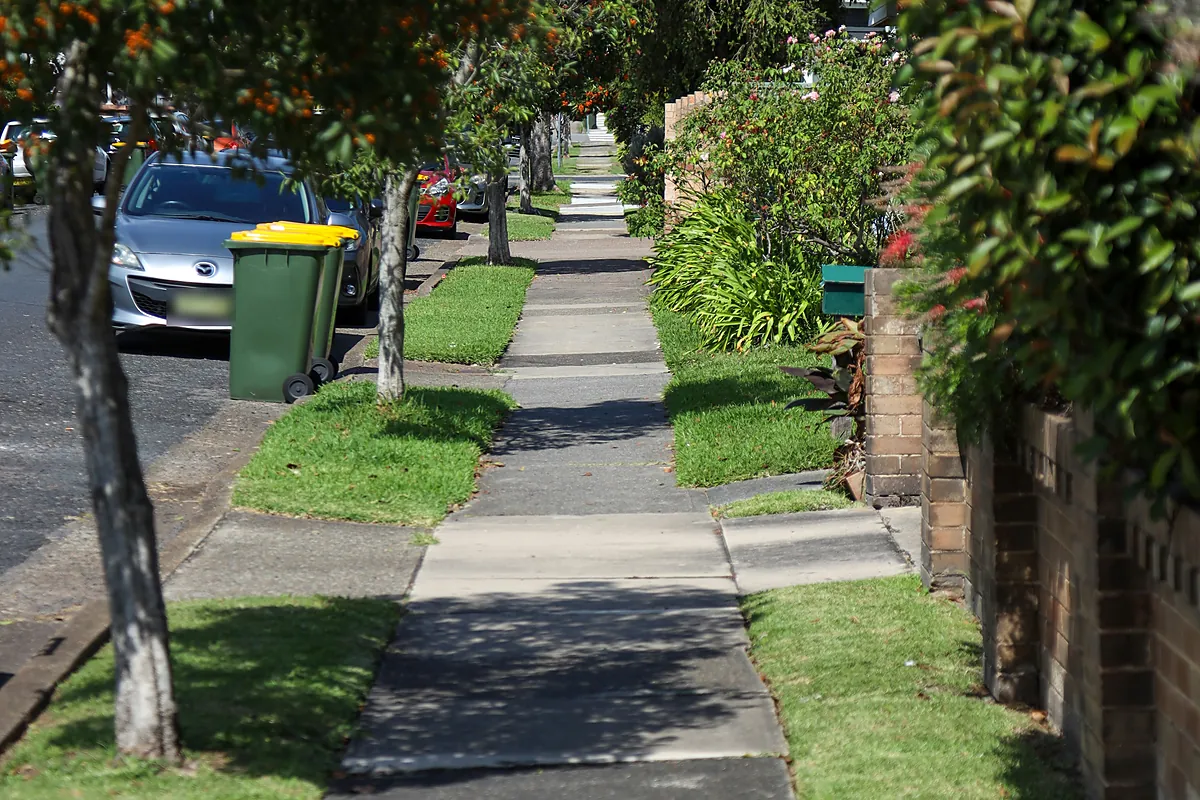
Street trees in a NSW suburb. The UTS study looked at public street trees, not backyard trees.
They measured the distance from each street tree to the centre of each property.
The study explained the drop for close trees as a rational response to the risks buyers see, including structural damage, fire hazard and falling branches.
It is worth keeping the limits in mind. The study covered public street trees in inner Sydney, not trees in private backyards, and the MidCoast market is different. But the pattern is a useful guide: close is a concern, a little further away is a plus.
Perth Research on Verge and Backyard Trees
A study by Pandit, Polyakov and Sadler, published in 2014 in the Australian Journal of Agricultural and Resource Economics, looked at more than 5,600 house sales in Perth. It found that tree canopy on the public verge in front of a house increased its value. Tree cover on the owner's own block, by contrast, did not reliably add value in the study's results.
Put the two studies together and a theme comes through. Buyers like a leafy street. They are more cautious about large trees right next to the house they are buying.
3. What Overseas Research Says
Much of the earlier research on trees and house prices comes from the United States. A summary of that research by the University of Washington reports that larger garden and street trees can add from 3% to 15% to home values, with studies trending towards an increase of about 7%.
A US Forest Service study in Portland, Oregon also found homes with street trees sold 1.7 days faster on average.
These figures come from different housing markets, climates and tree species, so they do not translate directly to the MidCoast. They do support the general idea that well-placed, healthy trees are appealing to buyers.
One of the main reasons buyers worry about close trees is foundation damage. On clay soils, which are common in parts of the MidCoast, the bigger issue is usually moisture, not roots pushing on concrete.
The same guide suggests trees should not be planted closer to a house than their mature height on moderately and highly reactive sites, 1.5 times their mature height on extremely reactive sites, and twice their height for rows or groups of trees.
Geotechnical reports also show that where existing trees create abnormal moisture conditions, a site can be classed as a Class P (problem) site under AS 2870, which means the footings need to be specially designed.
Removing a large tree is not always the fix either. Clay that has been dried out by a tree can take up water again once the tree is gone. If a big tree is close to a house on reactive clay, get advice from an engineer and an arborist before deciding to take it out.
5. Bushfire Risk and Trees Close to the House
Much of the MidCoast sits close to bushland, and bushfire risk is something many buyers think about. During a fire, embers, radiant heat and burning debris are what usually threaten a home, and trees and shrubs close to the house can add to all three.
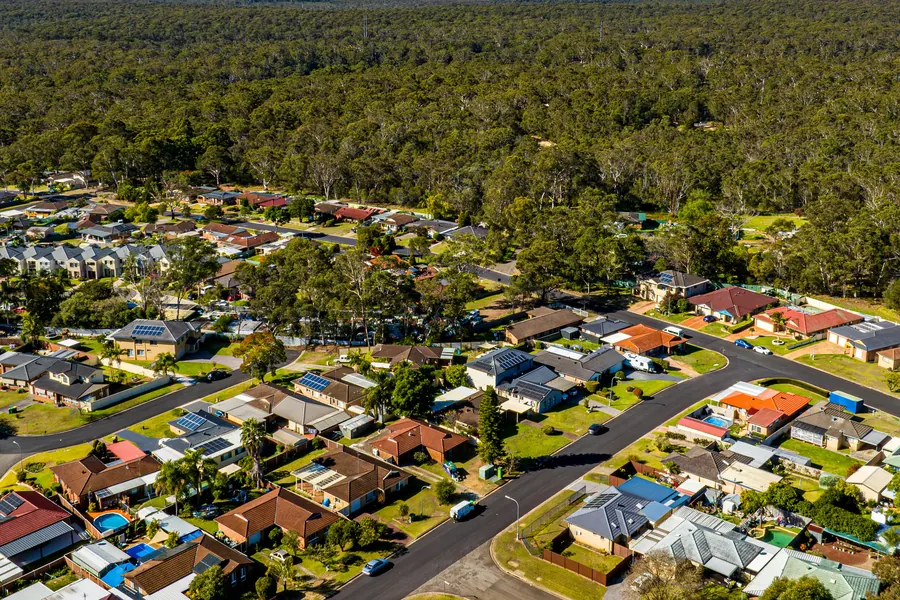
Homes next to bushland. The vegetation around a house helps set its Bushfire Attack Level.
Branches overhanging the roof, leaf litter building up in gutters, and dense vegetation right against the walls are the things most likely to worry a buyer, and the things most worth fixing.
Simple upkeep goes a long way: keep branches clear of the roof, remove dead wood and clean gutters regularly. Our fire and hazard management team can help reduce fuel around the house while keeping the trees that are worth keeping.
6. Koala Food Trees and Hollow Trees: A Different Kind of Value
Some mature trees carry more weight than their size suggests, because of what lives in them or feeds on them. On the MidCoast, two kinds stand out: koala food trees and trees with hollows.
Why These Trees Are Worth Keeping
Koalas on the MidCoast rely on a small group of preferred food trees, such as Tallowwood, Swamp Mahogany, Forest Red Gum and Grey Gums. Hollow-bearing trees matter just as much, because a hollow can take up to a hundred years to form and is used by owls, cockatoos, gliders, possums and bats. Once a tree like this is gone, it cannot be replaced within a lifetime.
Areas such as Hawks Nest, Tinonee and Smiths Lake are known koala and Squirrel Glider habitat. A tree with an active nest or a koala in it is best left alone until the animals have moved on.
What This Means for Buyers and Sellers
For buyers, the practical point is simple. If a block has koala food trees or hollow trees, the best approach is usually to keep them and plan any building, pool or extension around them. Do not count on removing them to free up space or improve a view.
For sellers, healthy koala food trees and habitat trees can be presented as part of the property's character, especially for buyers who want to live close to nature. Having an arborist confirm the trees are sound helps answer questions before a buyer raises them.
7. How to Make Mature Trees Work For Your Property
If you are selling, renovating or just want your trees to be seen as a plus, the aim is to make them look healthy, safe and well looked after. A few practical steps:
Get the trees assessed. An arborist can tell you which trees are healthy and worth keeping, and which have defects that a buyer's inspector is likely to notice. Our guide to 5 signs a tree is about to become a hazard is a good starting point.
Deal with obvious risks. Remove dead wood, especially over the roof, driveway and outdoor areas, and clear branches away from gutters and power lines.
Prune properly, not hard. Lopping and topping leave a tree looking damaged and can create weak regrowth. Pruning to AS 4373 keeps the tree's shape and health.
Think about shade placement. The Australian Government's Your Home guide notes that good shading can block up to 90% of the sun's heat through windows. The same guide recommends deciduous trees to the north, which let winter sun through, and deciduous or evergreen trees to the east and west.
Keep paperwork. Arborist reports and records of tree work help show a buyer that the trees have been well looked after.
If a tree really is in the wrong place, removal can be the right decision. Sometimes a healthy tree can be relocated instead with our tree transplanting service. Either way, it is better to make that call based on a proper assessment than on a guess about what buyers might think.
Want to know where your trees stand?
Whether you are getting ready to sell, planning an extension, or want a clearer picture of your trees, our residential tree services team at MidCoast Tree Solutions can walk your property with you. We will tell you which trees are healthy, which need work, and what your options are.
Our arborists hold AQF Level 5 qualifications in arboriculture and we carry public liability insurance.