What Makes a Tree "Dangerous"? Storm Damage, Leaning Trees, and When to Act
There's no single warning sign and no magic lean angle that makes the call for you. Here's how a professional risk assessment actually works, what to do if a tree is failing right now, and when it's time to bring in an arborist.
A tree doesn't have to be obviously dead to be dangerous, and a tree that leans doesn't automatically mean an emergency either. Homeowners across the MidCoast are often left guessing after a storm, or after noticing a tree leaning a little further than it used to, about whether they need to act now or can keep an eye on it.
This guide covers how arborists decide whether a tree is genuinely dangerous, what to do if a tree is failing right now, and why the size of a tree or the angle of its lean doesn't tell the whole story. If you're trying to spot the physical warning signs on a specific tree first, our guide to the 5 signs a tree is about to become a hazard covers the visual warning signs in detail; this guide picks up from there and covers what those signs actually mean.
Key Takeaways
A "dangerous" tree comes down to one question: is it a genuine risk to people or property? Dead, declining and structurally compromised trees are the main concerns.
If a tree is actively falling or has already come down, keep clear and call 000 if anyone's life is at risk, or the NSW SES on 132 500 for non-life-threatening storm damage.
Once everyone is safe, take dated photos and get an AQF Level 5 qualified arborist to assess what's left standing.
There's no magic lean angle. Arborists weigh how likely a tree is to fail, how likely it is to hit something, and how serious the consequences would be.
Size isn't the deciding factor. The tree's condition and what's underneath it are what count.
MidCoast has seen severe weather, including the record May 2025 Manning River flooding at Taree, which is why storm-damaged and leaning trees are such a common call locally.
1. "Dangerous" Is About Risk, Not Just Appearance
It's a common assumption that there's a simple rule that defines exactly what makes a tree "dangerous." In practice, it comes down to one question: is the tree a genuine risk to people or property?
Broadly, trees that cause concern fall into three groups:
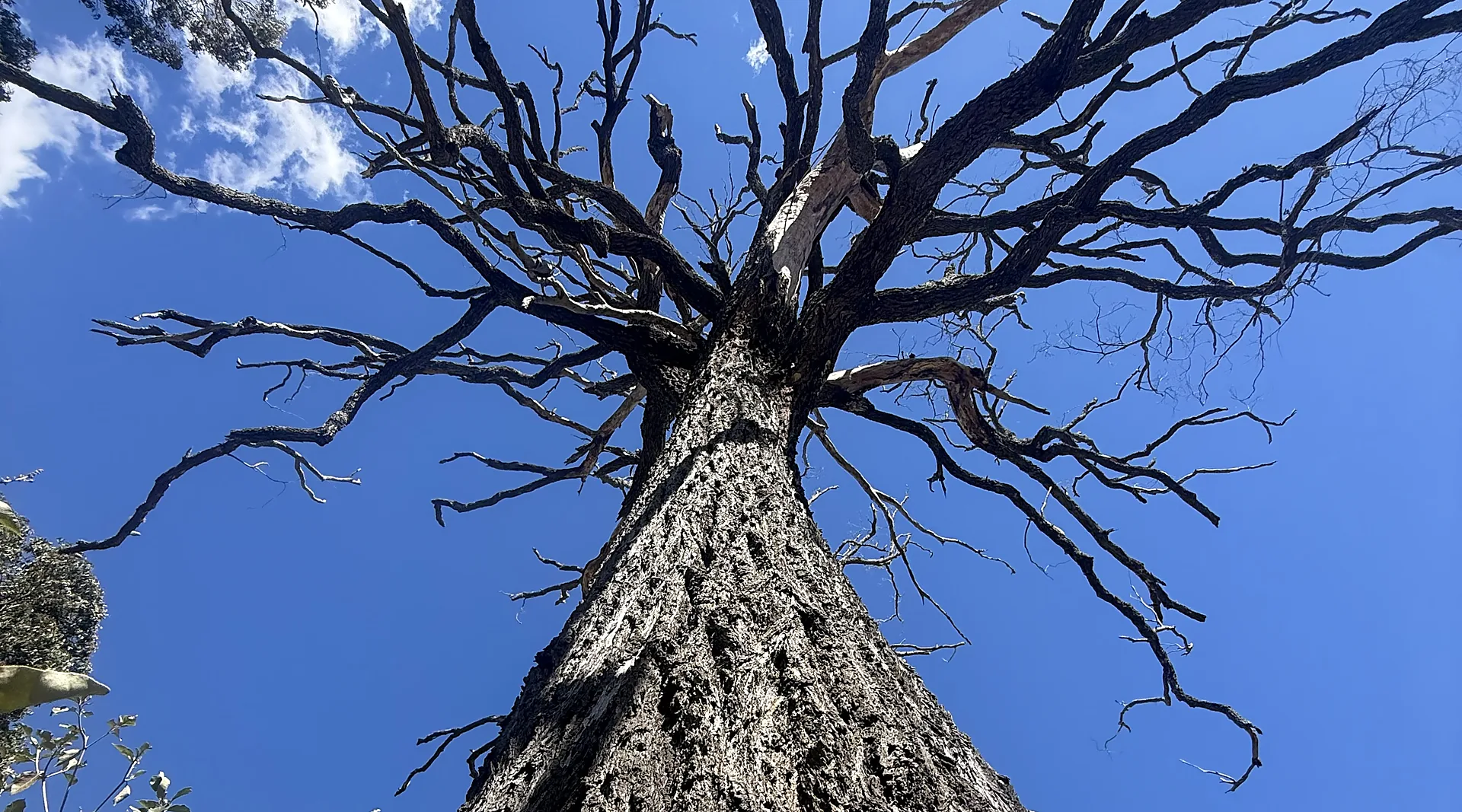
Dead trees. A tree that's no longer alive can't hold itself together the way a healthy tree does. Timber dries out, decays, and becomes brittle, and limbs can drop without warning.
Dying or declining trees. Disease, pests, root damage, or drought stress can leave a tree weakened long before it's obviously dead.
Structurally compromised trees. A perfectly healthy-looking tree can still be hazardous if it has a split trunk, a weak branch union, a damaged root plate, or has been hit hard by a storm.
What matters just as much is what's underneath it. A declining tree in the middle of an empty paddock is a very different risk to the same tree leaning over a house, a driveway, a play area, or a powerline.
2. If a Tree Is Actively Falling or Has Fallen Right Now
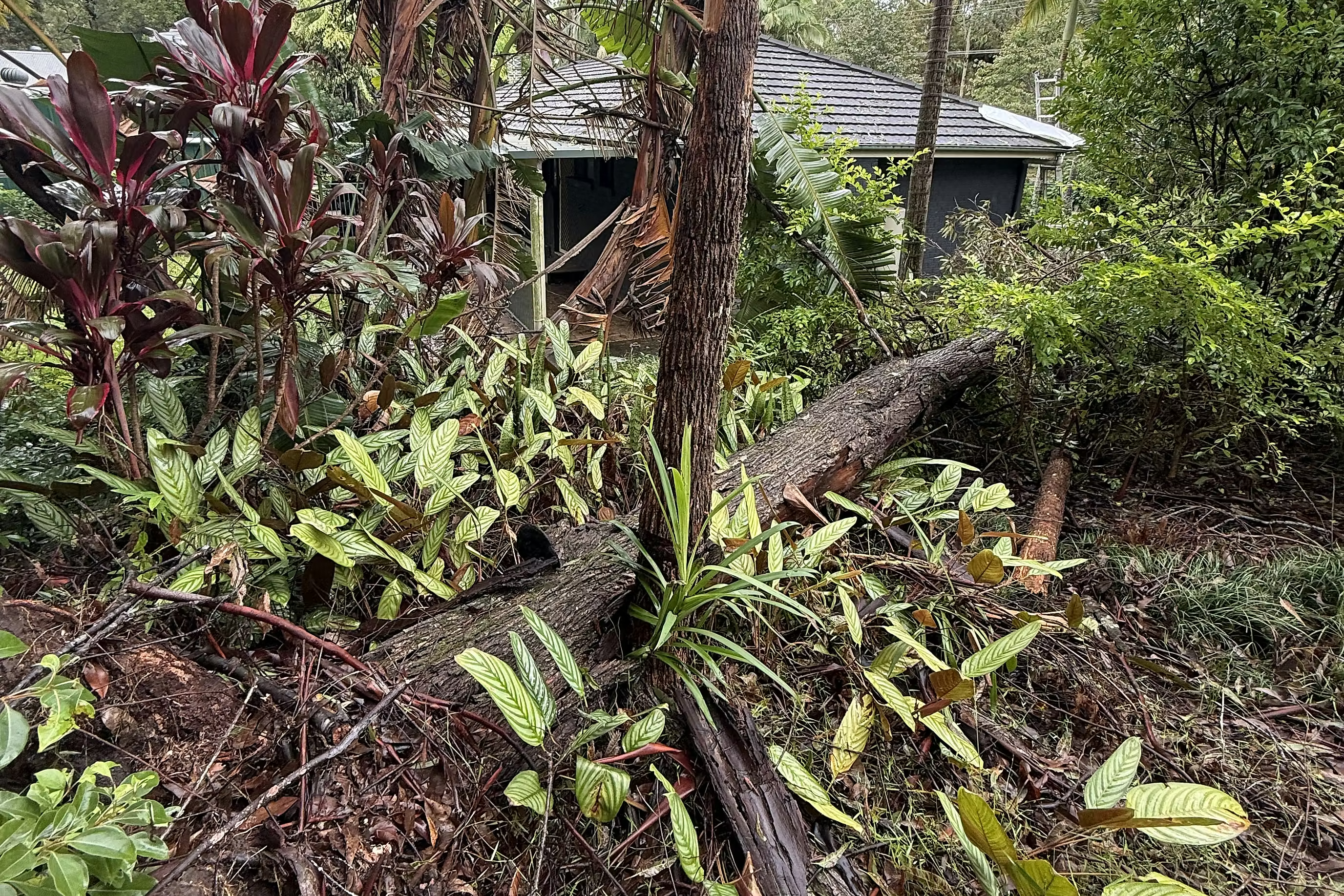
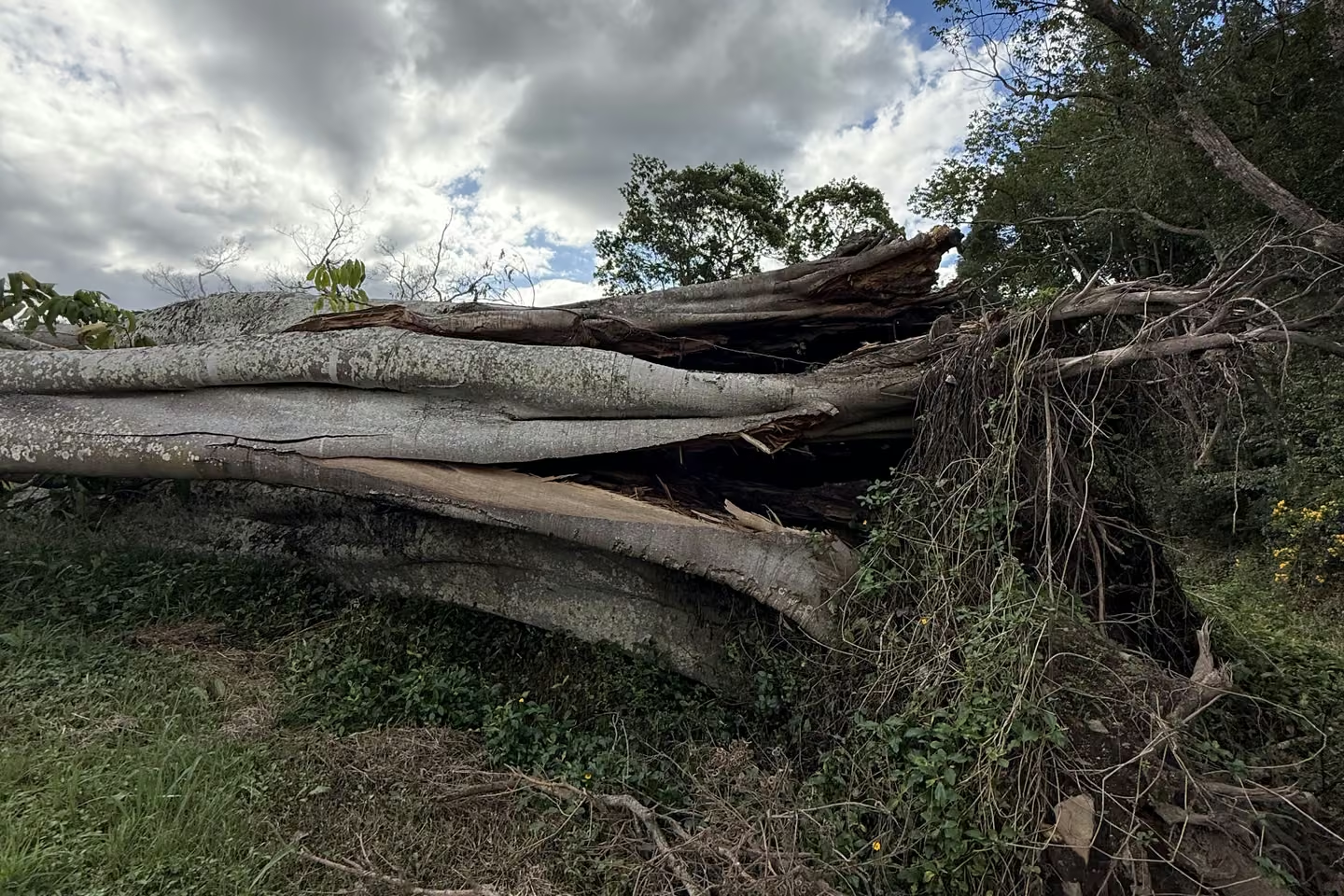
If a tree is failing right now, split, uprooting, or already down, safety comes first. Keep people and pets well clear, treat any fallen powerlines as live and stay well away, and call 000 if anyone's life is at risk. For storm damage that isn't life-threatening, contact the NSW SES on 132 500.
Once everyone is safe, take dated photos of the tree and any damage, and get an AQF Level 5 qualified arborist out to assess what's left standing. A damaged tree that's still upright can be under enormous tension, and cutting it the wrong way can make things worse.
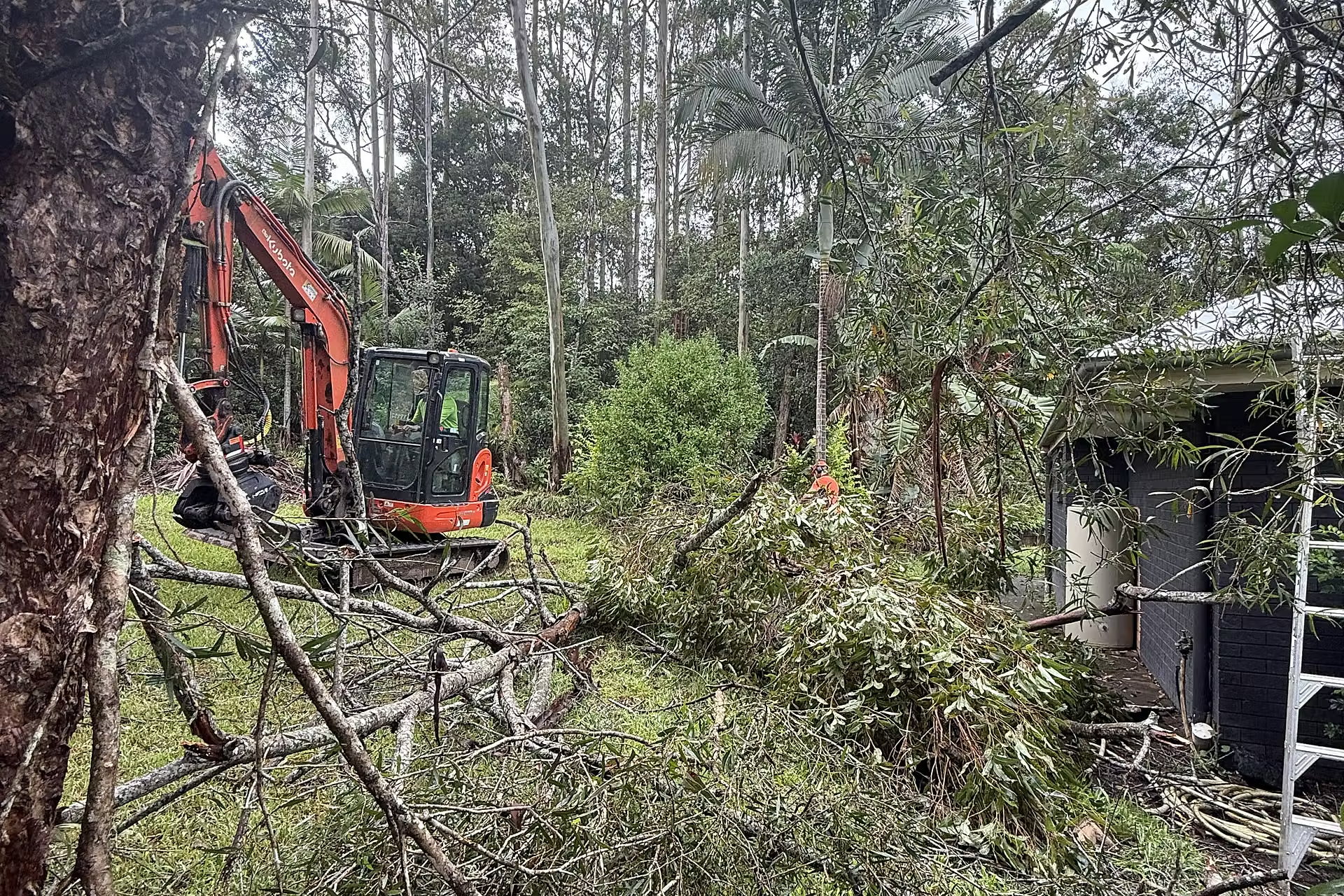
MidCoast Tree Solutions' 24/7 emergency team can attend fallen and storm-damaged trees across the MidCoast, make the site safe, and assess what's left standing. Call us any time on 0411 116 876.
Keep the photos and the arborist's written assessment together. They're useful for insurance, and they give you a clear record of what happened and why the work was done.
3. Leaning Trees: Why There's No Magic Angle
A tree leaning a bit more than it used to is one of the most common reasons homeowners start looking into removal, and one of the easiest places to get the assessment wrong. There is no single lean angle that makes a tree dangerous.
Instead, arborists use a structured risk assessment that weighs three things: how likely the tree is to fail, how likely it is to hit something if it does, and how serious the consequences would be. Together, these give an overall picture of how much risk the tree really poses.
A lean on its own doesn't automatically make a tree high risk under this approach. It has to be weighed alongside:
Root-plate condition: is the soil cracking or lifting on the opposite side of the lean?
Defect severity: are there splits, cavities, decay, or fungal growth?
Speed of onset: a sudden lean after a storm is a very different picture to one the tree has carried for decades.
Targets: is there a house, driveway, powerline, or area where people gather within the fall zone?
We've covered the physical warning signs of a tree at risk, canopy thinning, fungal growth, root-plate movement and cracked earth, split trunks, in our guide to the 5 signs a tree is about to become a hazard, and the structural side of root damage specifically in our guide to tree roots and structural risk. The point is that no single symptom makes the call on its own. A proper risk assessment is what tells you whether a tree is genuinely dangerous, not a rule of thumb about degrees of lean.
Source: Norris, M.B. & Moore, G.M. (2020), How Tree Risk Assessment Methods Work, Arboriculture & Urban Forestry, 46(6)
4. Does Size Matter?
Not in the way most people think. A big tree isn't automatically more dangerous than a small one, and a small tree isn't automatically safe.
Size does change the stakes. A large tree has a bigger fall zone and more weight behind it, so if it does fail, the consequences are usually more serious. But a modest-sized tree with a rotten base sitting right next to a bedroom window can be a bigger concern than a towering, healthy gum at the back of the block.
That's why arborists look at the condition of the tree and what's around it, not just the tape measure.
5. Why a Professional Assessment Matters
Misjudging the risk has real consequences in either direction. Leave a genuinely hazardous tree standing and you risk damage to your home, your car, or someone's safety the next time a big storm rolls through. Remove a healthy tree that only looked worrying and you've lost shade, privacy, and habitat for no real benefit.
A written assessment from a qualified arborist takes the guesswork out of it. It tells you what's actually going on with the tree, how serious the risk is, and what the options are, whether that's removal, pruning, cabling, or simply monitoring it over time.
This isn't a hypothetical risk for local homeowners. In May 2025, the Manning River at Taree rose to a record height, breaking a flood record that had stood since 1929, after Taree recorded more than 400mm of rain in two days. Wingham, Croki, and Manning Point were among the MidCoast communities directly affected, and more than 48,000 people across the region were isolated by floodwater.
Saturated ground and strong winds are a tough combination for trees. We typically see a lift in emergency enquiries after severe weather, often for storm-damaged or suddenly leaning trees, which is why getting the assessment right matters.
Keep an eye on trees after big storms, especially when the ground is saturated.
If you're not sure whether a tree on your property is dangerous, request a free assessment and we'll take a look.
Tree Down or Looking Dangerous? We're Available 24/7.
Whether a tree has come down in a storm or you're not sure if a lean is something to worry about, our team can assess it properly and give you a clear answer. Our 24/7 emergency tree removal service covers the whole MidCoast region, and our AQF Level 5 Consulting Arborists can provide a written risk assessment for any tree you're concerned about.
Our team are proud members of Arboriculture Australia.